Download high-resolution image
Listen to a clip from the audiobook
audio play button
0:00
0:00

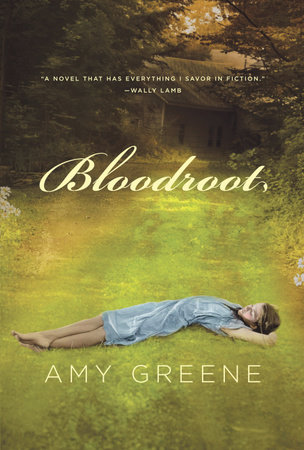
Bloodroot

Author Amy Greene
Listen to a clip from the audiobook
audio play button
0:00
0:00

NATIONAL BESTSELLER

A dark and riveting story of the legacies—of magic and madness, faith and secrets, passion and loss—that haunt one family across the generations.

Myra Lamb is a wild girl with mysterious, haint blue eyes who grows up on remote Bloodroot Mountain. Her grandmother, Byrdie, protects her fiercely and passes down “the touch” that bewitches people and animals alike. But when John Odom tries to tame Myra, it sparks a shocking disaster, ripping lives apart.

"A fascinating look at a rural world full of love and life, and dreams and disappointment." --The Boston Globe

"If Wuthering Heights had been set in southern Appalachia, it might have taken place on Bloodroot Mountain.... Brooding, dark and beautifully imagined." --The Atlanta Journal-Constitution 

Byrdie

Myra looks like her mama, but prettier because of her daddy mixed in. She got just the right amount of both. The best thing about Myra's daddy was his eyes, blue as the sky. They'd pierce right through you. Myra ended up with the same blue-blue eyes. I always figured she was too pretty and then John Odom came along. Now I'll die alone. It's not that I'm scared of being alone with this mountain. I love it like another person. I just miss my grandbaby. Me and Myra's mama wasn't close. Clio had little regard for me or Macon either one. Myra's the daughter I always wished I had.

I didn't see nothing wrong with John Odom at first, but even if I'd seen that snake coiled up inside his heart I wouldn't have tried to stop her. I could tell by her eyes Myra had to have him whatever the outcome. Now I know the outcome is no good. This morning I went to see her and it broke my heart in two. I can't stand to think about what he might be doing to her beside of them tracks. Through the years I got tougher than a pine knot, but something about getting this old has softened me up. I reckon I have too much time to think about my troubles these days, without Myra here to talk to.

I should have seen what was coming after that time she got in late from the library. She was supposed to have been studying with one of her school friends. But I caught a funny shine in her eyes. "What have you been up to?" I asked.

She went to the sink and got a glass of water, gulped it down like she'd been in a race. She turned around and her cheeks looked hot. She smiled with water shining on her lips. "I'll tell you later, Granny, I promise. Right now I want to keep it just for me."

"You're silly," I said, but the way her eyes shined made me nervous. Then I got busy tidying up the kitchen before bed and forgot all about it.

When I finally laid down, I fell asleep as quick as my head hit the pillow. Thinking back, it was an unnatural sleep, like I had drunk a sleeping potion. I had a dream that I was standing on a rickety bridge over muddy water. The roar of it was so loud I couldn't hear nothing else. Then I seen there was things getting carried off in the rapids. It was pieces of our house on Bloodroot Mountain. The leg off of my favorite chair. The quilt I made for Myra when she was a baby. A drawer out of the kitchen buffet. A baby doll Myra used to play with. Some floorboards and a few shingles and even the front door came rolling by. Then there was a crack and my foot went through the boards of that old bridge. It started coming apart, jagged pieces dropping and rushing away, until I was hanging on by a scrap of rotten wood, my feet dangling over the water. If I fell it would carry me off, too. Finally I couldn't hold on no longer. Just as I was dropping, I jerked awake, wringing wet with sweat. I set up on the side of the bed, heart thudding so hard I was afraid it might give out on me. I should have knowed right then. Grandmaw Ruth always said it's bad luck to dream of muddy waters.


Doug

Last night I closed the door to the smokehouse where the bloodroot is kept in cardboard boxes, away from the mice and bugs. I stood there with my back against it, looking across the yard. The house was dark with my parents sleeping and all my brothers gone. Behind barbwire the pasture made a chain of starlit humps. I took the feedbag, heavy with corn, to the barn on quivering legs. The cows are sold and the field was still, but from the barn came fitful knocking sounds. Wild Rose never rests. Daddy had to put her up because she's been getting loose more often. I think I know why. Myra Lamb is gone from her house down the mountain and Rose has been looking for her.
I went to the black opening of the barn and turned on my flashlight. The knocking sounds stopped at once. I could sense Wild Rose waiting for me in the shadows of her stall. The smells of manure and damp hay turned my stomach. Walking deeper into the barn, I saw the reflective shine of her glassy blue eyes and wanted to turn back.

"Rose," I said. "I brought you something good to eat."

The horse didn't stir as I came down the aisle, like she knew what I was up to. She's never liked being touched, but she usually lets me strap on the feedbag. I was hoping the taste of sweet corn would hide the bitterness of what I'd laced it with.

"You hungry?" It was hard to hear myself over the thudding of my heart. Part of me couldn't believe what I was doing. Maybe I was still in bed asleep.

Wild Rose took a few steps toward the front of the stall. I could hear her breath snuffling through the wet channels of her nostrils. Somehow, even before she charged, I knew that she had figured me out. She exploded out of the stall door as she had out of the trailer the first time I saw her, a storm of splintering wood and pounding hooves, with a scream that threatened to split my head in two. I dropped the feedbag and the flashlight and clapped my hands over my ears. I felt the hot passage of her body like a freight train in the dark, the force of it knocking me down. Then she was gone, out the barn opening and across the hills, leaving me to lie in a mess of spilled corn and bloodroot.

Byrdie

When I was a girl I lived across another mountain in a place called Chickweed Holler. Until I was ten years old, me and Mammy lived with Grandmaw Ruth, and two of Grandmaw's sisters, Della and Myrtle. I used to crawl up in Grandmaw's lap to study her face and follow its lines with my finger. She stayed slim and feisty up until the day she died of a stroke, walking home in the heat after birthing somebody's baby. Myrtle had hair soft and white as dandelion fluff that she liked for me to comb out and roll for her. They was all good-looking women, but Della was the prettiest. Her hair stayed black right up to the end of her life, and she didn't have as many wrinkles as Grandmaw. I reckon it's because she didn't have to work as much in the sun. She was the youngest and Myrtle and Grandmaw still babied her, old as all three of them was.


It was just me and Mammy after my daddy passed away, so Grandmaw took us in. We lived in a little cabin with a porch up on stilts. I liked to play under there, where they kept mason jars and rusty baling wire and all manner of junk for me to mess in. Chickweed Holler was a wild place with the mountains rising steep on both sides. From Grandmaw's doorstep you could see a long ways, wildflower fields waving when the summer winds blowed. That land was in our family for generations and Grandmaw and my great-aunts loved it as good as they did any of their kin.

All the neighbors thought the world of Grandmaw and her sisters. They was what you call granny women, and the people of Chickweed Holler relied on them for any kind of help you can think of. Each one of them had different gifts. Myrtle was what I've heard called a water witch. She could find a well on anybody's land with her dowsing rod. People sent for her from a long ways off. Sometimes they'd come to get her and she'd fetch the forked branch she kept under her bed and hop in their wagon. She'd be gone for days at a time, depending on how hard of a trip it was. Della was the best one at mixing up cures. She could name any root and herb and flower you pointed at. Another thing she was good for was healing animals. She could set the broke leg of the orneriest hunting dog and it wouldn't even bite her. One day I seen her in the yard bent over the washtub scrubbing and a bird lit on her shoulder. It stayed for a long time. If she noticed, she didn't let on. I stood still, trying not to scare it away. When I told Grandmaw about it later, she said animals are attracted to our kind of people, and so are other people of our kind. She winked and said, "Don't be surprised if the feller you marry has the touch. People with the touch draws one another." I've always remembered that, but I don't reckon Macon had none of the gifts Grandmaw and her sisters had. I didn't either. It's odd how the touch moves in a family. You never can tell who'll turn up with it.

Grandmaw had the best gift of all. She claimed she could send her spirit up out of her body. She said, "You could lock me up in the jailhouse or bury me alive down under the ground. It don't matter where this old shell is at. My soul will fly off wherever I want it to be." She told me about a time she fell down in a sinkhole when she was little and couldn't climb back out. She had wandered far from the house and knowed her mammy and pappy couldn't hear her. She looked up at the sun between the roots hanging down like dirty hair and wished so hard to fly up out of there that her spirit took off, rose, and soared on back to her little house in the holler. That's when she figured out what her gift was. She had no memory of being stuck in a hole that day. What she remembered was watching her mammy roll out biscuit dough and romping with her puppy dog and picking daisies to braid a crown. Grandmaw wasn't even hollering when a man out hunting came along and his dog sniffed her out. That's the gift I wish I had. I'd go back to Chickweed Holler right now and see if everything still looks the same.

Doug

It doesn't take as much to poison a horse as people think. You just have to know what to feed one. A few oleander leaves, a little sorghum grass, a bit of yellow star thistle and a horse can choke faster than the vet can get there. Tie your horse to a black locust or a chokecherry tree and it could be dead within minutes. Bloodroot is dangerous to horses, too. We have a carpet of it growing down the side of our mountain when springtime comes, thriving under the shady tree canopy high above our house. We have to walk quite a piece each year to find it. Daddy says such a lush stand is rare these days. My brother Mark, Daddy, and I used to go up there with hand spades and a sack, noses red in the leftover cold of winter. Bloodroot can be harvested in fall but the leaves have died back, so it's harder to know where the plants are. That's why we always made the trip in early spring, when the flowers are spread across the slope like the train of a wedding gown. We had to be careful not to damage the roots. When Mark and I were small, Daddy would yell at us if we were too rough, "That's money y'uns is throwing away!" He taught us to shake the roots free of clinging black soil and brush off the bugs and pluck away any weeds that might have got tangled in. Then we had to move fast because bloodroot is easy to mold. We'd head back down the mountain with our sacks to spray the roots with the water hose attached to the wellhouse spigot, washing away the dirt. Once the roots were clean we put them in the smokehouse to dry for about a week. Daddy or one of us would check them for mold once in a while, and when they broke without bending they were dry enough to store. Sometimes we got up to ten dollars a pound. I've heard bloodroot's good for curing croup, and it's even been used for treating certain kinds of cancer. Some of it we kept for ourselves, to use on poison ivy and warts. I've known bloodroot to last in a cool, dark place for up to two years. It will also kill a horse. Daddy told me so last spring, the last time we went up the mountain to dig.

It was March and still cold enough to see our breath. Daddy lumbered along beside me and Mark walked on ahead because, even though we're both grown, he always had to be the fastest. We heard the crack of Wild Rose's hooves before we saw her.

"Dang horse," Mark said. He hoisted himself up by a sapling onto a shelf of rock. "She's loose again."

Daddy shook his head but I saw a grin ripple under his beard. His beloved Rose could do no wrong. Not far up the mountain we saw the bloodroot, a lacy white patch littered with dead leaves. Wild Rose stepped out of the trees near the scattering of flowers and stood looking down at us, tail switching. Her beauty took my breath away.

"I don't believe I've ever seen her stray this far from home," Mark said. "She must be looking for something to eat up here that she's not getting in the pasture. Do you think she needs a dose of vitamins, Daddy?"

Wild Rose blinked at us indifferently for another second or two, then lowered her head to crop at the mossy grass beside the patch of bloodroot. All of a sudden Daddy sprang forward and threw up his arms. "Hyar, Rose!" he shouted. "Git!" Wild Rose turned and thundered off between the trees, tail high.

"Shoot, Daddy," Mark said. "You scared me half to death."

"Wouldn't take much of that bloodroot to kill a horse," Daddy said. He straightened his stocking hat and picked up the sack he had dropped. He moved on with Mark but I stood looking after Rose for a long time.

"This here's a three-man operation, Douglas," Daddy finally called. I went and joined them on my knees among the flowers.
© Adam Greene
Amy Greene was born and raised in the foothills of East Tennessee’s Smoky Mountains, where she lives with her husband and two children.

Amy Greene is available for select speaking engagements. To inquire about a possible appearance, please contact Penguin Random House Speakers Bureau at speakers@penguinrandomhouse.com or visit www.prhspeakers.com View titles by Amy Greene
“Some novels are so powerful, so magical in their sweep and voice, that they leave you feeling drugged. Close the pages and the people in them keep right on talking to you. Amy Greene’s debut novel, Bloodroot, set in the bone-poor hollows of the eastern Tennessee mountains, is such a book. . . . I found myself close to tears at several turns—devastated along with the characters by another crazed loss—and yet never depressed. Greene’s writing is so pure and effortless, so evocative of a far-off place, that the beauty of her words transcends whatever miseries her characters must overcome. . . . Greene, who grew up in the Smoky Mountains, captures what poverty looks and feels and sounds like. Her descriptions of a life lived by the railroad tracks rival any corner scene from The Wire. The vernacular is effortless and thick . . . This is a terribly sad, breathtakingly good read. Greene, get to writing another one quick.”
—Karen Valby, Entertainment Weekly, Grade: A

“Stirring . . . The wild beauty of Appalachia is the backdrop for Bloodroot, Greene’s entrancing debut novel told in six alternating voices over four generations. . . . The novel’s charm comes from its hints of magical realism. Women with ‘gifts’—to heal, make love potions and put curses on their enemies—add color.”
—Carol Memmott, USA Today 
 
“Masterful . . . Deep in Appalachia, where children run barefoot through the trees and the scent of wood smoke fills your nose, there’s a place called Bloodroot Mountain, the fictional setting of Amy Greene’s intricately layered debut novel . . . The book is narrated by six characters across four generations . . . voices [that] weave together a textured patchwork of life in a world geographically isolated but full of humanity. . . . A fascinating and authentic look at a rural world full of love and life, dreams and disappointment.”
—Nicole Cammorata, The Boston Globe  

“Four generations come to life in this beautiful and haunting debut novel by a daughter of Appalachia. It’s about family, forbidden love and magic—and Greene’s prose will cast a spell on you.
 —Glamour
 
"Bloodroot is a marvel of a first novel, its world deftly conjured, with a mood and magic all its own. I don't know what captivated me more, the vividness of its voices or its evocation of a corner of the American landscape both foreign and familiar—but I was riveted from start to finish."
—Arthur Golden, author of Memoirs of a Geisha
 
"Amy Greene's Bloodroot can stand proudly beside Alice Walker's The Color Purple and Jeannette Walls's The Glass Castle, two works which likewise examine the isometric push of the human spirit against the immovable forces of tyranny and poverty. Greene's novel has everything I savor in fiction: flawed but sympathetic characters, a narrative as unpredictable as it is engaging, and a setting rendered with such a vivid palette of local color detail that you'd swear you were there."
—Wally Lamb, author of The Hour I First Believed

“Brooding, dark and beautifully imagined . . . If Wuthering Heights had been set in southern Appalachia, it might have taken place on Bloodroot Mountain, where Amy Greene’s debut novel by the same name unfolds. . . . Greene, a native of eastern Tennessee, has filled her book with the sights and sounds—and the ‘granny women,’ or healers—of the wild, untouched landscape of her childhood. These wise women have ‘the touch’: a gift for working with herbs, curing disease, delivering babies and foreseeing the future. Used for good, the touch is a benign power in harmony with nature, but it can ‘draw ugly things to you if you’re not right with the Lord.’ The Bell sisters of Bloodroot Mountain once performed everyday magic that earned them respect for miles around. But a jealous cousin cursed them long ago, and the only one who can lift the family’s run of bad luck is a baby ‘born with haint blue eyes, a special color that wards off evil spirits and curses.’ When blue-eyed Myra Lamb comes into the world, her grandmother Byrdie sighs with relief that the spell has finally ended. Myra has inherited her great-great aunts’ gifts, and soon shows an ability to commune with birds, horses and other wild creatures: A neighbor finds her asleep in the leaves one day, a kaleidoscope of butterflies covering her like a blanket. But like many a human girl, Myra falls for the wickedly handsome John Odom . . . and she’s willing to do whatever it takes to win him—even if it means resorting to a love charm she knows is taboo . . . From then on, the touch swirls through Bloodroot like a deadly undercurrent that drags Myra under, along with everyone she touches, thwarting their efforts to love and be loved. . . . Bloodroot is a finely crafted, mystical look at a vanishing culture and its healers, once revered for their wisdom and faith. . . . This is rough magic, unromanticized and fierce, that came down from the Scots-Irish who first settled the high hills, bringing their folklore and spells with them in hopes of surviving a harsh environment. Through examining the many nuances of the touch, the author also mines the elusive connections between people and what happens when those connections fail—or are never developed properly.”
—Gina Webb, The Atlanta Journal-Constitution 

 “Compelling . . . Greene lovingly describes [Appalachia’s] mountains and hollows, its waters filled with bluegills. There’s also much talk of healing and magic and backwoods folk wisdom. But this story is really about the fraught, sometimes dangerous bonds between children and their mothers, and the spillover of violence from one generation to the next. . . . [Greene] succeeds in capturing the intimate relationship her characters have with the natural world. . . . In unadorned but assured prose, [she] takes her readers to the hardscrabble world of life in a blue-collar Appalachian town . . . Greene captures well the electric emotional snap of a woman about to break free from an inheritance of violence and poverty.”
—Lisa Fugard, The New York Times Book Review 

“Bloodroot is the name of a flower with blood-red sap, and it can both cure and poison someone. It grows wild on the mountains, which is at the center of this four-generation novel set in Appalachia. Appalachia also happens to be Ms. Greene’s home from childhood, and in her pages, the culture that comes to life is as haunted and mesmerizing as a fairy tale or a dream, as evil as a vile curse, and as beautiful as that ephemeral bloodroot flower.  I thought, is Greene channeling Flannery O’Connor or James Dickey or William Faulkner in terms of this dark and mad side of Southern culture? Amy Greene, I would imagine that you will continue to write about the very place that you are from. I hope you do!”
—Jacki Lyden, “Weekend Edition” (NPR) 
 
“The story itself transcends its bucolic setting . . . Taking cues from the William Wordsworth poem ‘Tintern Abbey,’ [Greene] creates indelible, endearing images of the mountains, the small towns and the townsfolk.”
—Rege Behe, Pittsburgh Tribune-Review 
 
“Powerful . . . Greene points to Cormac McCarthy as her major literary influence, and there are dozens of passages [in Bloodroot] that are reminiscent of McCarthy’s early Appalachian fiction. But Bloodroot reminds me even more of Jane Hamilton’s The Book of Ruth or especially of Harriette Arnow’s 1954 classic The Dollmaker, which begins with a bittersweet homage to an older, Edenic Appalachia . . . [A] spot-on account of a land and its people . . . It is the unmistakable authenticity of her voice—coming from a part of America that rarely gets heard—which makes Greene worth reading. . . . Bloodroot rings true.”
—Mike Fischer, Milwaukee Journal-Sentinel

“Beautiful . . . A big, ambitious book . . . An epic—a story of madness and magic that spans four generations, an emotionally tangled tale that requires six disparate voices to tell and offers no easy resolutions to the conflicts of the heart. . . . [Myra Lamb] is both larger than life—the wild child of Wordsworthian nature—and the all-too-real victim of limiting circumstances. [A summary of the novel] seriously misrepresents the deft touch and light hand with which Greene conveys mountain lore. The novel is charged with an atmosphere of magic and mystery, but it is simultaneously so firmly grounded in the soil and stones of Bloodroot Mountain that the supernatural operates subtly, almost unconsciously. . . . What’s much clearer is the authenticity of the voices here—all speaking the same Appalachian dialect and yet identifiably distinct from each other, a true feat of ventriloquism for a first-time novelist—and the profound love of the land that pervades the narrative. . . . This is Romanticism with a capital R—with its belief in the wisdom of children, its celebration of the natural world, and its shroud of mist and mystery. Bloodroot captures profoundly [a] vanishing mountain world.”     
—Margaret Renkl, Chapter 16
 
“Once or twice a year, I pick up a novel and just know it’s gonna be big. I had that feeling with Kathryn Stockett’s The Help as well as The Story of Edgar Sawtelle by David Wroblewski. This year, watch out for young and gifted Amy Greene. Bloodroot is her first novel, but Greene’s prose makes you feel like she’s been at it for decades. . . . Begun near the Depression all the way to modern times, Bloodroot spins a web of tragic history, mountain lore, and forbidden love amid the beauty of east Tennessee’s hill country. At the eye of the storm is Myra Lamb, a waifish girl born with ‘haint’ blue eyes and the ability to ‘touch’ people and animals alike. . . . Myra’s grandmother Byrdie will steal your heart. . . . Bloodroot will sweep you away to a time and place like no other.”
—JC Patterson, Madison County (MS) Herald 

“Romantic, riveting and beautiful: Bloodroot demonstrates how the soul of one woman can possess the spirit of many. . . . With a literary style reminiscent of Toni Morrison, Greene shows readers how extreme, inescapable, unremitting adoration can transform your whole being. Filled with passion and poetry, Bloodroot is an exciting beginning for a literary career.”
—Amber Amey, Sacramento News and Review

“Greene’s debut novel shows three generations of an eastern Tennessee family struggling against abusive men and narrow values that try to destroy their unusually active spirits. In the 1960s, Byrdie raises her granddaughter Myra on Bloodroot Mountain. She can tell early on that Myra has ‘the touch,’ an extra sensitivity passed down by the women of their family . . . The narration of Part One alternates between Byrdie and Myra’s friend Doug, who loves the wild girl but knows she’ll never be his. . . . Myra is swept up in a passionate romance with John Odom . . . Desire turns into violent possessiveness. . . . [A] fractured chronology builds suspense, allowing for red herrings and foreshadowing like Myra’s box holding a ring with a man’s finger still attached. . . . Pitch-perfect voices tell a story loaded with lyric suffering and redemption: Bound to be a huge hit.”
Kirkus Reviews

"This stunning debut novel is a triumph of voice and setting. Following one family from the Depression up through the present, the story is . . . set in a remote region called Bloodroot Mountain, so named for the rare flower that grows there, which can both poison and heal. The family's struggles with poverty and human cruelty and their search for connection are set against the majestic Appalachian landscape, which is evoked in the simplest and most beautiful language. At the center of this dramatic story is Myra Lamb . . . born with sky-blue eyes and a talent for connecting with animals and people. Allowed to run free on the family's mountaintop, Myra is a charismatic figure who eventually draws the romantic interest of John Odom, the wealthy son of business owners in town. Their marriage, which starts out with so much promise, gradually turns abusive . . . The long repercussions of their violent relationship, on both Myra's children and Myra's own sanity, are played out through the decades as each family member speaks to the lasting effects of John Odom's hot temper. With a style as elegant as southern novelist Lee Smith's and a story as affecting as The Color Purple, this debut offers stirring testimony to the resilience of the human spirit."
—Joanne Wilkinson, Booklist (starred, boxed review) 

“I couldn’t get my nose out of Amy Greene’s debut novel about life on a remote Appalachian mountain. Told in alternating voices of a family over four generations, it’s the story of Myra Lamb, who has inherited her grandmother’s ‘touch’—an ability to bewitch people. Grandmother Byrdie raises Myra . . . until the girl turns wild, marries the wrong man, has twins, Johnny and Laura, and gets in deep, deep trouble. She is ‘put away,’ the kids stuck in foster homes. Will they, finally, be reunited with their mother and finally know her story? Will they ever be able to say, ‘It’s not forgetting that heals. It’s remembering?’ Bloodroot is a magical story, a story of passion, madness, a mystery, and a wild and tempestuous place.”
 —Ann La Farge, Hudson Valley News 
 
"Bloodroot is a literary page-turner filled with characters—and a place—so real that they threaten to burst from the seams of the book and take over. I am haunted by Myra and her children, by the longing and grace of this book's language. But most of all I am haunted by the beauty of this lovely debut novel, a beauty as rare and hard to find as the elusive white-flowered plant for which it is named. Bloodroot is the best Appalachian novel to come out of the region in a long, long while, ushering in a fresh new voice that speaks for a whole generation."
—Silas House, author of Clay's Quilt and A Parchment of Leaves

“Haunting . . . Woven into [Bloodroot] is mountain magic, family history, rural poverty and each generation’s effort to make things better for their children. The central character, Myra Lamb, is raised by her grandmother on the mountain they both love, but she eventually leaves it for the passion she feels for John Odom, a dark character whose abusive nature dramatically changes Myra’s life and her children’s as well.”
—Susan Alexander, Knoxville News-Sentinel 
 
"It's spooky what Bloodroot did to me: it caused me to have a vision of Amy Greene typing at supernaturally speedy speed, thousands of beautiful novels just like this one purring out and away from her fingers. And there I am, in a rocker by a sunny window, forevermore reading them. That would heaven to me. The sound of her book's voices ring perfect."
—Carolyn Chute, author of The Beans of Egypt, Maine
 
"Brilliant . . . A tapestry of voices and lives so rich and intricate that each and every storyline holds the reader spellbound. It is a story of generations and the place that gave them birth, a story of love and loss, and sacrifice and forgiveness.  The voices ring as true and intimate as any I have ever heard. Hats off to Amy Greene, an immensely talented writer."
—Jill McCorkle, author of Going Away Shoes
 
"Amy Greene is a born storyteller who depicts the voices and folkways of Appalachia with both eloquence and verisimilitude. A striking debut by a gifted writer."
—Ron Rash, author of Serena


About

NATIONAL BESTSELLER

A dark and riveting story of the legacies—of magic and madness, faith and secrets, passion and loss—that haunt one family across the generations.

Myra Lamb is a wild girl with mysterious, haint blue eyes who grows up on remote Bloodroot Mountain. Her grandmother, Byrdie, protects her fiercely and passes down “the touch” that bewitches people and animals alike. But when John Odom tries to tame Myra, it sparks a shocking disaster, ripping lives apart.

"A fascinating look at a rural world full of love and life, and dreams and disappointment." --The Boston Globe

"If Wuthering Heights had been set in southern Appalachia, it might have taken place on Bloodroot Mountain.... Brooding, dark and beautifully imagined." --The Atlanta Journal-Constitution 

Excerpt

Byrdie

Myra looks like her mama, but prettier because of her daddy mixed in. She got just the right amount of both. The best thing about Myra's daddy was his eyes, blue as the sky. They'd pierce right through you. Myra ended up with the same blue-blue eyes. I always figured she was too pretty and then John Odom came along. Now I'll die alone. It's not that I'm scared of being alone with this mountain. I love it like another person. I just miss my grandbaby. Me and Myra's mama wasn't close. Clio had little regard for me or Macon either one. Myra's the daughter I always wished I had.

I didn't see nothing wrong with John Odom at first, but even if I'd seen that snake coiled up inside his heart I wouldn't have tried to stop her. I could tell by her eyes Myra had to have him whatever the outcome. Now I know the outcome is no good. This morning I went to see her and it broke my heart in two. I can't stand to think about what he might be doing to her beside of them tracks. Through the years I got tougher than a pine knot, but something about getting this old has softened me up. I reckon I have too much time to think about my troubles these days, without Myra here to talk to.

I should have seen what was coming after that time she got in late from the library. She was supposed to have been studying with one of her school friends. But I caught a funny shine in her eyes. "What have you been up to?" I asked.

She went to the sink and got a glass of water, gulped it down like she'd been in a race. She turned around and her cheeks looked hot. She smiled with water shining on her lips. "I'll tell you later, Granny, I promise. Right now I want to keep it just for me."

"You're silly," I said, but the way her eyes shined made me nervous. Then I got busy tidying up the kitchen before bed and forgot all about it.

When I finally laid down, I fell asleep as quick as my head hit the pillow. Thinking back, it was an unnatural sleep, like I had drunk a sleeping potion. I had a dream that I was standing on a rickety bridge over muddy water. The roar of it was so loud I couldn't hear nothing else. Then I seen there was things getting carried off in the rapids. It was pieces of our house on Bloodroot Mountain. The leg off of my favorite chair. The quilt I made for Myra when she was a baby. A drawer out of the kitchen buffet. A baby doll Myra used to play with. Some floorboards and a few shingles and even the front door came rolling by. Then there was a crack and my foot went through the boards of that old bridge. It started coming apart, jagged pieces dropping and rushing away, until I was hanging on by a scrap of rotten wood, my feet dangling over the water. If I fell it would carry me off, too. Finally I couldn't hold on no longer. Just as I was dropping, I jerked awake, wringing wet with sweat. I set up on the side of the bed, heart thudding so hard I was afraid it might give out on me. I should have knowed right then. Grandmaw Ruth always said it's bad luck to dream of muddy waters.

Doug

Last night I closed the door to the smokehouse where the bloodroot is kept in cardboard boxes, away from the mice and bugs. I stood there with my back against it, looking across the yard. The house was dark with my parents sleeping and all my brothers gone. Behind barbwire the pasture made a chain of starlit humps. I took the feedbag, heavy with corn, to the barn on quivering legs. The cows are sold and the field was still, but from the barn came fitful knocking sounds. Wild Rose never rests. Daddy had to put her up because she's been getting loose more often. I think I know why. Myra Lamb is gone from her house down the mountain and Rose has been looking for her.

I went to the black opening of the barn and turned on my flashlight. The knocking sounds stopped at once. I could sense Wild Rose waiting for me in the shadows of her stall. The smells of manure and damp hay turned my stomach. Walking deeper into the barn, I saw the reflective shine of her glassy blue eyes and wanted to turn back.

"Rose," I said. "I brought you something good to eat."

The horse didn't stir as I came down the aisle, like she knew what I was up to. She's never liked being touched, but she usually lets me strap on the feedbag. I was hoping the taste of sweet corn would hide the bitterness of what I'd laced it with.

"You hungry?" It was hard to hear myself over the thudding of my heart. Part of me couldn't believe what I was doing. Maybe I was still in bed asleep.

Wild Rose took a few steps toward the front of the stall. I could hear her breath snuffling through the wet channels of her nostrils. Somehow, even before she charged, I knew that she had figured me out. She exploded out of the stall door as she had out of the trailer the first time I saw her, a storm of splintering wood and pounding hooves, with a scream that threatened to split my head in two. I dropped the feedbag and the flashlight and clapped my hands over my ears. I felt the hot passage of her body like a freight train in the dark, the force of it knocking me down. Then she was gone, out the barn opening and across the hills, leaving me to lie in a mess of spilled corn and bloodroot.

Byrdie

When I was a girl I lived across another mountain in a place called Chickweed Holler. Until I was ten years old, me and Mammy lived with Grandmaw Ruth, and two of Grandmaw's sisters, Della and Myrtle. I used to crawl up in Grandmaw's lap to study her face and follow its lines with my finger. She stayed slim and feisty up until the day she died of a stroke, walking home in the heat after birthing somebody's baby. Myrtle had hair soft and white as dandelion fluff that she liked for me to comb out and roll for her. They was all good-looking women, but Della was the prettiest. Her hair stayed black right up to the end of her life, and she didn't have as many wrinkles as Grandmaw. I reckon it's because she didn't have to work as much in the sun. She was the youngest and Myrtle and Grandmaw still babied her, old as all three of them was.

It was just me and Mammy after my daddy passed away, so Grandmaw took us in. We lived in a little cabin with a porch up on stilts. I liked to play under there, where they kept mason jars and rusty baling wire and all manner of junk for me to mess in. Chickweed Holler was a wild place with the mountains rising steep on both sides. From Grandmaw's doorstep you could see a long ways, wildflower fields waving when the summer winds blowed. That land was in our family for generations and Grandmaw and my great-aunts loved it as good as they did any of their kin.

All the neighbors thought the world of Grandmaw and her sisters. They was what you call granny women, and the people of Chickweed Holler relied on them for any kind of help you can think of. Each one of them had different gifts. Myrtle was what I've heard called a water witch. She could find a well on anybody's land with her dowsing rod. People sent for her from a long ways off. Sometimes they'd come to get her and she'd fetch the forked branch she kept under her bed and hop in their wagon. She'd be gone for days at a time, depending on how hard of a trip it was. Della was the best one at mixing up cures. She could name any root and herb and flower you pointed at. Another thing she was good for was healing animals. She could set the broke leg of the orneriest hunting dog and it wouldn't even bite her. One day I seen her in the yard bent over the washtub scrubbing and a bird lit on her shoulder. It stayed for a long time. If she noticed, she didn't let on. I stood still, trying not to scare it away. When I told Grandmaw about it later, she said animals are attracted to our kind of people, and so are other people of our kind. She winked and said, "Don't be surprised if the feller you marry has the touch. People with the touch draws one another." I've always remembered that, but I don't reckon Macon had none of the gifts Grandmaw and her sisters had. I didn't either. It's odd how the touch moves in a family. You never can tell who'll turn up with it.

Grandmaw had the best gift of all. She claimed she could send her spirit up out of her body. She said, "You could lock me up in the jailhouse or bury me alive down under the ground. It don't matter where this old shell is at. My soul will fly off wherever I want it to be." She told me about a time she fell down in a sinkhole when she was little and couldn't climb back out. She had wandered far from the house and knowed her mammy and pappy couldn't hear her. She looked up at the sun between the roots hanging down like dirty hair and wished so hard to fly up out of there that her spirit took off, rose, and soared on back to her little house in the holler. That's when she figured out what her gift was. She had no memory of being stuck in a hole that day. What she remembered was watching her mammy roll out biscuit dough and romping with her puppy dog and picking daisies to braid a crown. Grandmaw wasn't even hollering when a man out hunting came along and his dog sniffed her out. That's the gift I wish I had. I'd go back to Chickweed Holler right now and see if everything still looks the same.

Doug

It doesn't take as much to poison a horse as people think. You just have to know what to feed one. A few oleander leaves, a little sorghum grass, a bit of yellow star thistle and a horse can choke faster than the vet can get there. Tie your horse to a black locust or a chokecherry tree and it could be dead within minutes. Bloodroot is dangerous to horses, too. We have a carpet of it growing down the side of our mountain when springtime comes, thriving under the shady tree canopy high above our house. We have to walk quite a piece each year to find it. Daddy says such a lush stand is rare these days. My brother Mark, Daddy, and I used to go up there with hand spades and a sack, noses red in the leftover cold of winter. Bloodroot can be harvested in fall but the leaves have died back, so it's harder to know where the plants are. That's why we always made the trip in early spring, when the flowers are spread across the slope like the train of a wedding gown. We had to be careful not to damage the roots. When Mark and I were small, Daddy would yell at us if we were too rough, "That's money y'uns is throwing away!" He taught us to shake the roots free of clinging black soil and brush off the bugs and pluck away any weeds that might have got tangled in. Then we had to move fast because bloodroot is easy to mold. We'd head back down the mountain with our sacks to spray the roots with the water hose attached to the wellhouse spigot, washing away the dirt. Once the roots were clean we put them in the smokehouse to dry for about a week. Daddy or one of us would check them for mold once in a while, and when they broke without bending they were dry enough to store. Sometimes we got up to ten dollars a pound. I've heard bloodroot's good for curing croup, and it's even been used for treating certain kinds of cancer. Some of it we kept for ourselves, to use on poison ivy and warts. I've known bloodroot to last in a cool, dark place for up to two years. It will also kill a horse. Daddy told me so last spring, the last time we went up the mountain to dig.

It was March and still cold enough to see our breath. Daddy lumbered along beside me and Mark walked on ahead because, even though we're both grown, he always had to be the fastest. We heard the crack of Wild Rose's hooves before we saw her.

"Dang horse," Mark said. He hoisted himself up by a sapling onto a shelf of rock. "She's loose again."

Daddy shook his head but I saw a grin ripple under his beard. His beloved Rose could do no wrong. Not far up the mountain we saw the bloodroot, a lacy white patch littered with dead leaves. Wild Rose stepped out of the trees near the scattering of flowers and stood looking down at us, tail switching. Her beauty took my breath away.

"I don't believe I've ever seen her stray this far from home," Mark said. "She must be looking for something to eat up here that she's not getting in the pasture. Do you think she needs a dose of vitamins, Daddy?"

Wild Rose blinked at us indifferently for another second or two, then lowered her head to crop at the mossy grass beside the patch of bloodroot. All of a sudden Daddy sprang forward and threw up his arms. "Hyar, Rose!" he shouted. "Git!" Wild Rose turned and thundered off between the trees, tail high.

"Shoot, Daddy," Mark said. "You scared me half to death."

"Wouldn't take much of that bloodroot to kill a horse," Daddy said. He straightened his stocking hat and picked up the sack he had dropped. He moved on with Mark but I stood looking after Rose for a long time.

"This here's a three-man operation, Douglas," Daddy finally called. I went and joined them on my knees among the flowers.

Author

© Adam Greene
Amy Greene was born and raised in the foothills of East Tennessee’s Smoky Mountains, where she lives with her husband and two children.

Amy Greene is available for select speaking engagements. To inquire about a possible appearance, please contact Penguin Random House Speakers Bureau at speakers@penguinrandomhouse.com or visit www.prhspeakers.com View titles by Amy Greene

Praise

“Some novels are so powerful, so magical in their sweep and voice, that they leave you feeling drugged. Close the pages and the people in them keep right on talking to you. Amy Greene’s debut novel, Bloodroot, set in the bone-poor hollows of the eastern Tennessee mountains, is such a book. . . . I found myself close to tears at several turns—devastated along with the characters by another crazed loss—and yet never depressed. Greene’s writing is so pure and effortless, so evocative of a far-off place, that the beauty of her words transcends whatever miseries her characters must overcome. . . . Greene, who grew up in the Smoky Mountains, captures what poverty looks and feels and sounds like. Her descriptions of a life lived by the railroad tracks rival any corner scene from The Wire. The vernacular is effortless and thick . . . This is a terribly sad, breathtakingly good read. Greene, get to writing another one quick.”
—Karen Valby, Entertainment Weekly, Grade: A

“Stirring . . . The wild beauty of Appalachia is the backdrop for Bloodroot, Greene’s entrancing debut novel told in six alternating voices over four generations. . . . The novel’s charm comes from its hints of magical realism. Women with ‘gifts’—to heal, make love potions and put curses on their enemies—add color.”
—Carol Memmott, USA Today 
 
“Masterful . . . Deep in Appalachia, where children run barefoot through the trees and the scent of wood smoke fills your nose, there’s a place called Bloodroot Mountain, the fictional setting of Amy Greene’s intricately layered debut novel . . . The book is narrated by six characters across four generations . . . voices [that] weave together a textured patchwork of life in a world geographically isolated but full of humanity. . . . A fascinating and authentic look at a rural world full of love and life, dreams and disappointment.”
—Nicole Cammorata, The Boston Globe  

“Four generations come to life in this beautiful and haunting debut novel by a daughter of Appalachia. It’s about family, forbidden love and magic—and Greene’s prose will cast a spell on you.
 —Glamour
 
"Bloodroot is a marvel of a first novel, its world deftly conjured, with a mood and magic all its own. I don't know what captivated me more, the vividness of its voices or its evocation of a corner of the American landscape both foreign and familiar—but I was riveted from start to finish."
—Arthur Golden, author of Memoirs of a Geisha
 
"Amy Greene's Bloodroot can stand proudly beside Alice Walker's The Color Purple and Jeannette Walls's The Glass Castle, two works which likewise examine the isometric push of the human spirit against the immovable forces of tyranny and poverty. Greene's novel has everything I savor in fiction: flawed but sympathetic characters, a narrative as unpredictable as it is engaging, and a setting rendered with such a vivid palette of local color detail that you'd swear you were there."
—Wally Lamb, author of The Hour I First Believed

“Brooding, dark and beautifully imagined . . . If Wuthering Heights had been set in southern Appalachia, it might have taken place on Bloodroot Mountain, where Amy Greene’s debut novel by the same name unfolds. . . . Greene, a native of eastern Tennessee, has filled her book with the sights and sounds—and the ‘granny women,’ or healers—of the wild, untouched landscape of her childhood. These wise women have ‘the touch’: a gift for working with herbs, curing disease, delivering babies and foreseeing the future. Used for good, the touch is a benign power in harmony with nature, but it can ‘draw ugly things to you if you’re not right with the Lord.’ The Bell sisters of Bloodroot Mountain once performed everyday magic that earned them respect for miles around. But a jealous cousin cursed them long ago, and the only one who can lift the family’s run of bad luck is a baby ‘born with haint blue eyes, a special color that wards off evil spirits and curses.’ When blue-eyed Myra Lamb comes into the world, her grandmother Byrdie sighs with relief that the spell has finally ended. Myra has inherited her great-great aunts’ gifts, and soon shows an ability to commune with birds, horses and other wild creatures: A neighbor finds her asleep in the leaves one day, a kaleidoscope of butterflies covering her like a blanket. But like many a human girl, Myra falls for the wickedly handsome John Odom . . . and she’s willing to do whatever it takes to win him—even if it means resorting to a love charm she knows is taboo . . . From then on, the touch swirls through Bloodroot like a deadly undercurrent that drags Myra under, along with everyone she touches, thwarting their efforts to love and be loved. . . . Bloodroot is a finely crafted, mystical look at a vanishing culture and its healers, once revered for their wisdom and faith. . . . This is rough magic, unromanticized and fierce, that came down from the Scots-Irish who first settled the high hills, bringing their folklore and spells with them in hopes of surviving a harsh environment. Through examining the many nuances of the touch, the author also mines the elusive connections between people and what happens when those connections fail—or are never developed properly.”
—Gina Webb, The Atlanta Journal-Constitution 

 “Compelling . . . Greene lovingly describes [Appalachia’s] mountains and hollows, its waters filled with bluegills. There’s also much talk of healing and magic and backwoods folk wisdom. But this story is really about the fraught, sometimes dangerous bonds between children and their mothers, and the spillover of violence from one generation to the next. . . . [Greene] succeeds in capturing the intimate relationship her characters have with the natural world. . . . In unadorned but assured prose, [she] takes her readers to the hardscrabble world of life in a blue-collar Appalachian town . . . Greene captures well the electric emotional snap of a woman about to break free from an inheritance of violence and poverty.”
—Lisa Fugard, The New York Times Book Review 

“Bloodroot is the name of a flower with blood-red sap, and it can both cure and poison someone. It grows wild on the mountains, which is at the center of this four-generation novel set in Appalachia. Appalachia also happens to be Ms. Greene’s home from childhood, and in her pages, the culture that comes to life is as haunted and mesmerizing as a fairy tale or a dream, as evil as a vile curse, and as beautiful as that ephemeral bloodroot flower.  I thought, is Greene channeling Flannery O’Connor or James Dickey or William Faulkner in terms of this dark and mad side of Southern culture? Amy Greene, I would imagine that you will continue to write about the very place that you are from. I hope you do!”
—Jacki Lyden, “Weekend Edition” (NPR) 
 
“The story itself transcends its bucolic setting . . . Taking cues from the William Wordsworth poem ‘Tintern Abbey,’ [Greene] creates indelible, endearing images of the mountains, the small towns and the townsfolk.”
—Rege Behe, Pittsburgh Tribune-Review 
 
“Powerful . . . Greene points to Cormac McCarthy as her major literary influence, and there are dozens of passages [in Bloodroot] that are reminiscent of McCarthy’s early Appalachian fiction. But Bloodroot reminds me even more of Jane Hamilton’s The Book of Ruth or especially of Harriette Arnow’s 1954 classic The Dollmaker, which begins with a bittersweet homage to an older, Edenic Appalachia . . . [A] spot-on account of a land and its people . . . It is the unmistakable authenticity of her voice—coming from a part of America that rarely gets heard—which makes Greene worth reading. . . . Bloodroot rings true.”
—Mike Fischer, Milwaukee Journal-Sentinel

“Beautiful . . . A big, ambitious book . . . An epic—a story of madness and magic that spans four generations, an emotionally tangled tale that requires six disparate voices to tell and offers no easy resolutions to the conflicts of the heart. . . . [Myra Lamb] is both larger than life—the wild child of Wordsworthian nature—and the all-too-real victim of limiting circumstances. [A summary of the novel] seriously misrepresents the deft touch and light hand with which Greene conveys mountain lore. The novel is charged with an atmosphere of magic and mystery, but it is simultaneously so firmly grounded in the soil and stones of Bloodroot Mountain that the supernatural operates subtly, almost unconsciously. . . . What’s much clearer is the authenticity of the voices here—all speaking the same Appalachian dialect and yet identifiably distinct from each other, a true feat of ventriloquism for a first-time novelist—and the profound love of the land that pervades the narrative. . . . This is Romanticism with a capital R—with its belief in the wisdom of children, its celebration of the natural world, and its shroud of mist and mystery. Bloodroot captures profoundly [a] vanishing mountain world.”     
—Margaret Renkl, Chapter 16
 
“Once or twice a year, I pick up a novel and just know it’s gonna be big. I had that feeling with Kathryn Stockett’s The Help as well as The Story of Edgar Sawtelle by David Wroblewski. This year, watch out for young and gifted Amy Greene. Bloodroot is her first novel, but Greene’s prose makes you feel like she’s been at it for decades. . . . Begun near the Depression all the way to modern times, Bloodroot spins a web of tragic history, mountain lore, and forbidden love amid the beauty of east Tennessee’s hill country. At the eye of the storm is Myra Lamb, a waifish girl born with ‘haint’ blue eyes and the ability to ‘touch’ people and animals alike. . . . Myra’s grandmother Byrdie will steal your heart. . . . Bloodroot will sweep you away to a time and place like no other.”
—JC Patterson, Madison County (MS) Herald 

“Romantic, riveting and beautiful: Bloodroot demonstrates how the soul of one woman can possess the spirit of many. . . . With a literary style reminiscent of Toni Morrison, Greene shows readers how extreme, inescapable, unremitting adoration can transform your whole being. Filled with passion and poetry, Bloodroot is an exciting beginning for a literary career.”
—Amber Amey, Sacramento News and Review

“Greene’s debut novel shows three generations of an eastern Tennessee family struggling against abusive men and narrow values that try to destroy their unusually active spirits. In the 1960s, Byrdie raises her granddaughter Myra on Bloodroot Mountain. She can tell early on that Myra has ‘the touch,’ an extra sensitivity passed down by the women of their family . . . The narration of Part One alternates between Byrdie and Myra’s friend Doug, who loves the wild girl but knows she’ll never be his. . . . Myra is swept up in a passionate romance with John Odom . . . Desire turns into violent possessiveness. . . . [A] fractured chronology builds suspense, allowing for red herrings and foreshadowing like Myra’s box holding a ring with a man’s finger still attached. . . . Pitch-perfect voices tell a story loaded with lyric suffering and redemption: Bound to be a huge hit.”
Kirkus Reviews

"This stunning debut novel is a triumph of voice and setting. Following one family from the Depression up through the present, the story is . . . set in a remote region called Bloodroot Mountain, so named for the rare flower that grows there, which can both poison and heal. The family's struggles with poverty and human cruelty and their search for connection are set against the majestic Appalachian landscape, which is evoked in the simplest and most beautiful language. At the center of this dramatic story is Myra Lamb . . . born with sky-blue eyes and a talent for connecting with animals and people. Allowed to run free on the family's mountaintop, Myra is a charismatic figure who eventually draws the romantic interest of John Odom, the wealthy son of business owners in town. Their marriage, which starts out with so much promise, gradually turns abusive . . . The long repercussions of their violent relationship, on both Myra's children and Myra's own sanity, are played out through the decades as each family member speaks to the lasting effects of John Odom's hot temper. With a style as elegant as southern novelist Lee Smith's and a story as affecting as The Color Purple, this debut offers stirring testimony to the resilience of the human spirit."
—Joanne Wilkinson, Booklist (starred, boxed review) 

“I couldn’t get my nose out of Amy Greene’s debut novel about life on a remote Appalachian mountain. Told in alternating voices of a family over four generations, it’s the story of Myra Lamb, who has inherited her grandmother’s ‘touch’—an ability to bewitch people. Grandmother Byrdie raises Myra . . . until the girl turns wild, marries the wrong man, has twins, Johnny and Laura, and gets in deep, deep trouble. She is ‘put away,’ the kids stuck in foster homes. Will they, finally, be reunited with their mother and finally know her story? Will they ever be able to say, ‘It’s not forgetting that heals. It’s remembering?’ Bloodroot is a magical story, a story of passion, madness, a mystery, and a wild and tempestuous place.”
 —Ann La Farge, Hudson Valley News 
 
"Bloodroot is a literary page-turner filled with characters—and a place—so real that they threaten to burst from the seams of the book and take over. I am haunted by Myra and her children, by the longing and grace of this book's language. But most of all I am haunted by the beauty of this lovely debut novel, a beauty as rare and hard to find as the elusive white-flowered plant for which it is named. Bloodroot is the best Appalachian novel to come out of the region in a long, long while, ushering in a fresh new voice that speaks for a whole generation."
—Silas House, author of Clay's Quilt and A Parchment of Leaves

“Haunting . . . Woven into [Bloodroot] is mountain magic, family history, rural poverty and each generation’s effort to make things better for their children. The central character, Myra Lamb, is raised by her grandmother on the mountain they both love, but she eventually leaves it for the passion she feels for John Odom, a dark character whose abusive nature dramatically changes Myra’s life and her children’s as well.”
—Susan Alexander, Knoxville News-Sentinel 
 
"It's spooky what Bloodroot did to me: it caused me to have a vision of Amy Greene typing at supernaturally speedy speed, thousands of beautiful novels just like this one purring out and away from her fingers. And there I am, in a rocker by a sunny window, forevermore reading them. That would heaven to me. The sound of her book's voices ring perfect."
—Carolyn Chute, author of The Beans of Egypt, Maine
 
"Brilliant . . . A tapestry of voices and lives so rich and intricate that each and every storyline holds the reader spellbound. It is a story of generations and the place that gave them birth, a story of love and loss, and sacrifice and forgiveness.  The voices ring as true and intimate as any I have ever heard. Hats off to Amy Greene, an immensely talented writer."
—Jill McCorkle, author of Going Away Shoes
 
"Amy Greene is a born storyteller who depicts the voices and folkways of Appalachia with both eloquence and verisimilitude. A striking debut by a gifted writer."
—Ron Rash, author of Serena


Books for Women’s History Month

In honor of Women’s History Month in March, we are sharing books by women who have shaped history and have fought for their communities. Our list includes books about women who fought for racial justice, abortion rights, equality in the workplace, and ranges in topics from women in politics and prominent women in history to

Read more