
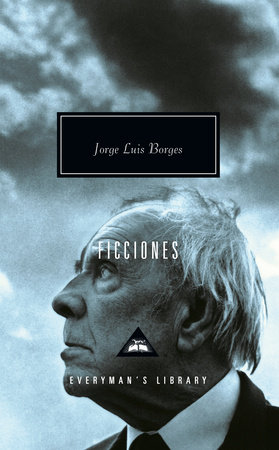






Ficciones

Introduction by John Sturrock

Introduction by John Sturrock
Look inside
With an Introduction by John Sturrock; translated by Anthony Kerrigan.
Jorge Luis Borges (1899–1986) was an Argentine poet, essayist, and author of short stories. His most notable works as a key literary Spanish-language figure of the twentieth century include Ficciones (Fictions) and El Aleph (The Aleph). He received a BA from the College of Geneva. He was also appointed the director of the National Public Library and professor of English literature at the University of Buenos Aries in 1955. During his lifetime, Borges received the first Prix International Formentor Prize which he shared alongside Samuel Beckett in 1961. He also received the Jerusalem Prize for the Freedom of the Individual in Society in 1971. View titles by Jorge Luis Borges
“[Borges is] a central fact of Western culture.”—WASHINGTON POST BOOK WORLD“Borges is the most important Spanish-language writer since Cervantes.”—Mario Vargas Llosa“Without Borges, the modern Latin American novel simply would not exist.”—Carlos Fuentes“[Borges] engages the heart as well as the intelligence.”—John Barth“The economy of his prose, the tact of his imagery, the courage of his thought are there to be admired and emulated.”—John Updike“These brief Ficciones . . . throb with uncanny and haunting power. A strange and formidable writer, Sr. Borges is also a magisterial stylist.”—ATLANTIC MONTHLY“The stories in Ficciones are the very best of Borges . . . They mean more than they seem to mean . . . Borges’ fictions are narrative at its purest.”—from the Introduction by John Sturrock

About

With an Introduction by John Sturrock; translated by Anthony Kerrigan.

Author

Jorge Luis Borges (1899–1986) was an Argentine poet, essayist, and author of short stories. His most notable works as a key literary Spanish-language figure of the twentieth century include Ficciones (Fictions) and El Aleph (The Aleph). He received a BA from the College of Geneva. He was also appointed the director of the National Public Library and professor of English literature at the University of Buenos Aries in 1955. During his lifetime, Borges received the first Prix International Formentor Prize which he shared alongside Samuel Beckett in 1961. He also received the Jerusalem Prize for the Freedom of the Individual in Society in 1971. View titles by Jorge Luis Borges

Praise

“[Borges is] a central fact of Western culture.”—WASHINGTON POST BOOK WORLD“Borges is the most important Spanish-language writer since Cervantes.”—Mario Vargas Llosa“Without Borges, the modern Latin American novel simply would not exist.”—Carlos Fuentes“[Borges] engages the heart as well as the intelligence.”—John Barth“The economy of his prose, the tact of his imagery, the courage of his thought are there to be admired and emulated.”—John Updike“These brief Ficciones . . . throb with uncanny and haunting power. A strange and formidable writer, Sr. Borges is also a magisterial stylist.”—ATLANTIC MONTHLY“The stories in Ficciones are the very best of Borges . . . They mean more than they seem to mean . . . Borges’ fictions are narrative at its purest.”—from the Introduction by John Sturrock