



Darwish: Poems

Hardcover
$20.00 US
On sale Nov 03, 2026 | 256 Pages | 9798217009657

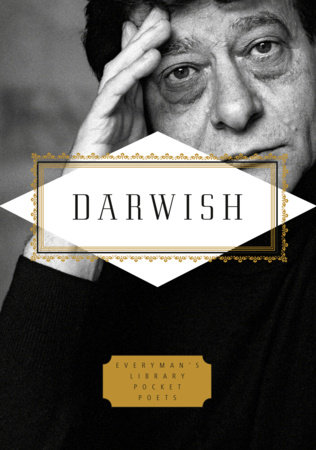
The first collection of Mahmoud Darwish's poems from across all periods of his life, highlighting the breadth, depth, and evolution of the beloved writer known as Palestine's national poet

In this sumptuous, expansive new collection—featuring, for the first time, English translations of significant poems from the 1960s to 1980s—Mahmoud Darwish's scope as a poet, Palestinian, political asylee, and renderer of worlds is finally on full display.

Darwish's poems have been scattered by the winds, the result of a life in exile spanning from Galilee to Paris to Beirut to Cairo to his final destination, Houston. Never before has the arc of his life's work been so well represented in a single volume, and so thoroughly refreshed via previously untranslated works, as in this collection, compiled and edited by two writers and professors, Omar Khalifah and Hannah Lillith Assadi.

Darwish was a master of Arab poetics and modernist methods, and in combining these influences, he created poetry of intense beauty and resonant music, and is read and treasured around the Middle East as a source of comfort and pride. Even now, nearly two decades after his passing, he remains an icon: His image appears in graffiti across the Middle East, along with lines of his poems. In his verses, everyone who has ever been dispossessed or displaced finds a voice that speaks to them. In Darwish's poetry, they find a home.

He was not solely a poet of resistance, however. Palestinians "cannot be defined by our relationship, positive or negative, to Israel. We have our own identity," he told BOMB magazine in an early 2000s interview. Here, in these fifty spectacular poems, is a range of expression that proceeds from that identity: love poems, lyrics, observations of nature, epically structured myths, and his famous diaries of life under siege, of life looking at the stars.

Everyman's Library's Pocket Poets are pocket-sized hardcovers that feature acid-free cream-colored paper bound in a full-cloth case with two-color foil stamping, decorative endpapers, a silk ribbon marker, a European-style half-round spine, and a full-color illustrated jacket.
MAHMOUD DARWISH was born in 1941 in Galilee, Palestine. His family was exiled from their home in the 1948 Nakba; they were considered "internal refugees" and were never granted Israeli citizenship. Darwish studied in Moscow and worked for literary magazines and newspapers in Cairo, Beirut, and Paris. He is the author of over thirty books of poetry and eight books of prose, and earned the Lannan Cultural Freedom Prize from the Lannan Foundation, the Lenin Peace Prize, and
was made Commandeur de l'ordre des Arts et des Lettres by the French government. Darwish died in 2008 in Houston, Texas.

For poetry readers, particularly appreciators of translation and diasporic themes; for those urgently called by the genocide in Palestine, many of whom have been educated in the last decade by Palestinian literature; for anyone looking for more Palestinian art.

About

The first collection of Mahmoud Darwish's poems from across all periods of his life, highlighting the breadth, depth, and evolution of the beloved writer known as Palestine's national poet

In this sumptuous, expansive new collection—featuring, for the first time, English translations of significant poems from the 1960s to 1980s—Mahmoud Darwish's scope as a poet, Palestinian, political asylee, and renderer of worlds is finally on full display.

Darwish's poems have been scattered by the winds, the result of a life in exile spanning from Galilee to Paris to Beirut to Cairo to his final destination, Houston. Never before has the arc of his life's work been so well represented in a single volume, and so thoroughly refreshed via previously untranslated works, as in this collection, compiled and edited by two writers and professors, Omar Khalifah and Hannah Lillith Assadi.

Darwish was a master of Arab poetics and modernist methods, and in combining these influences, he created poetry of intense beauty and resonant music, and is read and treasured around the Middle East as a source of comfort and pride. Even now, nearly two decades after his passing, he remains an icon: His image appears in graffiti across the Middle East, along with lines of his poems. In his verses, everyone who has ever been dispossessed or displaced finds a voice that speaks to them. In Darwish's poetry, they find a home.

He was not solely a poet of resistance, however. Palestinians "cannot be defined by our relationship, positive or negative, to Israel. We have our own identity," he told BOMB magazine in an early 2000s interview. Here, in these fifty spectacular poems, is a range of expression that proceeds from that identity: love poems, lyrics, observations of nature, epically structured myths, and his famous diaries of life under siege, of life looking at the stars.

Everyman's Library's Pocket Poets are pocket-sized hardcovers that feature acid-free cream-colored paper bound in a full-cloth case with two-color foil stamping, decorative endpapers, a silk ribbon marker, a European-style half-round spine, and a full-color illustrated jacket.

Author

MAHMOUD DARWISH was born in 1941 in Galilee, Palestine. His family was exiled from their home in the 1948 Nakba; they were considered "internal refugees" and were never granted Israeli citizenship. Darwish studied in Moscow and worked for literary magazines and newspapers in Cairo, Beirut, and Paris. He is the author of over thirty books of poetry and eight books of prose, and earned the Lannan Cultural Freedom Prize from the Lannan Foundation, the Lenin Peace Prize, and
was made Commandeur de l'ordre des Arts et des Lettres by the French government. Darwish died in 2008 in Houston, Texas.

For poetry readers, particularly appreciators of translation and diasporic themes; for those urgently called by the genocide in Palestine, many of whom have been educated in the last decade by Palestinian literature; for anyone looking for more Palestinian art.