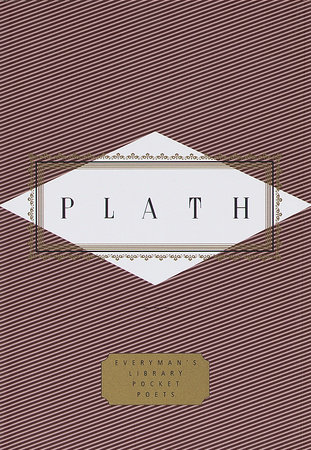





This Everyman's Library Pocket Poems edition contains the best of Plath's work, as selected by Diane Wood Middlebrook. It is organized chronologically, from "Juvenilia" to 1963, and includes an index of first lines.
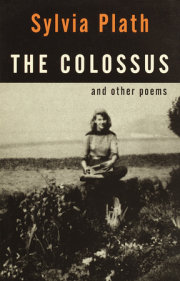
Sylvia Plath (19321963) was born in Boston, Massachusetts, and studied at Smith College. In 1955 she went to Cambridge University on a Fulbright scholarship, where she met and later married Ted Hughes. Plath published one collection of poems in her lifetime, The Colossus (1960), and a novel, The Bell Jar (1963). Her Collected Poems, which contains her poetry written from 1956 until her death, was published in 1981 and was awarded the Pulitzer Prize for poetry. View titles by Sylvia Plath
"[Her poems] have that exquisite, heart-breaking quality about them that has made Sylvia Plath our acknowledged Queen of Sorrows, the spokeswoman for our most private, most helpless nightmares.... Her poetry is as deathly as it is impeccable; it enchants us almost as powerfully as it must have enchanted her." —Joyce Carol Oates, The New York Times

About

This Everyman's Library Pocket Poems edition contains the best of Plath's work, as selected by Diane Wood Middlebrook. It is organized chronologically, from "Juvenilia" to 1963, and includes an index of first lines.

Author

Sylvia Plath (19321963) was born in Boston, Massachusetts, and studied at Smith College. In 1955 she went to Cambridge University on a Fulbright scholarship, where she met and later married Ted Hughes. Plath published one collection of poems in her lifetime, The Colossus (1960), and a novel, The Bell Jar (1963). Her Collected Poems, which contains her poetry written from 1956 until her death, was published in 1981 and was awarded the Pulitzer Prize for poetry. View titles by Sylvia Plath

Praise

"[Her poems] have that exquisite, heart-breaking quality about them that has made Sylvia Plath our acknowledged Queen of Sorrows, the spokeswoman for our most private, most helpless nightmares.... Her poetry is as deathly as it is impeccable; it enchants us almost as powerfully as it must have enchanted her." —Joyce Carol Oates, The New York Times