
Books for Arab American Heritage Month
In honor of Arab American Heritage Month in April, we are sharing books by Arab and Arab American authors that share their culture, history, and personal lives.


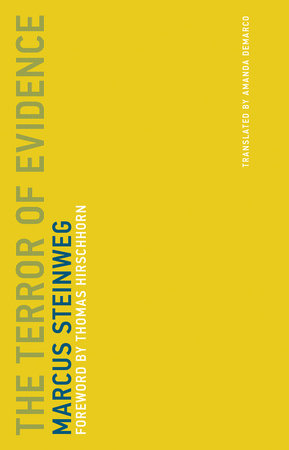
Marcus Steinweg's capacity to implicate the other is beautiful, bright, precise, and logical, grounded in everyday questions, which to him are always big questions.
—from the foreword by Thomas Hirschhorn
The houses of philosophy need not be palaces.
—Marcus Steinweg, “House,” The Terror of Evidence
This is the first book by the prolific German philosopher Marcus Steinweg to be available in English translation. The Terror of Evidence offers meditations, maxims, aphorisms, notes, and comments—191 texts ranging in length from three words to three pages—the deceptive simplicity of which challenges the reader to think. “Thinking means getting lost again and again,” Steinweg observes. Reality is the ever-broken promise of consistency; “the terror of evidence” arises from the inconsistency before our eyes. Thinking is a means of coping with that inconsistency.
Steinweg is known for his collaborations with Thomas Hirschhorn and the lectures and texts he has provided for many of Hirschhorn's projects. This translation of The Terror of Evidence includes a foreword by Hirschhorn written especially for the MIT Press edition.
The subjects of these short texts vary widely. (“The table of contents is in itself excessive and ambitious,” writes Hirschhorn.) They include pathos, passivity, genius, resentment, love, horror, catastrophe, and racism. And club sandwiches (specifically, Foucault's love for this American specialty), blow jobs, and dance. Also: “Two Kinds of Obscurantism,” “Putting Words in Spinoza's Mouth,” “Note on Rorty,” and “Doubting Doubt.” The Terror of Evidence can be considered a guidebook to thinking: the daily journey of exploration, the incessant questioning of reality that Steinweg sees as the task of philosophy.
Marcus Steinweg's capacity to implicate the other is beautiful, bright, precise, and logical, grounded in everyday questions, which to him are always big questions.
—from the foreword by Thomas Hirschhorn
The houses of philosophy need not be palaces.
—Marcus Steinweg, “House,” The Terror of Evidence
This is the first book by the prolific German philosopher Marcus Steinweg to be available in English translation. The Terror of Evidence offers meditations, maxims, aphorisms, notes, and comments—191 texts ranging in length from three words to three pages—the deceptive simplicity of which challenges the reader to think. “Thinking means getting lost again and again,” Steinweg observes. Reality is the ever-broken promise of consistency; “the terror of evidence” arises from the inconsistency before our eyes. Thinking is a means of coping with that inconsistency.
Steinweg is known for his collaborations with Thomas Hirschhorn and the lectures and texts he has provided for many of Hirschhorn's projects. This translation of The Terror of Evidence includes a foreword by Hirschhorn written especially for the MIT Press edition.
The subjects of these short texts vary widely. (“The table of contents is in itself excessive and ambitious,” writes Hirschhorn.) They include pathos, passivity, genius, resentment, love, horror, catastrophe, and racism. And club sandwiches (specifically, Foucault's love for this American specialty), blow jobs, and dance. Also: “Two Kinds of Obscurantism,” “Putting Words in Spinoza's Mouth,” “Note on Rorty,” and “Doubting Doubt.” The Terror of Evidence can be considered a guidebook to thinking: the daily journey of exploration, the incessant questioning of reality that Steinweg sees as the task of philosophy.



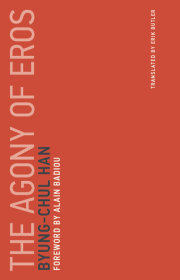
In honor of Arab American Heritage Month in April, we are sharing books by Arab and Arab American authors that share their culture, history, and personal lives.
For National Poetry Month in April, we are sharing poetry collections and books about poetry by authors who have their own stories to tell. These poets delve into history, reimagine the present, examine poetry itself—from traditional poems many know and love to poems and voices that are new and original.
/