
Books for Arab American Heritage Month
In honor of Arab American Heritage Month in April, we are sharing books by Arab and Arab American authors that share their culture, history, and personal lives.


With these engaging and provocative essays, Roberto Simanowski considers what new media has done to us. Why is digital privacy being eroded and why does society seem not to care? Why do we escape from living and loving the present into capturing, sharing and liking it? And how did we arrive at a selfie society without self-consciousness?
Simanowski, who has been studying the Internet and social media since the 1990s, goes deeper than the conventional wisdom. For example, on the question of Facebook's responsibility for the election of Donald Trump, he argues that the problem is not the “fake news” but the creation of conditions that make people susceptible to fake news. The hallmark of the Internet is its instantaneousness, but, Simanowski cautions, speed is the enemy of depth. On social media, he says, “complex arguments are jettisoned in favor of simple slogans, text in favor of images, laborious explorations at understanding the world and the self in favor of amusing banalities, deep engagement in favor of the click.” Simanowski wonders if we have sold our soul to Silicon Valley, as Faust sold his to the Devil; credits Edward Snowden for making privacy a news story; looks back at 1984, 1984, and Apple's famous sledgehammer commercial; and considers the shitstorm, mapping waves of Internet indignation—including one shitstorm that somehow held Adidas responsible for the killing of dogs in Ukraine. “Whatever gets you through the night,” sang John Lennon in 1974. Now, Simanowski says, it's Facebook that gets us through the night; and we have yet to grasp the implications of this.
With these engaging and provocative essays, Roberto Simanowski considers what new media has done to us. Why is digital privacy being eroded and why does society seem not to care? Why do we escape from living and loving the present into capturing, sharing and liking it? And how did we arrive at a selfie society without self-consciousness?
Simanowski, who has been studying the Internet and social media since the 1990s, goes deeper than the conventional wisdom. For example, on the question of Facebook's responsibility for the election of Donald Trump, he argues that the problem is not the “fake news” but the creation of conditions that make people susceptible to fake news. The hallmark of the Internet is its instantaneousness, but, Simanowski cautions, speed is the enemy of depth. On social media, he says, “complex arguments are jettisoned in favor of simple slogans, text in favor of images, laborious explorations at understanding the world and the self in favor of amusing banalities, deep engagement in favor of the click.” Simanowski wonders if we have sold our soul to Silicon Valley, as Faust sold his to the Devil; credits Edward Snowden for making privacy a news story; looks back at 1984, 1984, and Apple's famous sledgehammer commercial; and considers the shitstorm, mapping waves of Internet indignation—including one shitstorm that somehow held Adidas responsible for the killing of dogs in Ukraine. “Whatever gets you through the night,” sang John Lennon in 1974. Now, Simanowski says, it's Facebook that gets us through the night; and we have yet to grasp the implications of this.

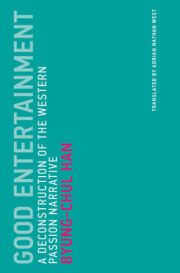
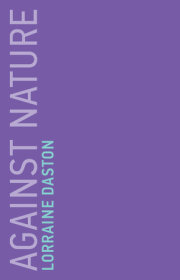
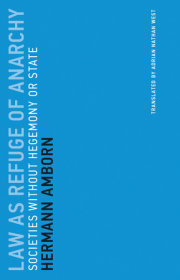










In honor of Arab American Heritage Month in April, we are sharing books by Arab and Arab American authors that share their culture, history, and personal lives.
For National Poetry Month in April, we are sharing poetry collections and books about poetry by authors who have their own stories to tell. These poets delve into history, reimagine the present, examine poetry itself—from traditional poems many know and love to poems and voices that are new and original.