
By: John Freeman
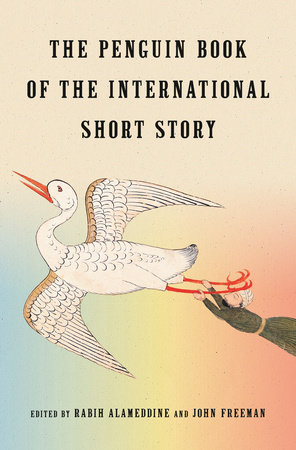
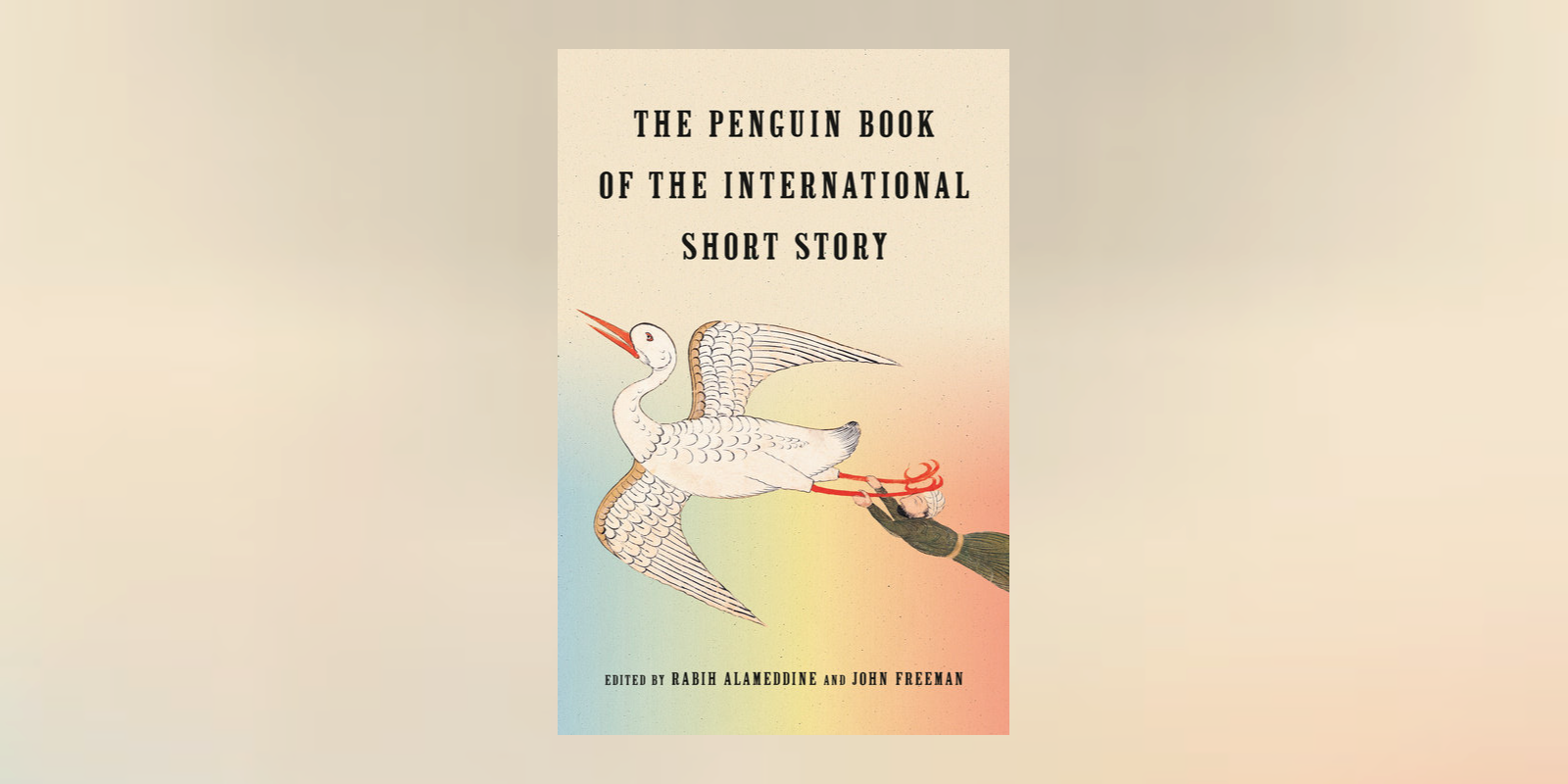
A few years ago, a friend and I were teaching classes on writing short fiction at the same time. He is from Lebanon, and I am from California, he is a small, fabulous man and every time I get a haircut my wife says you look like you’re in the CIA. But my friend and I had one thing in common: we like to travel in what we read. Every time I saw him he’d bring out a new author I had not read and therefore my life was about to be changed forever. What a record he had; five went on to win the Nobel Prize. Anyway, as teachers, we found teaching a peripatetic aesthetic was not hard to accommodate, especially when teaching the novel. You simply assigned one book at a time. But the semester we taught short fiction we discovered a problem. There wasn’t an anthology which was as up-to-date as our own reading. Where was an anthology with Olga Tokarczuk, Adania Shibi, Samanta Schweblin, Mieko Kawakami and Colm Toibin in the same pages? These were our gods and goddesses of the short form. My friend, as I said, is fabulous, and boy does he know it — his name is Rabih Alameddine and this issue with his awareness of his greatness has not been helped by him winning a National Book Award for his novel, The True True Story of Raja the Gullible (and his Mother), but that’s another story. Still, even he knows he doesn’t know everything. For me, my library card was my first passport. It got a lot more use than my actual one. Anyway, at the end of the semester, we decided to make an anthology of our own. One that didn’t presume the ground on which we were teaching was the center of the world, or that European languages were the height of civilization. We wanted a truly global book, and one that featured writers who were mostly alive. The Penguin Book of the International Short Story is what we came up with—a little over 30 stories from writers scattered around the world, working in different traditions, all showing us the huge range of what the story can be, and where it can take us. In a world where holding a passport is harder than ever, I hope it is a gateway for your students to discover, be enchanted, and to move with freedom.
The Penguin Book of the International Short Story includes:
“Superfrog Saves Tokyo,” by Haruki Murakami, translated by Jay Rubin
“The Illumination of Santiago,” by Nona Fernández, translated by Idra Novey
“Apples, by Gunnhild Øyehaug,” translated by Kari Dickson
“My Sad Dead, by Mariana Enriquez,” translated by Megan McDowell
“War of the Clowns, by Mia Couto,” translated by Eric M.B Becker
“One Minus One,” by Colm Tóibín
“The Flower Garden,” by Mieko Kawakami, translated by Hitomi Yoshio
“Night Women,” by Edwidge Danticat
“The July War,” by Rabih Alameddine
“Cattle Praise Song,” by Scholastique Mukasonga, translated by Melanie Mauthner
“Garments,” by Tahmima Anam
“Rotten Stench,” by Eva Kurniawan, translated by Annie Tucker
“Amira, Who Knows,” by Rawaa Sonbol, translated by Katharine Halls
“Petite Mort,” by Zanta Nkumane
“Girl,” by Jamaica Kincaid
“The Fruit of My Woman,” by Han Kang, translated by Deborah Smith
“Vertical Motion,” by Can Xue, translated by Karen Gernant and Chen Zeping
“You Can’t Get Lost in Cape Town,” by Zoë Wicomb
“Squatting,” by Diao Duo, translated by Brendan O’Kane
“Sparks,” by Carol Bensimon, translated by Beth Fowler
“Exhalation,” by Ted Chiang
“The Ugliest Woman in the World,” by Olga Tokarczuk, translated by Antonia Lloyd-Jones
“The Good Denis,” by Marie Ndiaye, translated by Jordan Stump
“Frogs,” by Mo Yan, translated by Howard Goldblatt
“On the Occasion of Our Fourth Divorce Anniversary,” by Lana Bastašić
“Loba Lamar’s Last Kiss,” by Pedro Lemebel, translated by Gwendolyn Harper
“The Free Radio,” by Salman Rushdie
“The Wounded Man,” by Abdellah Taïa, translated by Frank Stock
“Forty-Eight Steps,” by Paxima Mojavezi, translated by Sara Khalili
“Magnificat,” by Linnea Axelsson, translated by Saskia Vogel
“A Bright and Ambitious Good-Hearted Leftist,” by Adania Shibli, translated by Christopher Stone
“Islands,” by Aleksandar Hemon
“Offside,” by Cristina Rivera Garza, translated by Sarah Booker
“An Unlucky Man,” by Samanta Schweblin, translated by Megan McDowell
John Freeman is the editor of Freeman’s, a literary annual of new writing, and executive editor at Alfred A. Knopf. His books include How to Read a Novelist and Dictionary of the Undoing, as well as Tales of Two Americas, an anthology about income inequality in America, and Tales of Two Planets, an anthology of new writing about inequality and the climate crisis globally. He is also the author of two poetry collections, Maps and The Park. His work is translated into more than twenty languages, and has appeared in The New Yorker, The Paris Review, and The New York Times. The former editor of Granta, he teaches writing at New York University.
Rabih Alameddine is the author of Koolaids, The Perv, and I, the Divine. He divides his time between San Francisco and Beirut.