
Dear Reader,
Nearly 25 years since the attacks of September 11, 2001, writers, scholars, and the American public are still coming to understand their long-reaching effect—on civil liberties, civil discourse, and on domestic and global power dynamics—even as our domestic and global present continues to be shaded by the attacks and the U.S. response.
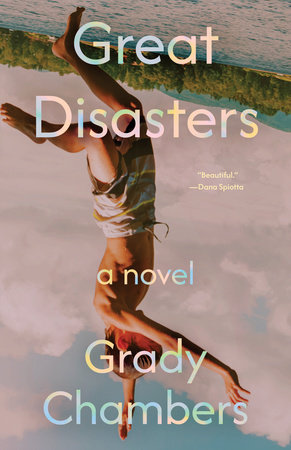
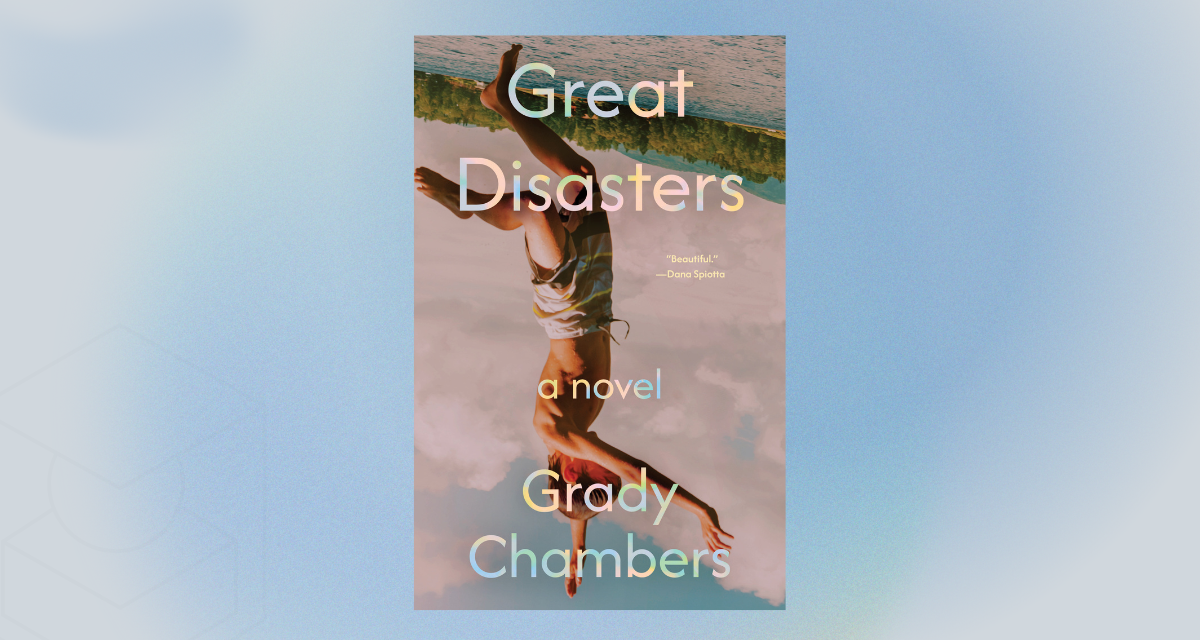
My new novel, Great Disasters, takes place in Chicago in the decade following 9/11. Set amidst the start of the wars in Iraq and Afghanistan and the protests against them, the book follows six friends coming of age in that context: one joins the military, others join the protests, and all reckon with a changing relationship to an altered country and their shared past.
It’s also a story that touches on the male loneliness epidemic, portraying a group of young men reckoning with culturally received notions of stoic masculinity. In their uneasy attempts to fit into these inherited molds, they find themselves increasingly retreating into alcohol and isolation, unable to proudly wear the masks of American masculinity but uncertain of who they are without them. The end result is an intimate portrait of life in America during a uniquely turbulent decade that encompassed 9/11, the start of American military campaigns in Iraq and Afghanistan, the presidency of George W. Bush, the election of Barack Obama, the financial collapse of 2008, and the beginnings of the Occupy Wall Street movement.
In the vein of Dana Spiotta’s Eat the Document, Philip Roth’s American Pastoral, and Ben Lerner’s The Topeka School, Great Disasters attempts to capture the mood and complexity of a volatile era in American history. Themes and topics of the book include:
- Political protest
- Legacies of activism
- The ties between the antiwar movement of the 1960s / 1970s and the antiwar movement of the early 2000s
- Friendship, love, class and privilege, masculinity, addiction, coming of age, and the male loneliness epidemic.
The book would be an illuminating addition to the syllabus for courses across a variety of disciplines, including:
- Political Science courses focused on post 9/11 America
- Contemporary Literature courses
- Courses exploring representations of masculinity
- Film courses with a focus on America during wartime or political protest in film
Great Disasters is a portrait of disasters big and small, personal and political. Even as the book takes on big global issues, the story at its core is an intimate one about love, friendship, growing up, growing apart, and how we might be better—towards each other and ourselves. At a time in which many people are asking how to make their voices heard in the face of large-scale forces, I hope that the book’s themes and sensibility will resonate with you and your students.
Grady Chambers is the author of the poetry collection North American Stadiums (Milkweed Editions, 2018), winner of the Max Ritvo Poetry Prize. Grady was born and raised on the north side of Chicago, and lives in Philadelphia. His writing can be found in The Atlantic, The Paris Review, American Poetry Review, The Sun, and many other publications. Grady is a former Wallace Stegner Fellow, and received his MFA in Creative Writing from Syracuse University. More info at gradychambers.com.