
Dear reader,
Do you remember the first time you fell in love? What words come to mind? Can you picture the season? If flowers were fully in bloom, or if the trail paths had grown silent from birds that had flown the nest? And of loss, do you remember how old you were the first time you were faced with death? With all its consuming pain and sadness. What language did you have to articulate your grief? I wrote How We Named the Stars in an attempt to offer what I learned at a young age of falling in love and losing someone so utterly dear to me.
The trees were green, I remember that. From the running path, I could hear the crashing waves. All this to say, life was so utterly alive when I received the news of a friend’s passing. But I survived that chapter of life, my novel its testament.
In many societies, turning eighteen marks the start of adult life. So much so, we readily send young people out into the world, be it higher education, sometimes into the battlefield, sometimes the workforce. Wherever these young people end up, rarely do we offer any instruction, or roadmap that might illuminate what to do with these newfound freedoms. But adults they are and adult matters they must contend with – love, desire, pain, and loss. In essence, these newly minted adults must wrangle intense emotion that burrs through them while learning to describe their place in the world, now free from the reigns of parents or guardians.
When I went to university, I had no blueprint for navigating the hallowed halls of higher education. Born into a larger Mexican immigrant family, son of two hardworking parents who did not have college degrees, I was left to figure out many things on my own. Yet, my peers and I did not easily talk about this strange isolation. It was only as I got older that I learned there were many friends – often from racialized, immigrant, and working-class backgrounds – who were left to survive the heady experience of trying to navigate their recently classed adult status and being the first in their family to attend college.
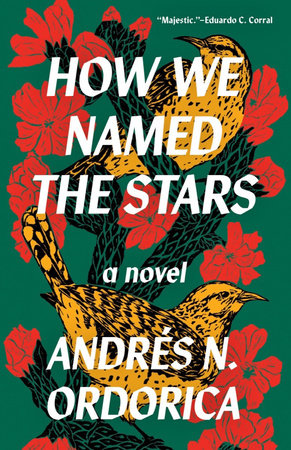
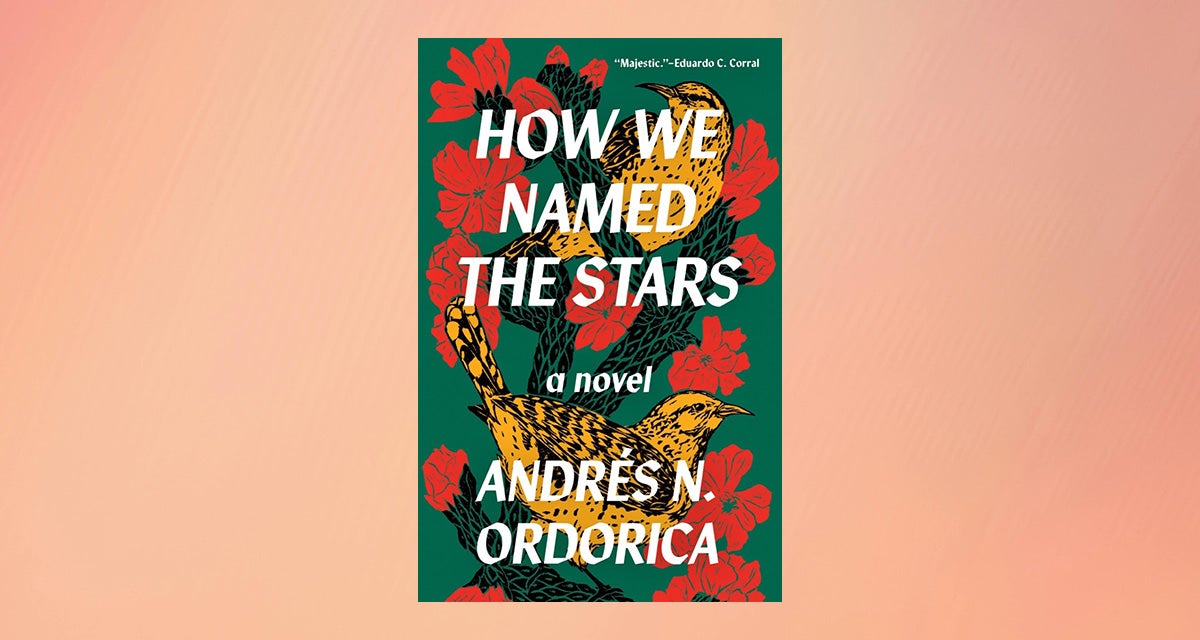
Memories of this strange, liminal space is what drew me to write How We Named the Stars. The novel follows the story of Daniel over one profoundly life-altering year as he attends a prestigious college on the east coast of the United States. Having left his sleepy town in northern California and traded it for the bucolic hills of Ithaca, New York, Daniel quickly comes face to face with the pains of growing up and not yet knowing his place in the world. But he soon finds home and friendship in his roommate, Sam, another Californian transplant but at oft times his polar opposite. In the months that follow, their friendship blossoms into something closer to love which will test both young men as they work further to understand who they are now in their adult life.
For me, these halcyon days were ripe with opportunity to explore ideas of love and loss, informed by a real understanding of how transformative both those words are at such an age. Having lost a dear childhood friend at the end of my sophomore year of college, I wanted to use this story to honor what it meant to face death and loss so young in life. So much of the novel is about Daniel trying to make sense of how he will move forward in his life after losing Sam (this is in no way a spoiler, I inform the reader on page 4 that Sam has passed away). In essence, the novel works as a love letter to Sam, and perhaps, in some ways, a love letter to a younger self who has yet to learn of all the unwieldy emotion life will press upon him. This kind of hindsight afforded by age also inspired the epistolary nature of the novel. Daniel, ultimately, is navigating two timelines. More recently, the aftermath of Sam’s death and preparing to start his second year of university in a matter of days, but also the past to which he is recounting to Sam, sifting through the debris of heartache and loss while attempting to help both that past self and his present overcome the swelling nature of grief.
From Great Expectations to Sons and Lovers the ‘bildungsroman’ has been regarded as a great literary tradition that captures coming of age and making sense of one’s identity. I see this novel as drawing upon that heritage while imbuing it with questions of culture, homeland, and sexuality that I did not have ready access to during my own young to new adult years.
I have been so lucky to receive countless messages and emails from readers of every age, who share their appreciation of a book that wrangles with what it means to grieve, but more importantly, what it means to honor and celebrate our short time on earth.
I hope that young people will be able to see some of themselves in Daniel and Sam’s story. How We Named the Stars is just one man’s articulation of love and loss, but hopefully it will afford you some language in how to talk about death and how to live a free and fearless life.
In gratitude,
Andrés N. Ordorica

© Daniel McGowan Photography
Andrés N. Ordorica is a queer Latinx poet, writer, and educator. Drawing on his family’s immigrant history and his own third culture upbringing, his writing maps the journey of diaspora and unpacks what it means to be from ni de aquí, ni de allá (neither here, nor there). He is the author of the poetry collection At Least This I Know and currently resides in Edinburgh, Scotland.