

Books for Arab American Heritage Month
In honor of Arab American Heritage Month in April, we are sharing books by Arab and Arab American authors that share their culture, history, and personal lives.


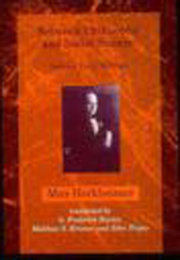
Liebersohn portrays his subjects as thinkers who were deeply immersed in the politics and poetry of their time, and whose sociology benefited in unexpected ways from sources as diverse as medieval mysticism and Nietzsche's Birth of Tragedy. He maps out their shared sociological discourse, shaped in response to the fragmentation they perceived in public life, in education and the arts, and in Protestant religious life.
German sociology has generally been interpreted as having a tragic perspective on modern society (as implied by the pervasive idiom of "fate"); Liebersohn argues that this sense of fate was matched by an underlying utopian hope for an end to fragmentation, rooted for all of his subjects in the Lutheran idea of community.The book's five biographical chapters are structured to discuss ideas of community, society, and personality in the work of the individual discussed, while there is a general movement among the chapters from community to society to socialism. Many specific texts are discussed, and the overall orientation is one of intellectual history rather than sociological analysis.
Liebersohn portrays his subjects as thinkers who were deeply immersed in the politics and poetry of their time, and whose sociology benefited in unexpected ways from sources as diverse as medieval mysticism and Nietzsche's Birth of Tragedy. He maps out their shared sociological discourse, shaped in response to the fragmentation they perceived in public life, in education and the arts, and in Protestant religious life.
German sociology has generally been interpreted as having a tragic perspective on modern society (as implied by the pervasive idiom of "fate"); Liebersohn argues that this sense of fate was matched by an underlying utopian hope for an end to fragmentation, rooted for all of his subjects in the Lutheran idea of community.The book's five biographical chapters are structured to discuss ideas of community, society, and personality in the work of the individual discussed, while there is a general movement among the chapters from community to society to socialism. Many specific texts are discussed, and the overall orientation is one of intellectual history rather than sociological analysis.



















In honor of Arab American Heritage Month in April, we are sharing books by Arab and Arab American authors that share their culture, history, and personal lives.
For National Poetry Month in April, we are sharing poetry collections and books about poetry by authors who have their own stories to tell. These poets delve into history, reimagine the present, examine poetry itself—from traditional poems many know and love to poems and voices that are new and original.