
Books for Arab American Heritage Month
In honor of Arab American Heritage Month in April, we are sharing books by Arab and Arab American authors that share their culture, history, and personal lives.


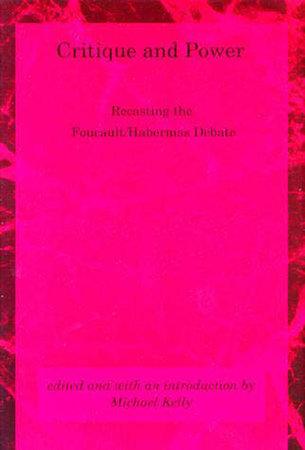
Which paradigm of critique—Foucault's or Habermas's—is philosophically and practically superior, especially with regard to the nature and role of power in contemporary society? In shaping this collection, Michael Kelly has sought to address this question in relation to the ethical, political, and social theory of the past two decades. Michel Foucault and Jurgen Habermas had only just begun to come to terms with one another's work when Foucault died in 1984; they had even discussed the possibility of a formal debate on "Enlightenment" in the neutral arena of the United States. In the decade since, Habermas and his supporters have continued to respond to Foucault in various ways, but Foucault's followers have not shown as strong an inclination to keep up his side of the dialogue. For this reason an invaluable exchange on the nature and limits of philosophy in the present age has never achieved its full potential. In this anthology Michael Kelly recasts the debate in a way that will open it up for further development. The book starts by juxtaposing key texts from the two philosophers; it then adds a set of reactions and commentaries by theorists who have taken up the two alternative approaches to power and critique. (Two of these essays were written especially for this volume.) The result is a guide for those seeking to understand and build on this important but unfinished debate.
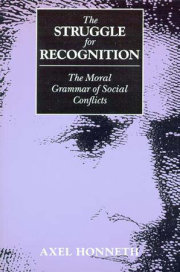
Essays by: Michel Foucault. Jürgen Habermas. Axel Honneth. Nancy Fraser. Richard Bernstein. Thomas McCarthy. James Schmidt and Thomas E. Wartenberg. Gilles Deleuze. Jana Sawicki. Michael Kelly.
Which paradigm of critique—Foucault's or Habermas's—is philosophically and practically superior, especially with regard to the nature and role of power in contemporary society? In shaping this collection, Michael Kelly has sought to address this question in relation to the ethical, political, and social theory of the past two decades. Michel Foucault and Jurgen Habermas had only just begun to come to terms with one another's work when Foucault died in 1984; they had even discussed the possibility of a formal debate on "Enlightenment" in the neutral arena of the United States. In the decade since, Habermas and his supporters have continued to respond to Foucault in various ways, but Foucault's followers have not shown as strong an inclination to keep up his side of the dialogue. For this reason an invaluable exchange on the nature and limits of philosophy in the present age has never achieved its full potential. In this anthology Michael Kelly recasts the debate in a way that will open it up for further development. The book starts by juxtaposing key texts from the two philosophers; it then adds a set of reactions and commentaries by theorists who have taken up the two alternative approaches to power and critique. (Two of these essays were written especially for this volume.) The result is a guide for those seeking to understand and build on this important but unfinished debate.
Essays by: Michel Foucault. Jürgen Habermas. Axel Honneth. Nancy Fraser. Richard Bernstein. Thomas McCarthy. James Schmidt and Thomas E. Wartenberg. Gilles Deleuze. Jana Sawicki. Michael Kelly.

In honor of Arab American Heritage Month in April, we are sharing books by Arab and Arab American authors that share their culture, history, and personal lives.
For National Poetry Month in April, we are sharing poetry collections and books about poetry by authors who have their own stories to tell. These poets delve into history, reimagine the present, examine poetry itself—from traditional poems many know and love to poems and voices that are new and original.