
Books for Arab American Heritage Month
In honor of Arab American Heritage Month in April, we are sharing books by Arab and Arab American authors that share their culture, history, and personal lives.


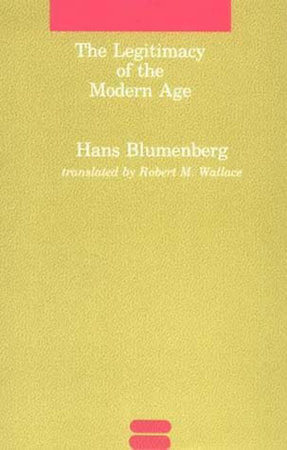
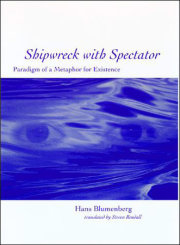
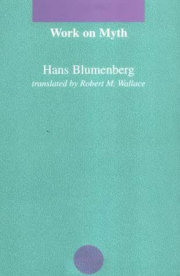
It has been left for Blumenberg to write a major treatise on the metaphysical tradition which unites intellectual history with critical dissection of the concept of 'secularization': a concept that has served two generations of writers in their efforts to make sense of the modern world. What Blumenberg has done, to put it briefly, is to describe the disintegration of the medieval world-view as a consequence of latent contradictions already present in the scholastic tradition: ultimately in the synthesis of early Christianity and neo-Platonism inherited by the European middle ages. However, this formulation supplies only the feeblest sort of pointer to the importance of a work whose author is no mere historian but an original thinker in his own right, equipped with the sort of synthesizing faculty which was the pride of German scholarship in its great age.
—The Times Literary Supplement—Modern science buried centuries of theological controversy. Hans Blumenberg has unearthed these controversies again, rethinking the dilemmas and dead ends of Christian dogma that provided the intellectual provocations for the scientific revolution.... But Blumenberg has not merely written a scholarly, nuanced, and illuminating study of the religious background to modern science. He has also written a philosophical book, a combative response to the dim Romantic suggestion more common in Germany than America, that the modern age 'as a whole' is somehow illegitimate.
—Stephen Holmes, The American Political Science Review—It has been left for Blumenberg to write a major treatise on the metaphysical tradition which unites intellectual history with critical dissection of the concept of 'secularization': a concept that has served two generations of writers in their efforts to make sense of the modern world. What Blumenberg has done, to put it briefly, is to describe the disintegration of the medieval world-view as a consequence of latent contradictions already present in the scholastic tradition: ultimately in the synthesis of early Christianity and neo-Platonism inherited by the European middle ages. However, this formulation supplies only the feeblest sort of pointer to the importance of a work whose author is no mere historian but an original thinker in his own right, equipped with the sort of synthesizing faculty which was the pride of German scholarship in its great age.
—The Times Literary Supplement—Modern science buried centuries of theological controversy. Hans Blumenberg has unearthed these controversies again, rethinking the dilemmas and dead ends of Christian dogma that provided the intellectual provocations for the scientific revolution.... But Blumenberg has not merely written a scholarly, nuanced, and illuminating study of the religious background to modern science. He has also written a philosophical book, a combative response to the dim Romantic suggestion more common in Germany than America, that the modern age 'as a whole' is somehow illegitimate.
—Stephen Holmes, The American Political Science Review—



In honor of Arab American Heritage Month in April, we are sharing books by Arab and Arab American authors that share their culture, history, and personal lives.
For National Poetry Month in April, we are sharing poetry collections and books about poetry by authors who have their own stories to tell. These poets delve into history, reimagine the present, examine poetry itself—from traditional poems many know and love to poems and voices that are new and original.
/