
Books for Arab American Heritage Month
In honor of Arab American Heritage Month in April, we are sharing books by Arab and Arab American authors that share their culture, history, and personal lives.


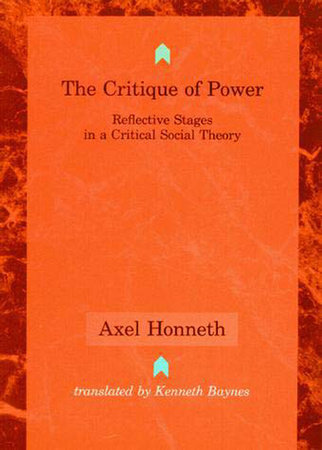
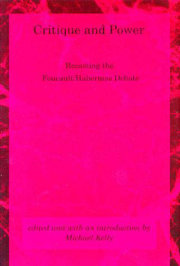
Axel Honneth's Critique of Power is a rich interpretation of the history of critical theory, which clarifies its central problems and emphasizes the "social" factors that should provide that theory with a normative and practical orientation.
Honneth focuses on the dialog between French and German social theory that was beginning at the time of Michel Foucault's death. It traces the common roots of the work of Foucault and Jürgen Habermas to a basic text of the last generation of critical theorists—Max Horkheimer and Theodor Adorno's Dialectic of Enlightenment—and draws from this connection the outline of a program that might unite and surpass their seemingly irreconcilable methods of critiquing power structures. In doing so, Honneth provides a constructive and nonpolemical framework for comparisons between the two theorists. And he presents a novel interpretation of Foucault's analysis of social systems.
Honneth traces the internal contradictions in critical theory through an analysis of Horkheimer's early programmatic writings, the Dialectic of Enlightenment, and Adorno's later social-theoretical writings. He shows how Habermas and Foucault in their distinctive ways reinserted the social world into critical theory but argues that neither operation has been wholly successful. His cogent analysis redirects critical social theory in ways that can draw on the strengths and avoid the weaknesses of the two approaches.
Axel Honneth's Critique of Power is a rich interpretation of the history of critical theory, which clarifies its central problems and emphasizes the "social" factors that should provide that theory with a normative and practical orientation.
Honneth focuses on the dialog between French and German social theory that was beginning at the time of Michel Foucault's death. It traces the common roots of the work of Foucault and Jürgen Habermas to a basic text of the last generation of critical theorists—Max Horkheimer and Theodor Adorno's Dialectic of Enlightenment—and draws from this connection the outline of a program that might unite and surpass their seemingly irreconcilable methods of critiquing power structures. In doing so, Honneth provides a constructive and nonpolemical framework for comparisons between the two theorists. And he presents a novel interpretation of Foucault's analysis of social systems.
Honneth traces the internal contradictions in critical theory through an analysis of Horkheimer's early programmatic writings, the Dialectic of Enlightenment, and Adorno's later social-theoretical writings. He shows how Habermas and Foucault in their distinctive ways reinserted the social world into critical theory but argues that neither operation has been wholly successful. His cogent analysis redirects critical social theory in ways that can draw on the strengths and avoid the weaknesses of the two approaches.


















In honor of Arab American Heritage Month in April, we are sharing books by Arab and Arab American authors that share their culture, history, and personal lives.
For National Poetry Month in April, we are sharing poetry collections and books about poetry by authors who have their own stories to tell. These poets delve into history, reimagine the present, examine poetry itself—from traditional poems many know and love to poems and voices that are new and original.