
Books for Arab American Heritage Month
In honor of Arab American Heritage Month in April, we are sharing books by Arab and Arab American authors that share their culture, history, and personal lives.


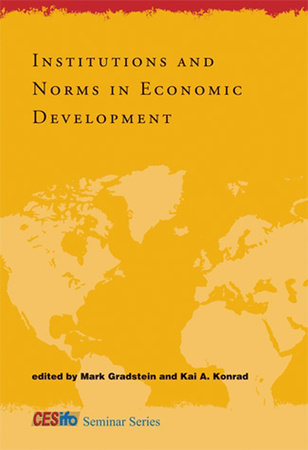
Recent decades have seen almost unprecedented economic growth in income per capita around the world. Yet this extraordinary overall performance masks a wide variation in growth rates across different countries, with persistent underdevelopment in some parts of the world. This disparity constitutes “the development puzzle,” and it is exemplified by growth spurts in China and India that contrast markedly with disturbingly low growth rates in sub-Saharan Africa. In this volume, economists address issues of inequality and growth, going beyond narrowly defined “economic” factors to consider the effect on growth of the structure of governance, the quality of a country's governing bodies, and the social norms that govern collective decision-making. The contributors use both formal modeling and empirical analyses to examine how the “soft factors” of institutions and norms interact with growth performance, natural resource endowments, and economic performance. They consider such topics as the effects of decentralization in Africa, fiscal discipline in Indian states, natural resource wealth as a cause of corruption, social violence during the Indonesian financial crisis of 1997 and 1998, and the effect of strong national identity on redistributive politics. Some of their findings suggest that not only do institutions and norms affect economic performance, economic performance itself is a key factor in explaining such governance failures as corruption and the frequency and intensity of economic conflict.
Recent decades have seen almost unprecedented economic growth in income per capita around the world. Yet this extraordinary overall performance masks a wide variation in growth rates across different countries, with persistent underdevelopment in some parts of the world. This disparity constitutes “the development puzzle,” and it is exemplified by growth spurts in China and India that contrast markedly with disturbingly low growth rates in sub-Saharan Africa. In this volume, economists address issues of inequality and growth, going beyond narrowly defined “economic” factors to consider the effect on growth of the structure of governance, the quality of a country's governing bodies, and the social norms that govern collective decision-making. The contributors use both formal modeling and empirical analyses to examine how the “soft factors” of institutions and norms interact with growth performance, natural resource endowments, and economic performance. They consider such topics as the effects of decentralization in Africa, fiscal discipline in Indian states, natural resource wealth as a cause of corruption, social violence during the Indonesian financial crisis of 1997 and 1998, and the effect of strong national identity on redistributive politics. Some of their findings suggest that not only do institutions and norms affect economic performance, economic performance itself is a key factor in explaining such governance failures as corruption and the frequency and intensity of economic conflict.






In honor of Arab American Heritage Month in April, we are sharing books by Arab and Arab American authors that share their culture, history, and personal lives.
For National Poetry Month in April, we are sharing poetry collections and books about poetry by authors who have their own stories to tell. These poets delve into history, reimagine the present, examine poetry itself—from traditional poems many know and love to poems and voices that are new and original.