
Books for Arab American Heritage Month
In honor of Arab American Heritage Month in April, we are sharing books by Arab and Arab American authors that share their culture, history, and personal lives.


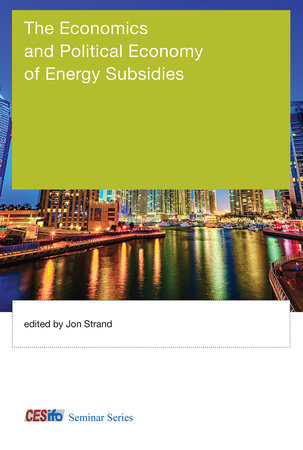
Government subsidies to energy are widespread and represent a heavy burden on public budgets in many countries. Both producers and consumers may be subsidized; the most common subsidies are for motor fuel consumption and electricity production and consumption. The subsidies to consumers often prove particularly harmful because they result in increased energy consumption, increased carbon emissions, and distortionary effects on consumer behavior. This book fills a void in the literature by providing a first, broad and diverse, analysis of several aspects of the economic and political economy aspects of government energy subsidies. The contributors take both theoretical and empirical approaches, with most of the focus on subsidies to fuel and electricity in non-OECD countries.
The chapters cover such topics as energy pricing, reelection incentives for politicians that may encourage excessive subsidies; political corruption and “bribing equilibria,” the the “resource curse” in developing countries when the gains from natural resource windfalls are largely wasted, the “entitlement” of energy subsidies in autocracies, and distributional issues when subsidies targeted to the poor are removed in high-income countries. One chapter discusses nonharmful subsidies: the potential economic effects of subsidizing the manufacturing and deployment of renewable energy.
Contributors
Carolyn Fischer, Mads Greaker, Mohammad Habibpour, Michelle Harding, Christina Kolerus, Christos Kotsogiannis, Jim Krane, Alber Touna Mama, Raffaele Miniaci, Marco Pani, Ian Parry, Carlo Perroni, Leonzio Rizzo, Knut Einar Rosendahl, Carlo Scarpa, Neda Seiban, Suphi Sen, Jon Strand, Paola Valbonesi, Herman Vollebergh
Government subsidies to energy are widespread and represent a heavy burden on public budgets in many countries. Both producers and consumers may be subsidized; the most common subsidies are for motor fuel consumption and electricity production and consumption. The subsidies to consumers often prove particularly harmful because they result in increased energy consumption, increased carbon emissions, and distortionary effects on consumer behavior. This book fills a void in the literature by providing a first, broad and diverse, analysis of several aspects of the economic and political economy aspects of government energy subsidies. The contributors take both theoretical and empirical approaches, with most of the focus on subsidies to fuel and electricity in non-OECD countries.
The chapters cover such topics as energy pricing, reelection incentives for politicians that may encourage excessive subsidies; political corruption and “bribing equilibria,” the the “resource curse” in developing countries when the gains from natural resource windfalls are largely wasted, the “entitlement” of energy subsidies in autocracies, and distributional issues when subsidies targeted to the poor are removed in high-income countries. One chapter discusses nonharmful subsidies: the potential economic effects of subsidizing the manufacturing and deployment of renewable energy.
Contributors
Carolyn Fischer, Mads Greaker, Mohammad Habibpour, Michelle Harding, Christina Kolerus, Christos Kotsogiannis, Jim Krane, Alber Touna Mama, Raffaele Miniaci, Marco Pani, Ian Parry, Carlo Perroni, Leonzio Rizzo, Knut Einar Rosendahl, Carlo Scarpa, Neda Seiban, Suphi Sen, Jon Strand, Paola Valbonesi, Herman Vollebergh


In honor of Arab American Heritage Month in April, we are sharing books by Arab and Arab American authors that share their culture, history, and personal lives.
For National Poetry Month in April, we are sharing poetry collections and books about poetry by authors who have their own stories to tell. These poets delve into history, reimagine the present, examine poetry itself—from traditional poems many know and love to poems and voices that are new and original.