









































Books for Jewish American Heritage Month
In celebration of Jewish American Heritage Month in May, we are sharing books by authors who share their individual stories, experiences, and lives. Find our full collection of books here.
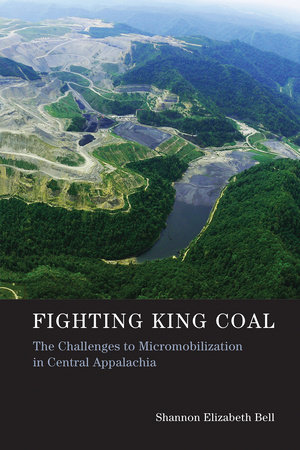
In the coal-mining region of Central Appalachia, mountaintop-removal mining and coal-industry-related flooding, water contamination, and illness have led to the emergence of a grassroots, women-driven environmental justice movement. But the number of local activists is small relative to the affected population, and recruiting movement participants from within the region is an ongoing challenge.
In Fighting King Coal, Shannon Elizabeth Bell examines an understudied puzzle within social movement theory: why so few of the many people who suffer from industry-produced environmental hazards and pollution rise up to participate in social movements aimed at bringing about social justice and industry accountability. Using the coal-mining region of Central Appalachia as a case study, Bell investigates the challenges of micromobilization through in-depth interviews, participant observation, content analysis, geospatial viewshed analysis, and an eight-month “Photovoice” project—an innovative means of studying, in real time, the social dynamics affecting activist involvement in the region. Although the Photovoice participants took striking photographs and wrote movingly about the environmental destruction caused by coal production, only a few became activists. Bell reveals the importance of local identities to the success or failure of local recruitment efforts in social movement struggles, ultimately arguing that, if the local identities of environmental justice movements are lost, the movements may also lose their power.
In the coal-mining region of Central Appalachia, mountaintop-removal mining and coal-industry-related flooding, water contamination, and illness have led to the emergence of a grassroots, women-driven environmental justice movement. But the number of local activists is small relative to the affected population, and recruiting movement participants from within the region is an ongoing challenge.
In Fighting King Coal, Shannon Elizabeth Bell examines an understudied puzzle within social movement theory: why so few of the many people who suffer from industry-produced environmental hazards and pollution rise up to participate in social movements aimed at bringing about social justice and industry accountability. Using the coal-mining region of Central Appalachia as a case study, Bell investigates the challenges of micromobilization through in-depth interviews, participant observation, content analysis, geospatial viewshed analysis, and an eight-month “Photovoice” project—an innovative means of studying, in real time, the social dynamics affecting activist involvement in the region. Although the Photovoice participants took striking photographs and wrote movingly about the environmental destruction caused by coal production, only a few became activists. Bell reveals the importance of local identities to the success or failure of local recruitment efforts in social movement struggles, ultimately arguing that, if the local identities of environmental justice movements are lost, the movements may also lose their power.
In celebration of Jewish American Heritage Month in May, we are sharing books by authors who share their individual stories, experiences, and lives. Find our full collection of books here.
For Mental Health Awareness Month in May, we are sharing books to educate and raise awareness about mental health and the various factors that may affect it, and to provide tools and resources for student wellness. Find our full collection of titles here.
Each May, we honor the stories, histories, and cultures of Asian Americans, Native Hawaiians, and Pacific Islanders. Below is a selection of acclaimed fiction and nonfiction books by AANHPI creators to share with your students this month and throughout the year. Find our full collection of titles for Higher Education here.