Books for Jewish American Heritage Month
In celebration of Jewish American Heritage Month in May, we are sharing books by authors who share their individual stories, experiences, and lives. Find our full collection of books here.
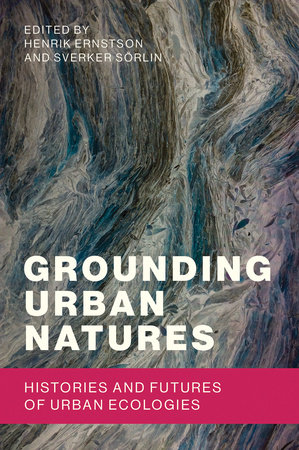
The global discourse around urban ecology tends to homogenize and universalize, relying on such terms as “smart cities,” “eco-cities,” and “resilience,” and proposing a “science of cities” based largely on information from the Global North. Grounding Urban Natures makes the case for the importance of place and time in understanding urban environments. Rather than imposing a unified framework on the ecology of cities, the contributors use a variety of approaches across a range of of locales and timespans to examine how urban natures are part of—and are shaped by—cities and urbanization. Grounding Urban Natures offers case studies from cities on five continents that demonstrate the advantages of thinking comparatively about urban environments.
The contributors consider the diversity of urban natures, analyzing urban ecologies that range from the coastal delta of New Orleans to real estate practices of the urban poor in Lagos. They examine the effect of popular movements on the meanings of urban nature in cities including San Francisco, Delhi, and Berlin. Finally, they explore abstract urban planning models and their global mobility, examining real-world applications in such cities as Cape Town, Baltimore, and the Chinese “eco-city” Yixing.
Contributors
Martín Ávila, Amita Baviskar, Jia-Ching Chen, Henrik Ernstson, James Evans, Lisa M. Hoffman, Jens Lachmund, Joshua Lewis, Lindsay Sawyer, Sverker Sörlin, Anne Whiston Spirn, Lance van Sittert, Richard A. Walker

The global discourse around urban ecology tends to homogenize and universalize, relying on such terms as “smart cities,” “eco-cities,” and “resilience,” and proposing a “science of cities” based largely on information from the Global North. Grounding Urban Natures makes the case for the importance of place and time in understanding urban environments. Rather than imposing a unified framework on the ecology of cities, the contributors use a variety of approaches across a range of of locales and timespans to examine how urban natures are part of—and are shaped by—cities and urbanization. Grounding Urban Natures offers case studies from cities on five continents that demonstrate the advantages of thinking comparatively about urban environments.
The contributors consider the diversity of urban natures, analyzing urban ecologies that range from the coastal delta of New Orleans to real estate practices of the urban poor in Lagos. They examine the effect of popular movements on the meanings of urban nature in cities including San Francisco, Delhi, and Berlin. Finally, they explore abstract urban planning models and their global mobility, examining real-world applications in such cities as Cape Town, Baltimore, and the Chinese “eco-city” Yixing.
Contributors
Martín Ávila, Amita Baviskar, Jia-Ching Chen, Henrik Ernstson, James Evans, Lisa M. Hoffman, Jens Lachmund, Joshua Lewis, Lindsay Sawyer, Sverker Sörlin, Anne Whiston Spirn, Lance van Sittert, Richard A. Walker
In celebration of Jewish American Heritage Month in May, we are sharing books by authors who share their individual stories, experiences, and lives. Find our full collection of books here.
For Mental Health Awareness Month in May, we are sharing books to educate and raise awareness about mental health and the various factors that may affect it, and to provide tools and resources for student wellness. Find our full collection of titles here.
Each May, we honor the stories, histories, and cultures of Asian Americans, Native Hawaiians, and Pacific Islanders. Below is a selection of acclaimed fiction and nonfiction books by AANHPI creators to share with your students this month and throughout the year. Find our full collection of titles for Higher Education here.