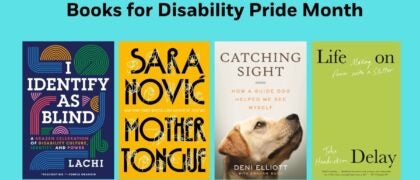
Books for Jewish American Heritage Month
In celebration of Jewish American Heritage Month in May, we are sharing books by authors who share their individual stories, experiences, and lives. Find our full collection of books here.
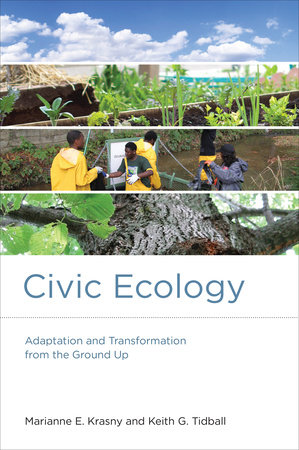
In communities across the country and around the world, people are coming together to rebuild and restore local environments that have been affected by crisis or disaster. In New Orleans after Katrina, in New York after Sandy, in Soweto after apartheid, and in any number of postindustrial, depopulated cities, people work together to restore nature, renew communities, and heal themselves. In Civic Ecology, Marianne Krasny and Keith Tidball offer stories of this emerging grassroots environmental stewardship, along with an interdisciplinary framework for understanding and studying it as a growing international phenomenon.
Krasny and Tidball draw on research in social capital and collective efficacy, ecosystem services, social learning, governance, social-ecological systems, and other findings in the social and ecological sciences to investigate how people, practices, and communities interact. Along the way, they chronicle local environmental stewards who have undertaken such tasks as beautifying blocks in the Bronx, clearing trash from the Iranian countryside, and working with traumatized veterans to conserve nature and recreate community. Krasny and Tidball argue that humans' innate love of nature and attachment to place compels them to restore nature and places that are threatened, destroyed, or lost. At the same time, they report, nature and community exert a healing and restorative power on their stewards.

Civic Ecology is a thoroughly hopeful portrait of the ways that people recover from many kinds of disaster, whether from the sudden devastation of a hurricane to the slow unraveling of economic disinvestment and social fragmentation.... [T]he book offers an inviting introduction to civic ecology for students, an on the ground look at the power of civic ecology practices of policy makers, and a source of inspiration for practitioners and researchers.
—Matthew DelSesto, Agriculture and Human Values—In communities across the country and around the world, people are coming together to rebuild and restore local environments that have been affected by crisis or disaster. In New Orleans after Katrina, in New York after Sandy, in Soweto after apartheid, and in any number of postindustrial, depopulated cities, people work together to restore nature, renew communities, and heal themselves. In Civic Ecology, Marianne Krasny and Keith Tidball offer stories of this emerging grassroots environmental stewardship, along with an interdisciplinary framework for understanding and studying it as a growing international phenomenon.
Krasny and Tidball draw on research in social capital and collective efficacy, ecosystem services, social learning, governance, social-ecological systems, and other findings in the social and ecological sciences to investigate how people, practices, and communities interact. Along the way, they chronicle local environmental stewards who have undertaken such tasks as beautifying blocks in the Bronx, clearing trash from the Iranian countryside, and working with traumatized veterans to conserve nature and recreate community. Krasny and Tidball argue that humans' innate love of nature and attachment to place compels them to restore nature and places that are threatened, destroyed, or lost. At the same time, they report, nature and community exert a healing and restorative power on their stewards.
Civic Ecology is a thoroughly hopeful portrait of the ways that people recover from many kinds of disaster, whether from the sudden devastation of a hurricane to the slow unraveling of economic disinvestment and social fragmentation.... [T]he book offers an inviting introduction to civic ecology for students, an on the ground look at the power of civic ecology practices of policy makers, and a source of inspiration for practitioners and researchers.

—Matthew DelSesto, Agriculture and Human Values—In celebration of Jewish American Heritage Month in May, we are sharing books by authors who share their individual stories, experiences, and lives. Find our full collection of books here.
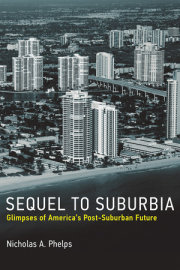
For Mental Health Awareness Month in May, we are sharing books to educate and raise awareness about mental health and the various factors that may affect it, and to provide tools and resources for student wellness. Find our full collection of titles here.
Each May, we honor the stories, histories, and cultures of Asian Americans, Native Hawaiians, and Pacific Islanders. Below is a selection of acclaimed fiction and nonfiction books by AANHPI creators to share with your students this month and throughout the year. Find our full collection of titles for Higher Education here.