






Books for Jewish American Heritage Month
In celebration of Jewish American Heritage Month in May, we are sharing books by authors who share their individual stories, experiences, and lives. Find our full collection of books here.
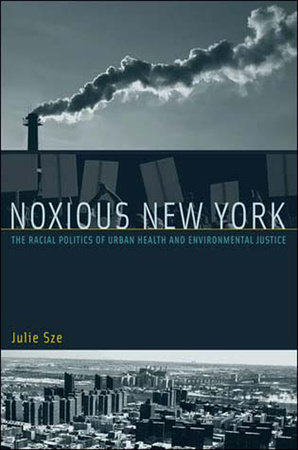
Racial minority and low-income communities often suffer disproportionate effects of urban environmental problems. Environmental justice advocates argue that these communities are on the front lines of environmental and health risks. In Noxious New York, Julie Sze analyzes the culture, politics, and history of environmental justice activism in New York City within the larger context of privatization, deregulation, and globalization. She tracks urban planning and environmental health activism in four gritty New York neighborhoods: Brooklyn's Sunset Park and Williamsburg sections, West Harlem, and the South Bronx. In these communities, activism flourished in the 1980s and 1990s in response to economic decay and a concentration of noxious incinerators, solid waste transfer stations, and power plants. Sze describes the emergence of local campaigns organized around issues of asthma, garbage, and energy systems, and how, in each neighborhood, activists framed their arguments in the vocabulary of environmental justice. Sze shows that the linkage of planning and public health in New York City goes back to the nineteenth century's sanitation movement, and she looks at the city's history of garbage, sewage, and sludge management. She analyzes the influence of race, family, and gender politics on asthma activism and examines community activists' responses to garbage privatization and energy deregulation. Finally, she looks at how activist groups have begun to shift from fighting particular siting and land use decisions to engaging in a larger process of community planning and community-based research projects. Drawing extensively on fieldwork and interviews with community members and activists, Sze illuminates the complex mix of local and global issues that fuels environmental justice activism.
In celebration of Jewish American Heritage Month in May, we are sharing books by authors who share their individual stories, experiences, and lives. Find our full collection of books here.
For Mental Health Awareness Month in May, we are sharing books to educate and raise awareness about mental health and the various factors that may affect it, and to provide tools and resources for student wellness. Find our full collection of titles here.
Each May, we honor the stories, histories, and cultures of Asian Americans, Native Hawaiians, and Pacific Islanders. Below is a selection of acclaimed fiction and nonfiction books by AANHPI creators to share with your students this month and throughout the year. Find our full collection of titles for Higher Education here.