
Books for Jewish American Heritage Month
In celebration of Jewish American Heritage Month in May, we are sharing books by authors who share their individual stories, experiences, and lives. Find our full collection of books here.


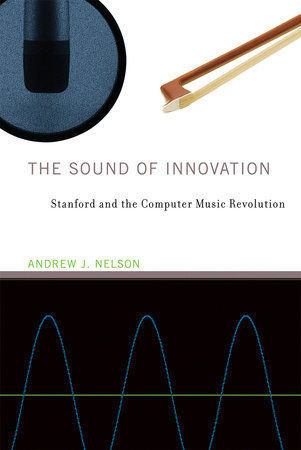
In the 1960s, a team of Stanford musicians, engineers, computer scientists, and psychologists used computing in an entirely novel way: to produce and manipulate sound and create the sonic basis of new musical compositions. This group of interdisciplinary researchers at the nascent Center for Computer Research in Music and Acoustics (CCRMA, pronounced “karma”) helped to develop computer music as an academic field, invent the technologies that underlie it, and usher in the age of digital music. In The Sound of Innovation, Andrew Nelson chronicles the history of CCRMA, tracing its origins in Stanford's Artificial Intelligence Laboratory through its present-day influence on Silicon Valley and digital music groups worldwide.
Nelson emphasizes CCRMA's interdisciplinarity, which stimulates creativity at the intersections of fields; its commitment to open sharing and users; and its pioneering commercial engagement. He shows that Stanford's outsized influence on the emergence of digital music came from the intertwining of these three modes, which brought together diverse supporters with different aims around a field of shared interest. Nelson thus challenges long-standing assumptions about the divisions between art and science, between the humanities and technology, and between academic research and commercial applications, showing how the story of a small group of musicians reveals substantial insights about innovation.
Nelson draws on extensive archival research and dozens of interviews with digital music pioneers; the book's website provides access to original historic documents and other material.
In the 1960s, a team of Stanford musicians, engineers, computer scientists, and psychologists used computing in an entirely novel way: to produce and manipulate sound and create the sonic basis of new musical compositions. This group of interdisciplinary researchers at the nascent Center for Computer Research in Music and Acoustics (CCRMA, pronounced “karma”) helped to develop computer music as an academic field, invent the technologies that underlie it, and usher in the age of digital music. In The Sound of Innovation, Andrew Nelson chronicles the history of CCRMA, tracing its origins in Stanford's Artificial Intelligence Laboratory through its present-day influence on Silicon Valley and digital music groups worldwide.
Nelson emphasizes CCRMA's interdisciplinarity, which stimulates creativity at the intersections of fields; its commitment to open sharing and users; and its pioneering commercial engagement. He shows that Stanford's outsized influence on the emergence of digital music came from the intertwining of these three modes, which brought together diverse supporters with different aims around a field of shared interest. Nelson thus challenges long-standing assumptions about the divisions between art and science, between the humanities and technology, and between academic research and commercial applications, showing how the story of a small group of musicians reveals substantial insights about innovation.
Nelson draws on extensive archival research and dozens of interviews with digital music pioneers; the book's website provides access to original historic documents and other material.










In celebration of Jewish American Heritage Month in May, we are sharing books by authors who share their individual stories, experiences, and lives. Find our full collection of books here.
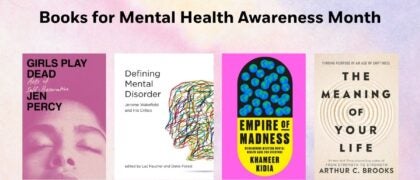
For Mental Health Awareness Month in May, we are sharing books to educate and raise awareness about mental health and the various factors that may affect it, and to provide tools and resources for student wellness. Find our full collection of titles here.
Each May, we honor the stories, histories, and cultures of Asian Americans, Native Hawaiians, and Pacific Islanders. Below is a selection of acclaimed fiction and nonfiction books by AANHPI creators to share with your students this month and throughout the year. Find our full collection of titles for Higher Education here.