
Books for Jewish American Heritage Month
In celebration of Jewish American Heritage Month in May, we are sharing books by authors who share their individual stories, experiences, and lives. Find our full collection of books here.


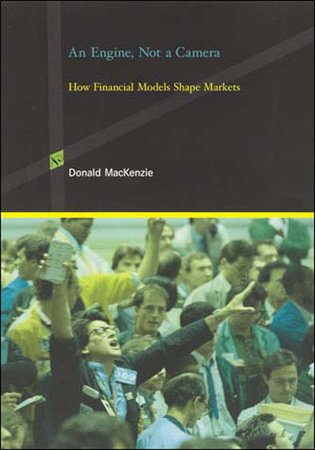
Paraphrasing Milton Friedman, MacKenzie says that economic models are an engine of inquiry rather than a camera to reproduce empirical facts. More than that, the emergence of an authoritative theory of financial markets altered those markets fundamentally. For example, in 1970, there was almost no trading in financial derivatives such as "futures." By June of 2004, derivatives contracts totaling $273 trillion were outstanding worldwide. MacKenzie suggests that this growth could never have happened without the development of theories that gave derivatives legitimacy and explained their complexities.
MacKenzie examines the role played by finance theory in the two most serious crises to hit the world's financial markets in recent years: the stock market crash of 1987 and the market turmoil that engulfed the hedge fund Long-Term Capital Management in 1998. He also looks at finance theory that is somewhat beyond the mainstream—chaos theorist Benoit Mandelbrot's model of "wild" randomness. MacKenzie's pioneering work in the social studies of finance will interest anyone who wants to understand how America's financial markets have grown into their current form.
A brilliant, extremely lucid account of the connections between financial economics and the development of futures, options, and derivatives markets between the 1950s and 2001.
—Neil Fligstein, American Journal of Sociology—Paraphrasing Milton Friedman, MacKenzie says that economic models are an engine of inquiry rather than a camera to reproduce empirical facts. More than that, the emergence of an authoritative theory of financial markets altered those markets fundamentally. For example, in 1970, there was almost no trading in financial derivatives such as "futures." By June of 2004, derivatives contracts totaling $273 trillion were outstanding worldwide. MacKenzie suggests that this growth could never have happened without the development of theories that gave derivatives legitimacy and explained their complexities.
MacKenzie examines the role played by finance theory in the two most serious crises to hit the world's financial markets in recent years: the stock market crash of 1987 and the market turmoil that engulfed the hedge fund Long-Term Capital Management in 1998. He also looks at finance theory that is somewhat beyond the mainstream—chaos theorist Benoit Mandelbrot's model of "wild" randomness. MacKenzie's pioneering work in the social studies of finance will interest anyone who wants to understand how America's financial markets have grown into their current form.
A brilliant, extremely lucid account of the connections between financial economics and the development of futures, options, and derivatives markets between the 1950s and 2001.
—Neil Fligstein, American Journal of Sociology—















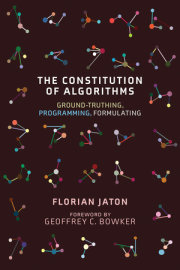
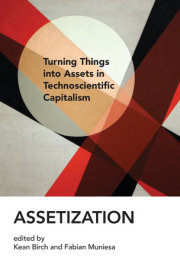

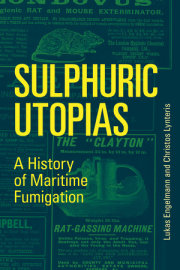
















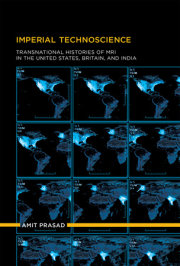



















In celebration of Jewish American Heritage Month in May, we are sharing books by authors who share their individual stories, experiences, and lives. Find our full collection of books here.
For Mental Health Awareness Month in May, we are sharing books to educate and raise awareness about mental health and the various factors that may affect it, and to provide tools and resources for student wellness. Find our full collection of titles here.
Each May, we honor the stories, histories, and cultures of Asian Americans, Native Hawaiians, and Pacific Islanders. Below is a selection of acclaimed fiction and nonfiction books by AANHPI creators to share with your students this month and throughout the year. Find our full collection of titles for Higher Education here.