Books for Jewish American Heritage Month
In celebration of Jewish American Heritage Month in May, we are sharing books by authors who share their individual stories, experiences, and lives. Find our full collection of books here.
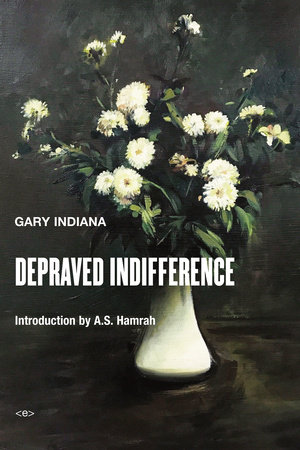
She collected future marks like lottery tickets. She operated by reflex. Any public room was a pristine harvest of human information. Not just business cards, phone numbers, fax numbers and the like, but weaknesses, quirks, character flaws, delusional ambitions, risky dreams, medical problems, shaky marriages. Everybody came equipped with a panel of invisible buttons.... If you had the right touch, if you knew how to press one button lightly and another button with a bit more force, you could make the emotional side of a person swing up and down as you wished.
—from Depraved Indifference
First published in 2001, Depraved Indifference is the third of Gary Indiana's famed crime trilogy now being reissued by Semiotext(e). Inspired by the virtuoso con artistry of mother-and-son criminals Sante and Kenneth Kimes, Depraved Indifference follows Evangeline Slote, a dead ringer for Elizabeth Taylor “so compulsive she grifts herself when she runs out of other people” through the circus of calamity that her compulsions invoke. Evangeline, or “Evelyn Carson, “Princess Shah Shah,” among other pseudonyms, accompanied by her alcoholic husband Warren and fanatically devoted son Devin, moves from Las Vegas to Hawaii to Nassau in a maelstrom of forgery and fraud that constantly threatens to come undone. When Warren dies, Evangeline and her son embark upon an ever more brazen series of grifts, frauds, and crimes. Thriving on chaos, a master of manipulation and seduction, Evangeline concocts the scheme to end all schemes—which may take a murder to complete.
Reminiscent of Nathanael West's The Day of the Locust, Indiana's scathing, insightful prose is a mirror to the empty landscape of American culture.

First published in 2001, Indiana's stylish mother-and-son crime novel (the last in a trilogy) draws on the real-life con artists and murderers Sante and Kenneth Kimes to cast a jaundiced eye on the hollowness of America's capitalist culture.
—New York Times Book Review—She collected future marks like lottery tickets. She operated by reflex. Any public room was a pristine harvest of human information. Not just business cards, phone numbers, fax numbers and the like, but weaknesses, quirks, character flaws, delusional ambitions, risky dreams, medical problems, shaky marriages. Everybody came equipped with a panel of invisible buttons.... If you had the right touch, if you knew how to press one button lightly and another button with a bit more force, you could make the emotional side of a person swing up and down as you wished.
—from Depraved Indifference
First published in 2001, Depraved Indifference is the third of Gary Indiana's famed crime trilogy now being reissued by Semiotext(e). Inspired by the virtuoso con artistry of mother-and-son criminals Sante and Kenneth Kimes, Depraved Indifference follows Evangeline Slote, a dead ringer for Elizabeth Taylor “so compulsive she grifts herself when she runs out of other people” through the circus of calamity that her compulsions invoke. Evangeline, or “Evelyn Carson, “Princess Shah Shah,” among other pseudonyms, accompanied by her alcoholic husband Warren and fanatically devoted son Devin, moves from Las Vegas to Hawaii to Nassau in a maelstrom of forgery and fraud that constantly threatens to come undone. When Warren dies, Evangeline and her son embark upon an ever more brazen series of grifts, frauds, and crimes. Thriving on chaos, a master of manipulation and seduction, Evangeline concocts the scheme to end all schemes—which may take a murder to complete.
Reminiscent of Nathanael West's The Day of the Locust, Indiana's scathing, insightful prose is a mirror to the empty landscape of American culture.
First published in 2001, Indiana's stylish mother-and-son crime novel (the last in a trilogy) draws on the real-life con artists and murderers Sante and Kenneth Kimes to cast a jaundiced eye on the hollowness of America's capitalist culture.

—New York Times Book Review—In celebration of Jewish American Heritage Month in May, we are sharing books by authors who share their individual stories, experiences, and lives. Find our full collection of books here.

For Mental Health Awareness Month in May, we are sharing books to educate and raise awareness about mental health and the various factors that may affect it, and to provide tools and resources for student wellness. Find our full collection of titles here.

Each May, we honor the stories, histories, and cultures of Asian Americans, Native Hawaiians, and Pacific Islanders. Below is a selection of acclaimed fiction and nonfiction books by AANHPI creators to share with your students this month and throughout the year. Find our full collection of titles for Higher Education here.