Books for Jewish American Heritage Month
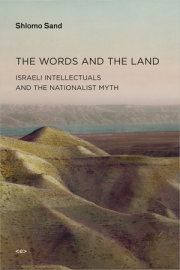
In celebration of Jewish American Heritage Month in May, we are sharing books by authors who share their individual stories, experiences, and lives. Find our full collection of books here.
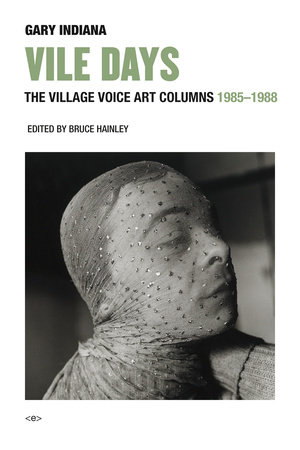
In 1985, the Village Voice offered me a job as senior art critic. This made my life easier and lousy at the same time. I now had to actually enter all those galleries instead of peeking in the windows. At times, the only tangible perk was having the chump for a fifth of vodka whenever twenty more phonies had flattered my ass off in the course of a working week.
—from Vile Days
From March 1985 through June 1988 in The Village Voice, Gary Indiana reimagined the weekly art column. Thirty years later, Vile Days brings together for the first time all of those vivid dispatches, too long stuck in archival limbo, so that the fire of Indiana's observations can burn again. In the midst of Reaganism, the grim toll of AIDS, and the frequent jingoism of postmodern theory, Indiana found a way to be the moment's Baudelaire. He turned the art review into a chronicle of life under siege.
As a critic, Indiana combines his novelistic and theatrical gifts with a startling political acumen to assess art and the unruly environments that give it context. No one was better positioned to elucidate the work of key artists at crucial junctures of their early careers, from Sherrie Levine and Richard Prince to Jeff Koons and Cindy Sherman, among others. But Indiana also remained alert to the aesthetic consequence of sumo wrestling, flower shows, public art, corporate galleries, and furniture design. Edited and prefaced by Bruce Hainley, Vile Days provides an opportunity to track Indiana's emergence as one of the most prescient writers of his generation.

A thought-provoking read.
—Art Agenda—It is... impossible to read the columns without savoring their radioactive wit and aphoristic intelligence.
—Boston Review—Vile Days is a jolting reminder that there were once prominent critics who viewed the dominant culture of their day not with occasional skepticism but permanent hostility.
—Artforum—In 1985, the Village Voice offered me a job as senior art critic. This made my life easier and lousy at the same time. I now had to actually enter all those galleries instead of peeking in the windows. At times, the only tangible perk was having the chump for a fifth of vodka whenever twenty more phonies had flattered my ass off in the course of a working week.
—from Vile Days
From March 1985 through June 1988 in The Village Voice, Gary Indiana reimagined the weekly art column. Thirty years later, Vile Days brings together for the first time all of those vivid dispatches, too long stuck in archival limbo, so that the fire of Indiana's observations can burn again. In the midst of Reaganism, the grim toll of AIDS, and the frequent jingoism of postmodern theory, Indiana found a way to be the moment's Baudelaire. He turned the art review into a chronicle of life under siege.
As a critic, Indiana combines his novelistic and theatrical gifts with a startling political acumen to assess art and the unruly environments that give it context. No one was better positioned to elucidate the work of key artists at crucial junctures of their early careers, from Sherrie Levine and Richard Prince to Jeff Koons and Cindy Sherman, among others. But Indiana also remained alert to the aesthetic consequence of sumo wrestling, flower shows, public art, corporate galleries, and furniture design. Edited and prefaced by Bruce Hainley, Vile Days provides an opportunity to track Indiana's emergence as one of the most prescient writers of his generation.
A thought-provoking read.
—Art Agenda—It is... impossible to read the columns without savoring their radioactive wit and aphoristic intelligence.
—Boston Review—Vile Days is a jolting reminder that there were once prominent critics who viewed the dominant culture of their day not with occasional skepticism but permanent hostility.
—Artforum—In celebration of Jewish American Heritage Month in May, we are sharing books by authors who share their individual stories, experiences, and lives. Find our full collection of books here.
For Mental Health Awareness Month in May, we are sharing books to educate and raise awareness about mental health and the various factors that may affect it, and to provide tools and resources for student wellness. Find our full collection of titles here.
Each May, we honor the stories, histories, and cultures of Asian Americans, Native Hawaiians, and Pacific Islanders. Below is a selection of acclaimed fiction and nonfiction books by AANHPI creators to share with your students this month and throughout the year. Find our full collection of titles for Higher Education here.