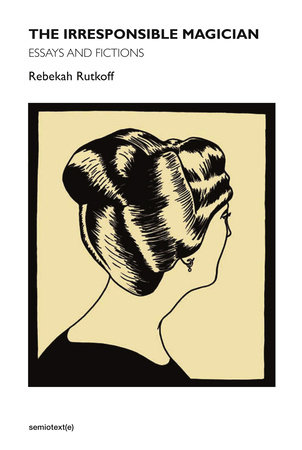
Sharp, acerbic, and humorous writings that approach psychoanalysis and celebrity on a first-name basis, with subjects that range from Oprah Winfrey to William Eggleston.As any good magician or psychoanalyst knows, it's the deliberate chalking of a particular square that allows for the discovery of personal order and private mythology.
—from The Irresponsible Magician
Sharp, acerbic, and often humorous, Rebekah Rutkoff's writings about contemporary culture reflect the present in ways reminiscent of Renata Adler's and Joan Didion's writings about urban life in the late twentieth century. Moving freely between fact and fiction, utilizing imaginary interviews, accidental stories, and critical essays, The Irresponsible Magician approaches psychoanalysis and celebrity on a first-name basis. Writing about cultural figures as diverse as Oprah Winfrey, Michel Auder, the Kennedy women, William Eggleston, Gregory Markopoulos, and Hilda Doolittle, Rutkoff interprets protagonists as if they were figures in a dream. Navigating a world of painting, cable television, video art, avant-garde film, memories, or Rutkoff's own photographs, these texts read images like tea leaves, opening up a space in which shadows speak more eloquently than symbols or signs.