
Books for Jewish American Heritage Month
In celebration of Jewish American Heritage Month in May, we are sharing books by authors who share their individual stories, experiences, and lives. Find our full collection of books here.


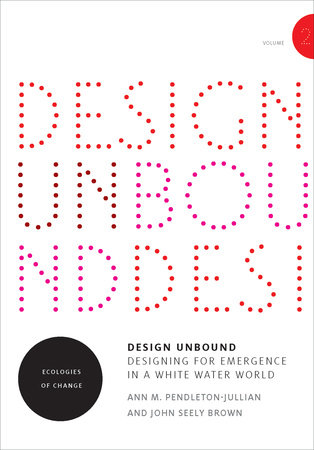
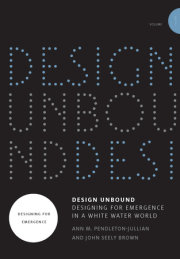
Design Unbound presents a new tool set for having agency in the twenty-first century, in what the authors characterize as a white water world—rapidly changing, hyperconnected, and radically contingent. These are the tools of a new kind of practice that is the offspring of complexity science, which gives us a new lens through which to view the world as entangled and emerging, and architecture, which is about designing contexts. In such a practice, design, unbound from its material thingness, is set free to design contexts as complex systems.
In a world where causality is systemic, entangled, in flux, and often elusive, we cannot design for absolute outcomes. Instead, we need to design for emergence. Design Unbound not only makes this case through theory but also presents a set of tools to do so. With case studies that range from a new kind of university to organizational, and even societal, transformation, Design Unbound draws from a vast array of domains: architecture, science and technology, philosophy, cinema, music, literature and poetry, even the military. It is presented in five books, bound as two volumes. Different books within the larger system of books will resonate with different reading audiences, from architects to people reconceiving higher education to the public policy or defense and intelligence communities. The authors provide different entry points allowing readers to navigate their own pathways through the system of books.
Design Unbound presents a new tool set for having agency in the twenty-first century, in what the authors characterize as a white water world—rapidly changing, hyperconnected, and radically contingent. These are the tools of a new kind of practice that is the offspring of complexity science, which gives us a new lens through which to view the world as entangled and emerging, and architecture, which is about designing contexts. In such a practice, design, unbound from its material thingness, is set free to design contexts as complex systems.
In a world where causality is systemic, entangled, in flux, and often elusive, we cannot design for absolute outcomes. Instead, we need to design for emergence. Design Unbound not only makes this case through theory but also presents a set of tools to do so. With case studies that range from a new kind of university to organizational, and even societal, transformation, Design Unbound draws from a vast array of domains: architecture, science and technology, philosophy, cinema, music, literature and poetry, even the military. It is presented in five books, bound as two volumes. Different books within the larger system of books will resonate with different reading audiences, from architects to people reconceiving higher education to the public policy or defense and intelligence communities. The authors provide different entry points allowing readers to navigate their own pathways through the system of books.


























In celebration of Jewish American Heritage Month in May, we are sharing books by authors who share their individual stories, experiences, and lives. Find our full collection of books here.
For Mental Health Awareness Month in May, we are sharing books to educate and raise awareness about mental health and the various factors that may affect it, and to provide tools and resources for student wellness. Find our full collection of titles here.
Each May, we honor the stories, histories, and cultures of Asian Americans, Native Hawaiians, and Pacific Islanders. Below is a selection of acclaimed fiction and nonfiction books by AANHPI creators to share with your students this month and throughout the year. Find our full collection of titles for Higher Education here.