
Books for Jewish American Heritage Month
In celebration of Jewish American Heritage Month in May, we are sharing books by authors who share their individual stories, experiences, and lives. Find our full collection of books here.


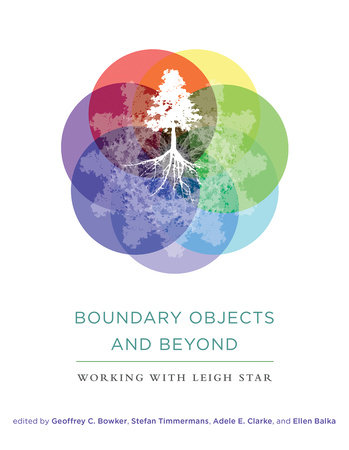
Susan Leigh Star (1954–2010) was one of the most influential science studies scholars of the last several decades. In her work, Star highlighted the messy practices of discovering science, asking hard questions about the marginalizing as well as the liberating powers of science and technology. In the landmark work Sorting Things Out, Star and Geoffrey Bowker revealed the social and ethical histories that are deeply embedded in classification systems. Star's most celebrated concept was the notion of boundary objects: representational forms—things or theories—that can be shared between different communities, with each holding its own understanding of the representation.
Unfortunately, Leigh was unable to complete a work on the poetics of infrastructure that further developed the full range of her work. This volume collects articles by Star that set out some of her thinking on boundary objects, marginality, and infrastructure, together with essays by friends and colleagues from a range of disciplines—from philosophy of science to organization science—that testify to the wide-ranging influence of Star's work.
Contributors
Ellen Balka, Eevi E. Beck, Dick Boland, Geoffrey C. Bowker, Janet Ceja Alcalá, Adele E. Clarke, Les Gasser, James R. Griesemer, Gail Hornstein, John Leslie King, Cheris Kramarae, Maria Puig de la Bellacasa, Karen Ruhleder, Kjeld Schmidt, Brian Cantwell Smith, Susan Leigh Star, Anselm L. Strauss, Jane Summerton, Stefan Timmermans, Helen Verran, Nina Wakeford, Jutta Weber
Susan Leigh Star (1954–2010) was one of the most influential science studies scholars of the last several decades. In her work, Star highlighted the messy practices of discovering science, asking hard questions about the marginalizing as well as the liberating powers of science and technology. In the landmark work Sorting Things Out, Star and Geoffrey Bowker revealed the social and ethical histories that are deeply embedded in classification systems. Star's most celebrated concept was the notion of boundary objects: representational forms—things or theories—that can be shared between different communities, with each holding its own understanding of the representation.
Unfortunately, Leigh was unable to complete a work on the poetics of infrastructure that further developed the full range of her work. This volume collects articles by Star that set out some of her thinking on boundary objects, marginality, and infrastructure, together with essays by friends and colleagues from a range of disciplines—from philosophy of science to organization science—that testify to the wide-ranging influence of Star's work.
Contributors
Ellen Balka, Eevi E. Beck, Dick Boland, Geoffrey C. Bowker, Janet Ceja Alcalá, Adele E. Clarke, Les Gasser, James R. Griesemer, Gail Hornstein, John Leslie King, Cheris Kramarae, Maria Puig de la Bellacasa, Karen Ruhleder, Kjeld Schmidt, Brian Cantwell Smith, Susan Leigh Star, Anselm L. Strauss, Jane Summerton, Stefan Timmermans, Helen Verran, Nina Wakeford, Jutta Weber

















In celebration of Jewish American Heritage Month in May, we are sharing books by authors who share their individual stories, experiences, and lives. Find our full collection of books here.
For Mental Health Awareness Month in May, we are sharing books to educate and raise awareness about mental health and the various factors that may affect it, and to provide tools and resources for student wellness. Find our full collection of titles here.
Each May, we honor the stories, histories, and cultures of Asian Americans, Native Hawaiians, and Pacific Islanders. Below is a selection of acclaimed fiction and nonfiction books by AANHPI creators to share with your students this month and throughout the year. Find our full collection of titles for Higher Education here.