
Books for Jewish American Heritage Month
In celebration of Jewish American Heritage Month in May, we are sharing books by authors who share their individual stories, experiences, and lives. Find our full collection of books here.


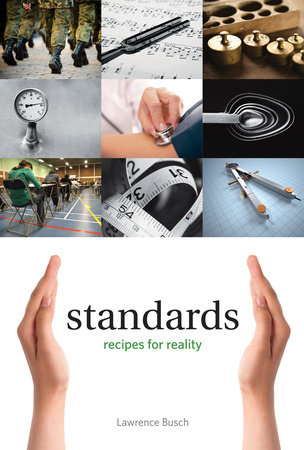
Standards are the means by which we construct realities. There are established standards for professional accreditation, the environment, consumer products, animal welfare, the acceptable stress for highway bridges, healthcare, education—for almost everything. We are surrounded by a vast array of standards, many of which we take for granted but each of which has been and continues to be the subject of intense negotiation. In this book, Lawrence Busch investigates standards as “recipes for reality.” Standards, he argues, shape not only the physical world around us but also our social lives and even our selves.
Busch shows how standards are intimately connected to power—that they often serve to empower some and disempower others. He outlines the history of formal standards and describes how modern science came to be associated with the moral-technical project of standardization of both people and things. Busch suggests guidelines for developing fair, equitable, and effective standards. Taking a uniquely integrated and comprehensive view of the subject, Busch shows how standards for people and things are inextricably linked, how standards are always layered (even if often addressed serially), and how standards are simultaneously technical, social, moral, legal, and ontological devices.
Standards are the means by which we construct realities. There are established standards for professional accreditation, the environment, consumer products, animal welfare, the acceptable stress for highway bridges, healthcare, education—for almost everything. We are surrounded by a vast array of standards, many of which we take for granted but each of which has been and continues to be the subject of intense negotiation. In this book, Lawrence Busch investigates standards as “recipes for reality.” Standards, he argues, shape not only the physical world around us but also our social lives and even our selves.
Busch shows how standards are intimately connected to power—that they often serve to empower some and disempower others. He outlines the history of formal standards and describes how modern science came to be associated with the moral-technical project of standardization of both people and things. Busch suggests guidelines for developing fair, equitable, and effective standards. Taking a uniquely integrated and comprehensive view of the subject, Busch shows how standards for people and things are inextricably linked, how standards are always layered (even if often addressed serially), and how standards are simultaneously technical, social, moral, legal, and ontological devices.
























In celebration of Jewish American Heritage Month in May, we are sharing books by authors who share their individual stories, experiences, and lives. Find our full collection of books here.
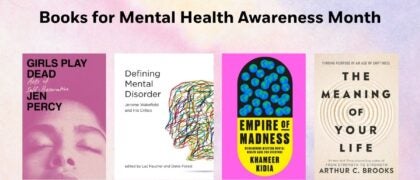
For Mental Health Awareness Month in May, we are sharing books to educate and raise awareness about mental health and the various factors that may affect it, and to provide tools and resources for student wellness. Find our full collection of titles here.
Each May, we honor the stories, histories, and cultures of Asian Americans, Native Hawaiians, and Pacific Islanders. Below is a selection of acclaimed fiction and nonfiction books by AANHPI creators to share with your students this month and throughout the year. Find our full collection of titles for Higher Education here.