
Books for Jewish American Heritage Month
In celebration of Jewish American Heritage Month in May, we are sharing books by authors who share their individual stories, experiences, and lives. Find our full collection of books here.


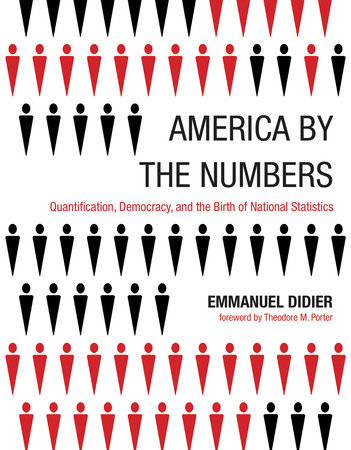
When the Great Depression struck, the US government lacked tools to assess the situation; there was no reliable way to gauge the unemployment rate, the number of unemployed, or how many families had abandoned their farms to become migrants. In America by the Numbers, Emmanuel Didier examines the development in the 1930s of one such tool: representative sampling. Didier describes and analyzes the work of New Deal agricultural economists and statisticians who traveled from farm to farm, in search of information that would be useful for planning by farmers and government agencies. Didier shows that their methods were not just simple enumeration; these new techniques of quantification shaped the New Deal and American democracy even as the New Deal shaped the evolution of statistical surveys.
Didier explains how statisticians had to become detectives and anthropologists, searching for elements that would help them portray America as a whole. Representative surveys were one of the most effective instruments for their task. He examines pre-Depression survey techniques; the invention of the random sampling method and the development of the Master Sample; and the application of random sampling by employment experts to develop the “Trial Census of Unemployment.”
When the Great Depression struck, the US government lacked tools to assess the situation; there was no reliable way to gauge the unemployment rate, the number of unemployed, or how many families had abandoned their farms to become migrants. In America by the Numbers, Emmanuel Didier examines the development in the 1930s of one such tool: representative sampling. Didier describes and analyzes the work of New Deal agricultural economists and statisticians who traveled from farm to farm, in search of information that would be useful for planning by farmers and government agencies. Didier shows that their methods were not just simple enumeration; these new techniques of quantification shaped the New Deal and American democracy even as the New Deal shaped the evolution of statistical surveys.
Didier explains how statisticians had to become detectives and anthropologists, searching for elements that would help them portray America as a whole. Representative surveys were one of the most effective instruments for their task. He examines pre-Depression survey techniques; the invention of the random sampling method and the development of the Master Sample; and the application of random sampling by employment experts to develop the “Trial Census of Unemployment.”








































In celebration of Jewish American Heritage Month in May, we are sharing books by authors who share their individual stories, experiences, and lives. Find our full collection of books here.
For Mental Health Awareness Month in May, we are sharing books to educate and raise awareness about mental health and the various factors that may affect it, and to provide tools and resources for student wellness. Find our full collection of titles here.
Each May, we honor the stories, histories, and cultures of Asian Americans, Native Hawaiians, and Pacific Islanders. Below is a selection of acclaimed fiction and nonfiction books by AANHPI creators to share with your students this month and throughout the year. Find our full collection of titles for Higher Education here.