
Books for Jewish American Heritage Month
In celebration of Jewish American Heritage Month in May, we are sharing books by authors who share their individual stories, experiences, and lives. Find our full collection of books here.


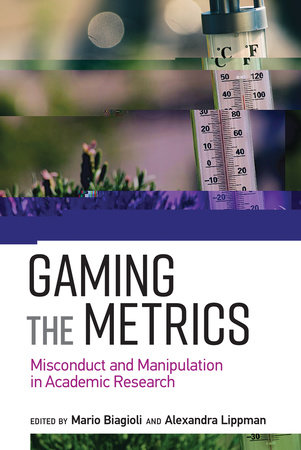
The traditional academic imperative to “publish or perish” is increasingly coupled with the newer necessity of “impact or perish”—the requirement that a publication have “impact,” as measured by a variety of metrics, including citations, views, and downloads. Gaming the Metrics examines how the increasing reliance on metrics to evaluate scholarly publications has produced radically new forms of academic fraud and misconduct. The contributors show that the metrics-based “audit culture” has changed the ecology of research, fostering the gaming and manipulation of quantitative indicators, which lead to the invention of such novel forms of misconduct as citation rings and variously rigged peer reviews.
The chapters, written by both scholars and those in the trenches of academic publication, provide a map of academic fraud and misconduct today. They consider such topics as the shortcomings of metrics, the gaming of impact factors, the emergence of so-called predatory journals, the “salami slicing” of scientific findings, the rigging of global university rankings, and the creation of new watchdogs and forensic practices.
The traditional academic imperative to “publish or perish” is increasingly coupled with the newer necessity of “impact or perish”—the requirement that a publication have “impact,” as measured by a variety of metrics, including citations, views, and downloads. Gaming the Metrics examines how the increasing reliance on metrics to evaluate scholarly publications has produced radically new forms of academic fraud and misconduct. The contributors show that the metrics-based “audit culture” has changed the ecology of research, fostering the gaming and manipulation of quantitative indicators, which lead to the invention of such novel forms of misconduct as citation rings and variously rigged peer reviews.
The chapters, written by both scholars and those in the trenches of academic publication, provide a map of academic fraud and misconduct today. They consider such topics as the shortcomings of metrics, the gaming of impact factors, the emergence of so-called predatory journals, the “salami slicing” of scientific findings, the rigging of global university rankings, and the creation of new watchdogs and forensic practices.
















In celebration of Jewish American Heritage Month in May, we are sharing books by authors who share their individual stories, experiences, and lives. Find our full collection of books here.
For Mental Health Awareness Month in May, we are sharing books to educate and raise awareness about mental health and the various factors that may affect it, and to provide tools and resources for student wellness. Find our full collection of titles here.
Each May, we honor the stories, histories, and cultures of Asian Americans, Native Hawaiians, and Pacific Islanders. Below is a selection of acclaimed fiction and nonfiction books by AANHPI creators to share with your students this month and throughout the year. Find our full collection of titles for Higher Education here.