
Books for Arab American Heritage Month
In honor of Arab American Heritage Month in April, we are sharing books by Arab and Arab American authors that share their culture, history, and personal lives.


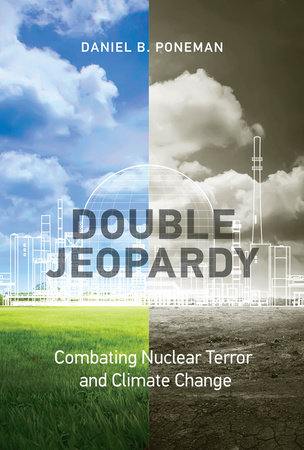
Humanity faces two existential threats: nuclear annihilation and catastrophic climate change. Both have human origins, and both are linked to the use of nuclear energy. Inherent in the use of atomic fission is the risk that the technology and materials can be diverted to terrorists or hostile nations and used to make nuclear weapons. The key question is whether we can use nuclear energy to reduce the threat of climate change without increasing the risk that nuclear weapons will be used.
In Double Jeopardy, Daniel Poneman argues that the world needs an “all-of-the-above” energy policy, one that advances the goal of decarbonizing the environment through all available means—including nuclear power. Poneman makes a compelling case that we can enhance the ability of nuclear power to combat climate change even as we reduce the risks of nuclear terror. Doing so will require well-crafted laws and policies, implemented with an ethos of constant vigilance and embedded in a culture that weaves safety and security goals into the fabric of our nuclear programs. This will enable government and industry to work together to maximize energy and climate benefits while minimizing safety and security risks.
Humanity faces two existential threats: nuclear annihilation and catastrophic climate change. Both have human origins, and both are linked to the use of nuclear energy. Inherent in the use of atomic fission is the risk that the technology and materials can be diverted to terrorists or hostile nations and used to make nuclear weapons. The key question is whether we can use nuclear energy to reduce the threat of climate change without increasing the risk that nuclear weapons will be used.
In Double Jeopardy, Daniel Poneman argues that the world needs an “all-of-the-above” energy policy, one that advances the goal of decarbonizing the environment through all available means—including nuclear power. Poneman makes a compelling case that we can enhance the ability of nuclear power to combat climate change even as we reduce the risks of nuclear terror. Doing so will require well-crafted laws and policies, implemented with an ethos of constant vigilance and embedded in a culture that weaves safety and security goals into the fabric of our nuclear programs. This will enable government and industry to work together to maximize energy and climate benefits while minimizing safety and security risks.

In honor of Arab American Heritage Month in April, we are sharing books by Arab and Arab American authors that share their culture, history, and personal lives.
For National Poetry Month in April, we are sharing poetry collections and books about poetry by authors who have their own stories to tell. These poets delve into history, reimagine the present, examine poetry itself—from traditional poems many know and love to poems and voices that are new and original.