
Books for Arab American Heritage Month
In honor of Arab American Heritage Month in April, we are sharing books by Arab and Arab American authors that share their culture, history, and personal lives.


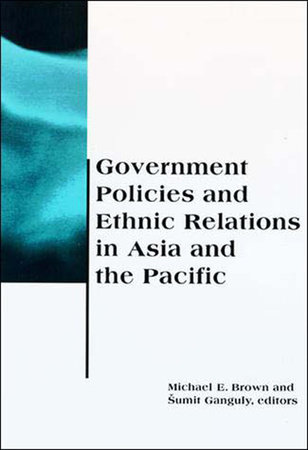
Ethnic conflict, one of the most serious and widespread problems in the world today, can undermine efforts to promote political and economic development, as well as political, economic, and social justice. It can also lead to violence and open warfare, producing horrifying levels of death and destruction. Although government policies on ethnic issues often have profound effects on a country, the subject has been neglected by most scholars and analysts. This volume analyzes different policies governments have pursued in their efforts to contend with the tensions inherent in multiethnic societies. The book focuses on Asia and the Pacific, the most populous and economically vibrant part of the world. The heart of the book is a set of case studies of government policies in sixteen countries: India, Pakistan, Sri Lanka, Burma, Thailand, Malaysia, Singapore, Indonesia, the Philippines, China, Australia, New Zealand, Papua New Guinea, Fiji, Vanuatu, and the Federated States of Micronesia. The studies consider a wide range of political, economic, educational, linguistic, and cultural policies, and how these policies have evolved over time. Using a broad comparative perspective to assess the effectiveness of different governmental approaches, the authors offer policy recommendations that cut across individual countries and regions.
Ethnic conflict, one of the most serious and widespread problems in the world today, can undermine efforts to promote political and economic development, as well as political, economic, and social justice. It can also lead to violence and open warfare, producing horrifying levels of death and destruction. Although government policies on ethnic issues often have profound effects on a country, the subject has been neglected by most scholars and analysts. This volume analyzes different policies governments have pursued in their efforts to contend with the tensions inherent in multiethnic societies. The book focuses on Asia and the Pacific, the most populous and economically vibrant part of the world. The heart of the book is a set of case studies of government policies in sixteen countries: India, Pakistan, Sri Lanka, Burma, Thailand, Malaysia, Singapore, Indonesia, the Philippines, China, Australia, New Zealand, Papua New Guinea, Fiji, Vanuatu, and the Federated States of Micronesia. The studies consider a wide range of political, economic, educational, linguistic, and cultural policies, and how these policies have evolved over time. Using a broad comparative perspective to assess the effectiveness of different governmental approaches, the authors offer policy recommendations that cut across individual countries and regions.







In honor of Arab American Heritage Month in April, we are sharing books by Arab and Arab American authors that share their culture, history, and personal lives.
For National Poetry Month in April, we are sharing poetry collections and books about poetry by authors who have their own stories to tell. These poets delve into history, reimagine the present, examine poetry itself—from traditional poems many know and love to poems and voices that are new and original.