
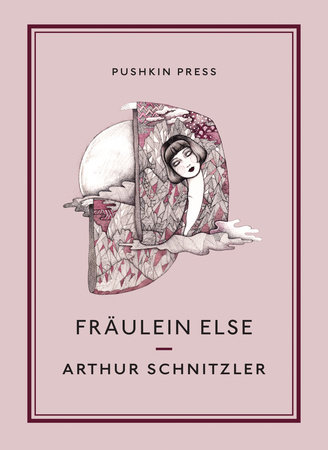















Fräulein Else

Translated by F.H. Lyon
While staying with her aunt at a fashionable spa, Else receives an unexpected telegram from her mother, begging her to save her father from debtor's jail. The only way out, it seems, is to approach an elderly acquaintance in order to borrow money from him. Through this telegram, Else is forced into the reality of a world entirely at odds with her romantic imagination – with horrific consequences.
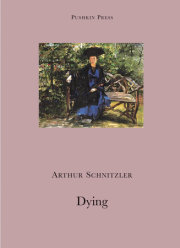
Arthur Schnitzler (1862-1931) was born in Vienna, the son of a prominent Jewish doctor, and studied medicine at the University of Vienna. In later years he devoted his life to writing and was successful as a novelist, dramatist and short story writer—His novels Dying and Casanova’s Return to Venice are also available from Pushkin Press. Schnitzler's work shows a remarkable ability to create atmosphere and a profound understanding of human motives.
"Schnitzler's brilliant novella." - Desmond Christy, Guardian

"Schnitzler was a remarkable and versatile talent who adapted for his artistic purposes both the new techniques of psychoanalysis and what was later to be known as the stream of consciousness." - John Bayley, Times Literary Supplement

"What makes it a tour de force is that the story is old, in a superbly sustained stream-of-consciousness, entirely from Else's point of view." - Gilbert Adair, Evening Standard

About

While staying with her aunt at a fashionable spa, Else receives an unexpected telegram from her mother, begging her to save her father from debtor's jail. The only way out, it seems, is to approach an elderly acquaintance in order to borrow money from him. Through this telegram, Else is forced into the reality of a world entirely at odds with her romantic imagination – with horrific consequences.

Author

Arthur Schnitzler (1862-1931) was born in Vienna, the son of a prominent Jewish doctor, and studied medicine at the University of Vienna. In later years he devoted his life to writing and was successful as a novelist, dramatist and short story writer—His novels Dying and Casanova’s Return to Venice are also available from Pushkin Press. Schnitzler's work shows a remarkable ability to create atmosphere and a profound understanding of human motives.

Praise

"Schnitzler's brilliant novella." - Desmond Christy, Guardian

"Schnitzler was a remarkable and versatile talent who adapted for his artistic purposes both the new techniques of psychoanalysis and what was later to be known as the stream of consciousness." - John Bayley, Times Literary Supplement

"What makes it a tour de force is that the story is old, in a superbly sustained stream-of-consciousness, entirely from Else's point of view." - Gilbert Adair, Evening Standard

Books for Women’s History Month

In honor of Women’s History Month in March, we are sharing books by women who have shaped history and have fought for their communities. Our list includes books about women who fought for racial justice, abortion rights, equality in the workplace, and ranges in topics from women in politics and prominent women in history to

Read more