Books for Jewish American Heritage Month
In celebration of Jewish American Heritage Month in May, we are sharing books by authors who share their individual stories, experiences, and lives. Find our full collection of books here.
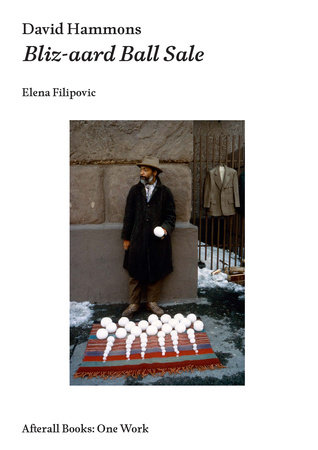
One wintry day in 1983, alongside other street sellers in the East Village, David Hammons peddled snowballs of various sizes. He had neatly laid them out in graduated rows and spent the day acting as obliging salesman. He called the evanescent and unannounced street action Bliz-aard Ball Sale, thus inscribing it into a body of work that, from the late 1960s to the present, has used a lexicon of ephemeral actions and self-consciously “black" materials to comment on the nature of the artwork, the art world, and race in America. And although Bliz-aard Ball Sale has been frequently cited and is increasingly influential, it has long been known only through a mix of eyewitness rumors and a handful of photographs. Its details were as elusive as the artist himself; even its exact date was unrecorded. Like so much of the artist's work, it was conceived, it seems, to slip between our fingers—to trouble the grasp of the market, as much as of history and knowability.
In this engaging study, Elena Filipovic collects a vast oral history of the ephemeral action, uncovering rare images and documents, and giving us singular insight into an artist who made an art of making himself difficult to find. And through it, she reveals Bliz-aard Ball Sale to be the backbone of a radical artistic oeuvre that transforms such notions as “art,” “commodity,” “performance,” and even “race” into categories that shift and dissolve, much like slowly melting snowballs.

One wintry day in 1983, alongside other street sellers in the East Village, David Hammons peddled snowballs of various sizes. He had neatly laid them out in graduated rows and spent the day acting as obliging salesman. He called the evanescent and unannounced street action Bliz-aard Ball Sale, thus inscribing it into a body of work that, from the late 1960s to the present, has used a lexicon of ephemeral actions and self-consciously “black" materials to comment on the nature of the artwork, the art world, and race in America. And although Bliz-aard Ball Sale has been frequently cited and is increasingly influential, it has long been known only through a mix of eyewitness rumors and a handful of photographs. Its details were as elusive as the artist himself; even its exact date was unrecorded. Like so much of the artist's work, it was conceived, it seems, to slip between our fingers—to trouble the grasp of the market, as much as of history and knowability.
In this engaging study, Elena Filipovic collects a vast oral history of the ephemeral action, uncovering rare images and documents, and giving us singular insight into an artist who made an art of making himself difficult to find. And through it, she reveals Bliz-aard Ball Sale to be the backbone of a radical artistic oeuvre that transforms such notions as “art,” “commodity,” “performance,” and even “race” into categories that shift and dissolve, much like slowly melting snowballs.
In celebration of Jewish American Heritage Month in May, we are sharing books by authors who share their individual stories, experiences, and lives. Find our full collection of books here.

For Mental Health Awareness Month in May, we are sharing books to educate and raise awareness about mental health and the various factors that may affect it, and to provide tools and resources for student wellness. Find our full collection of titles here.
Each May, we honor the stories, histories, and cultures of Asian Americans, Native Hawaiians, and Pacific Islanders. Below is a selection of acclaimed fiction and nonfiction books by AANHPI creators to share with your students this month and throughout the year. Find our full collection of titles for Higher Education here.