













Books for Jewish American Heritage Month
In celebration of Jewish American Heritage Month in May, we are sharing books by authors who share their individual stories, experiences, and lives. Find our full collection of books here.
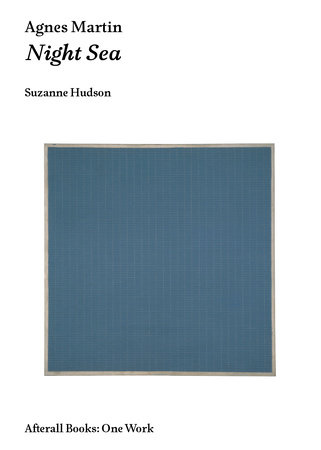
Agnes Martin's Night Sea (1963) is a large canvas of hand-drawn rectangular grids painted in luminous blue and gold. In this illustrated study, Suzanne Hudson presents the painting as the work of an artist who was also a thinker, poet, and writer for whom self-presentation was a necessary part of making her works public. With Night Sea, Hudson argues, Martin (1912–2004) created a shimmering realization of control and loss that stands alone within her suite of classic grid paintings as an exemplary and exceptional achievement.
Hudson offers a close examination of Night Sea and its position within Martin's long and prolific career, during which the artist destroyed many works as she sought forms of perfection within self-imposed restrictions of color and line. For Hudson, Night Sea stands as the last of Martin's process-based works before she turned from oil to acrylic and sought to express emotions of lightness and purity unburdened by evidence of human struggle.
Drawing from a range of archival records, Hudson attempts to draw together the facts surrounding the work, which were at times obfuscated by the artist's desire for privacy. Critical responses of the time give a sense of the impact of the work and that which followed it. Texts by peers including Lenore Tawney, Donald Judd, and Lucy Lippard are presented alongside interviews with a number of Martin's friends and keepers of estates, such as the publisher Ronald Feldman and Kathleen Mangan of the Lenore Tawney archive, which holds correspondence between Martin and Tawney.
Agnes Martin's Night Sea (1963) is a large canvas of hand-drawn rectangular grids painted in luminous blue and gold. In this illustrated study, Suzanne Hudson presents the painting as the work of an artist who was also a thinker, poet, and writer for whom self-presentation was a necessary part of making her works public. With Night Sea, Hudson argues, Martin (1912–2004) created a shimmering realization of control and loss that stands alone within her suite of classic grid paintings as an exemplary and exceptional achievement.
Hudson offers a close examination of Night Sea and its position within Martin's long and prolific career, during which the artist destroyed many works as she sought forms of perfection within self-imposed restrictions of color and line. For Hudson, Night Sea stands as the last of Martin's process-based works before she turned from oil to acrylic and sought to express emotions of lightness and purity unburdened by evidence of human struggle.
Drawing from a range of archival records, Hudson attempts to draw together the facts surrounding the work, which were at times obfuscated by the artist's desire for privacy. Critical responses of the time give a sense of the impact of the work and that which followed it. Texts by peers including Lenore Tawney, Donald Judd, and Lucy Lippard are presented alongside interviews with a number of Martin's friends and keepers of estates, such as the publisher Ronald Feldman and Kathleen Mangan of the Lenore Tawney archive, which holds correspondence between Martin and Tawney.
In celebration of Jewish American Heritage Month in May, we are sharing books by authors who share their individual stories, experiences, and lives. Find our full collection of books here.
For Mental Health Awareness Month in May, we are sharing books to educate and raise awareness about mental health and the various factors that may affect it, and to provide tools and resources for student wellness. Find our full collection of titles here.
Each May, we honor the stories, histories, and cultures of Asian Americans, Native Hawaiians, and Pacific Islanders. Below is a selection of acclaimed fiction and nonfiction books by AANHPI creators to share with your students this month and throughout the year. Find our full collection of titles for Higher Education here.