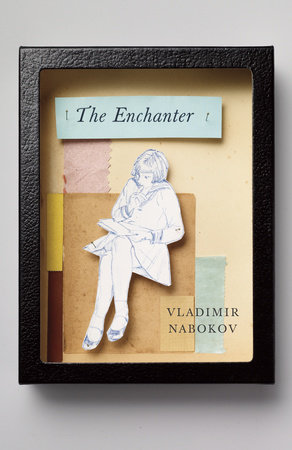


The Enchanter is the precursor to Nabokov's classic novel, Lolita. At once hilarious and chilling, it tells the story of an outwardly respectable man and his fatal obsession with certain prepubescent girls, whose coltish grace and subconscious coquetry reveal, to his mind, a special bud on the verge of bloom.
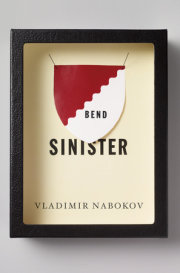
Vladimir Nabokov studied French and Russian literature at Trinity College, Cambridge, then lived in Berlin and Paris, writing prolifically in Russian under the pseudonym Sirin. In 1940, he left France for America, where he wrote some of his greatest works—Bend Sinister (1947), Lolita (1955), Pnin (1957), and Pale Fire (1962)—and translated his earlier Russian novels into English. He taught at Wellesley, Harvard, and Cornell. He died in Montreux, Switzerland, in 1977. View titles by Vladimir Nabokov
"Nabokov writes prose the only way it should be written, that is, ecstatically." — John Updike

"Masterly ... brilliant." —V. S. Pritchett, The New York Review of Books

"A gem to be appreciated by any admirer of the most graceful and provocative literary craftsman." —Chicago Tribune

"One of the best books of the year ... [The Enchanter] displays the supple clarity of a master." —The Boston Globe

"Enchanting ... sleekly wrought." —Newsweek

About

The Enchanter is the precursor to Nabokov's classic novel, Lolita. At once hilarious and chilling, it tells the story of an outwardly respectable man and his fatal obsession with certain prepubescent girls, whose coltish grace and subconscious coquetry reveal, to his mind, a special bud on the verge of bloom.

Author

Vladimir Nabokov studied French and Russian literature at Trinity College, Cambridge, then lived in Berlin and Paris, writing prolifically in Russian under the pseudonym Sirin. In 1940, he left France for America, where he wrote some of his greatest works—Bend Sinister (1947), Lolita (1955), Pnin (1957), and Pale Fire (1962)—and translated his earlier Russian novels into English. He taught at Wellesley, Harvard, and Cornell. He died in Montreux, Switzerland, in 1977. View titles by Vladimir Nabokov

Praise

"Nabokov writes prose the only way it should be written, that is, ecstatically." — John Updike

"Masterly ... brilliant." —V. S. Pritchett, The New York Review of Books

"A gem to be appreciated by any admirer of the most graceful and provocative literary craftsman." —Chicago Tribune

"One of the best books of the year ... [The Enchanter] displays the supple clarity of a master." —The Boston Globe

"Enchanting ... sleekly wrought." —Newsweek

Books for Women’s History Month

In honor of Women’s History Month in March, we are sharing books by women who have shaped history and have fought for their communities. Our list includes books about women who fought for racial justice, abortion rights, equality in the workplace, and ranges in topics from women in politics and prominent women in history to

Read more