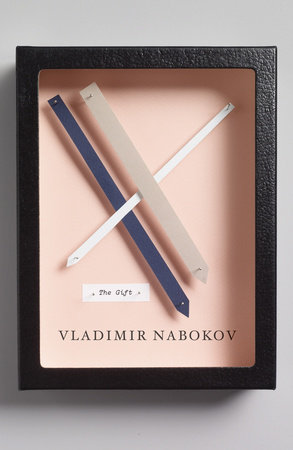


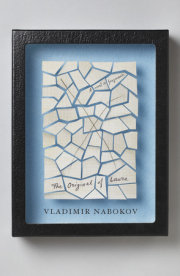
The Gift is the last novel Nabokov wrote in his native language. It is his ode to Russian literature, evoking the works of Pushkin, Gogol, and others in the course of its narrative: the story of Fyodor Godunov-Cherdyntsev, an impoverished émigré poet living in Berlin, who dreams of the book he will someday write--a book similar to The Gift itself.
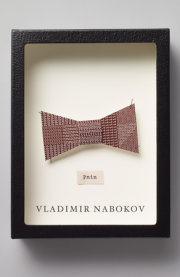
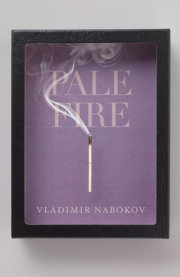
Vladimir Nabokov studied French and Russian literature at Trinity College, Cambridge, then lived in Berlin and Paris, writing prolifically in Russian under the pseudonym Sirin. In 1940, he left France for America, where he wrote some of his greatest works—Bend Sinister (1947), Lolita (1955), Pnin (1957), and Pale Fire (1962)—and translated his earlier Russian novels into English. He taught at Wellesley, Harvard, and Cornell. He died in Montreux, Switzerland, in 1977. View titles by Vladimir Nabokov
“[Nabokov is] the supreme master.”
The New York Times Book Review

“Nabokov writes prose the only way it should be written, that is, ecstatically.”
—John Updike

“[Nabokov] is in a class by himself.”
The Atlantic

About

The Gift is the last novel Nabokov wrote in his native language. It is his ode to Russian literature, evoking the works of Pushkin, Gogol, and others in the course of its narrative: the story of Fyodor Godunov-Cherdyntsev, an impoverished émigré poet living in Berlin, who dreams of the book he will someday write--a book similar to The Gift itself.

Author

Vladimir Nabokov studied French and Russian literature at Trinity College, Cambridge, then lived in Berlin and Paris, writing prolifically in Russian under the pseudonym Sirin. In 1940, he left France for America, where he wrote some of his greatest works—Bend Sinister (1947), Lolita (1955), Pnin (1957), and Pale Fire (1962)—and translated his earlier Russian novels into English. He taught at Wellesley, Harvard, and Cornell. He died in Montreux, Switzerland, in 1977. View titles by Vladimir Nabokov

Praise

“[Nabokov is] the supreme master.”
The New York Times Book Review

“Nabokov writes prose the only way it should be written, that is, ecstatically.”
—John Updike

“[Nabokov] is in a class by himself.”
The Atlantic

Books for Women’s History Month

In honor of Women’s History Month in March, we are sharing books by women who have shaped history and have fought for their communities. Our list includes books about women who fought for racial justice, abortion rights, equality in the workplace, and ranges in topics from women in politics and prominent women in history to

Read more