
Books for Jewish American Heritage Month
In celebration of Jewish American Heritage Month in May, we are sharing books by authors who share their individual stories, experiences, and lives. Find our full collection of books here.


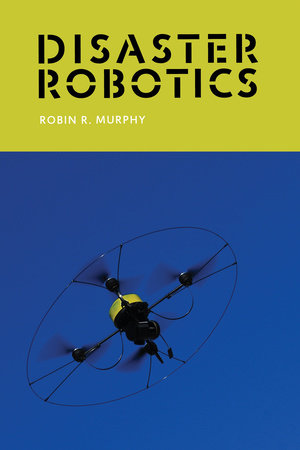
This book offers the definitive guide to the theory and practice of disaster robotics. It can serve as an introduction for researchers and technologists, a reference for emergency managers, and a textbook in field robotics. Written by a pioneering researcher in the field who has herself participated in fifteen deployments of robots in disaster response and recovery, the book covers theory and practice, the history of the field, and specific missions.
After a broad overview of rescue robotics in the context of emergency informatics, the book provides a chronological summary and formal analysis of the thirty-four documented deployments of robots to disasters that include the 2001 collapse of the World Trade Center, Hurricane Katrina, the 2010 Haiti earthquake, the Deepwater Horizon oil spill, the 2011 Japanese earthquake and tsunami, and numerous mining accidents. It then examines disaster robotics in the typical robot modalities of ground, air, and marine, addressing such topics as robot types, missions and tasks, and selection heuristics for each modality. Finally, the book discusses types of fieldwork, providing practical advice on matters that include collecting data and collaborating with emergency professionals.
The field of disaster robotics has lacked a comprehensive overview. This book by a leader in the field, offering a unique combination of the theoretical and the practical, fills the gap.
This book offers the definitive guide to the theory and practice of disaster robotics. It can serve as an introduction for researchers and technologists, a reference for emergency managers, and a textbook in field robotics. Written by a pioneering researcher in the field who has herself participated in fifteen deployments of robots in disaster response and recovery, the book covers theory and practice, the history of the field, and specific missions.
After a broad overview of rescue robotics in the context of emergency informatics, the book provides a chronological summary and formal analysis of the thirty-four documented deployments of robots to disasters that include the 2001 collapse of the World Trade Center, Hurricane Katrina, the 2010 Haiti earthquake, the Deepwater Horizon oil spill, the 2011 Japanese earthquake and tsunami, and numerous mining accidents. It then examines disaster robotics in the typical robot modalities of ground, air, and marine, addressing such topics as robot types, missions and tasks, and selection heuristics for each modality. Finally, the book discusses types of fieldwork, providing practical advice on matters that include collecting data and collaborating with emergency professionals.
The field of disaster robotics has lacked a comprehensive overview. This book by a leader in the field, offering a unique combination of the theoretical and the practical, fills the gap.




In celebration of Jewish American Heritage Month in May, we are sharing books by authors who share their individual stories, experiences, and lives. Find our full collection of books here.
For Mental Health Awareness Month in May, we are sharing books to educate and raise awareness about mental health and the various factors that may affect it, and to provide tools and resources for student wellness. Find our full collection of titles here.
Each May, we honor the stories, histories, and cultures of Asian Americans, Native Hawaiians, and Pacific Islanders. Below is a selection of acclaimed fiction and nonfiction books by AANHPI creators to share with your students this month and throughout the year. Find our full collection of titles for Higher Education here.