
Books for Jewish American Heritage Month
In celebration of Jewish American Heritage Month in May, we are sharing books by authors who share their individual stories, experiences, and lives. Find our full collection of books here.


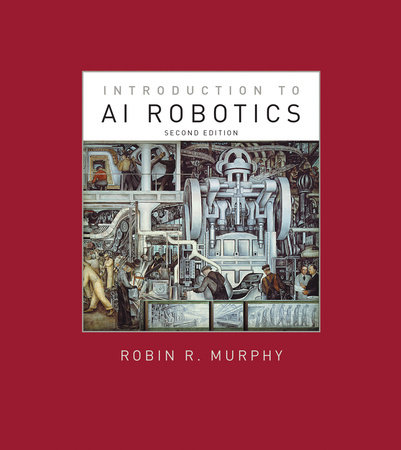
This textbook offers a comprehensive survey of artificial intelligence (AI) algorithms and programming organization for robot systems. Readers who master the topics covered will be able to design and evaluate an artificially intelligent robot for applications involving sensing, acting, planning, and learning. A background in AI is not required; the book introduces key AI topics from all AI subdisciplines throughout the book and explains how they contribute to autonomous capabilities.
This second edition is a major expansion and reorganization of the first edition, reflecting the dramatic advances made in AI over the past fifteen years. An introductory overview provides a framework for thinking about AI for robotics, distinguishing between the fundamentally different design paradigms of automation and autonomy. The book then discusses the reactive functionality of sensing and acting in AI robotics; introduces the deliberative functions most often associated with intelligence and the capability of autonomous initiative; surveys multi-robot systems and (in a new chapter) human-robot interaction; and offers a “metaview” of how to design and evaluate autonomous systems and the ethical considerations in doing so. New material covers locomotion, simultaneous localization and mapping, human-robot interaction, machine learning, and ethics. Each chapter includes exercises, and many chapters provide case studies. Endnotes point to additional reading, highlight advanced topics, and offer robot trivia.
This textbook offers a comprehensive survey of artificial intelligence (AI) algorithms and programming organization for robot systems. Readers who master the topics covered will be able to design and evaluate an artificially intelligent robot for applications involving sensing, acting, planning, and learning. A background in AI is not required; the book introduces key AI topics from all AI subdisciplines throughout the book and explains how they contribute to autonomous capabilities.
This second edition is a major expansion and reorganization of the first edition, reflecting the dramatic advances made in AI over the past fifteen years. An introductory overview provides a framework for thinking about AI for robotics, distinguishing between the fundamentally different design paradigms of automation and autonomy. The book then discusses the reactive functionality of sensing and acting in AI robotics; introduces the deliberative functions most often associated with intelligence and the capability of autonomous initiative; surveys multi-robot systems and (in a new chapter) human-robot interaction; and offers a “metaview” of how to design and evaluate autonomous systems and the ethical considerations in doing so. New material covers locomotion, simultaneous localization and mapping, human-robot interaction, machine learning, and ethics. Each chapter includes exercises, and many chapters provide case studies. Endnotes point to additional reading, highlight advanced topics, and offer robot trivia.



In celebration of Jewish American Heritage Month in May, we are sharing books by authors who share their individual stories, experiences, and lives. Find our full collection of books here.
For Mental Health Awareness Month in May, we are sharing books to educate and raise awareness about mental health and the various factors that may affect it, and to provide tools and resources for student wellness. Find our full collection of titles here.
Each May, we honor the stories, histories, and cultures of Asian Americans, Native Hawaiians, and Pacific Islanders. Below is a selection of acclaimed fiction and nonfiction books by AANHPI creators to share with your students this month and throughout the year. Find our full collection of titles for Higher Education here.