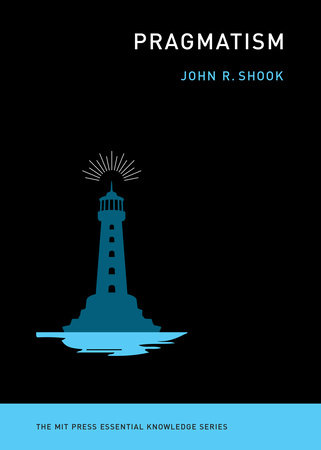

A concise, reader-friendly overview of pragmatism, the most influential school of American philosophical thought.

Pragmatism, America’s homegrown philosophy, has been a major intellectual movement for over a century. Unlike its rivals, it reaches well beyond the confines of philosophy into concerns and disciplines as diverse as religion, politics, science, and culture. In this concise, engagingly written overview, John R. Shook describes pragmatism’s origins, concepts, and continuing global relevance and appeal. With attention to the movement’s original thinkers—Charles Sanders Peirce, William James, John Dewey, and George Herbert Mead—as well as its contemporary proponents, he explains how pragmatism thinks about what is real, what can be known, and what minds are doing. And because of pragmatism’s far-reaching impact, Shook shows how its views on reality, truth, knowledge, and cognition coordinate with its approaches to agency, sociality, human nature, and personhood.

Series Foreword vii
Preface ix
1 Pragmatism: An Old Name for Newly Confirmed Ideas 1
2 Principles of Pragmatism 21
3 Permanence and Impermanence 39
4 Context and Reality 65
5 Truth in Consequences 89
6 Being and Thinking 115
7 Pragmatism versus Epistemology 139
8 Transactional Knowledge 159
9 Ecological Mentality 181
10 Society, Self, and Mind 205
11 Culture and Person 227
Acknowledgments 243
Glossary 245
Notes 251
Further Reading 267
Index 273
John R. Shook teaches philosophy at Bowie State University in Maryland. He is coeditor of The Blackwell Companion to Pragmatism and Neuroscience, Neurophilosophy, and Pragmatism.
"[An] accessible intellectual history. . . . The book’s solid structure, helpful glossary, and discerning list of further readings make it a worthwhile resource for newcomers. Philosophy students will want to check this out."
Publishers Weekly

About

A concise, reader-friendly overview of pragmatism, the most influential school of American philosophical thought.

Pragmatism, America’s homegrown philosophy, has been a major intellectual movement for over a century. Unlike its rivals, it reaches well beyond the confines of philosophy into concerns and disciplines as diverse as religion, politics, science, and culture. In this concise, engagingly written overview, John R. Shook describes pragmatism’s origins, concepts, and continuing global relevance and appeal. With attention to the movement’s original thinkers—Charles Sanders Peirce, William James, John Dewey, and George Herbert Mead—as well as its contemporary proponents, he explains how pragmatism thinks about what is real, what can be known, and what minds are doing. And because of pragmatism’s far-reaching impact, Shook shows how its views on reality, truth, knowledge, and cognition coordinate with its approaches to agency, sociality, human nature, and personhood.
Table of Contents

Series Foreword vii
Preface ix
1 Pragmatism: An Old Name for Newly Confirmed Ideas 1
2 Principles of Pragmatism 21
3 Permanence and Impermanence 39
4 Context and Reality 65
5 Truth in Consequences 89
6 Being and Thinking 115
7 Pragmatism versus Epistemology 139
8 Transactional Knowledge 159
9 Ecological Mentality 181
10 Society, Self, and Mind 205
11 Culture and Person 227
Acknowledgments 243
Glossary 245
Notes 251
Further Reading 267
Index 273

Author

John R. Shook teaches philosophy at Bowie State University in Maryland. He is coeditor of The Blackwell Companion to Pragmatism and Neuroscience, Neurophilosophy, and Pragmatism.

Praise

"[An] accessible intellectual history. . . . The book’s solid structure, helpful glossary, and discerning list of further readings make it a worthwhile resource for newcomers. Philosophy students will want to check this out."
Publishers Weekly

Books for Women’s History Month

In honor of Women’s History Month in March, we are sharing books by women who have shaped history and have fought for their communities. Our list includes books about women who fought for racial justice, abortion rights, equality in the workplace, and ranges in topics from women in politics and prominent women in history to

Read more