
Books for Jewish American Heritage Month
In celebration of Jewish American Heritage Month in May, we are sharing books by authors who share their individual stories, experiences, and lives. Find our full collection of books here.


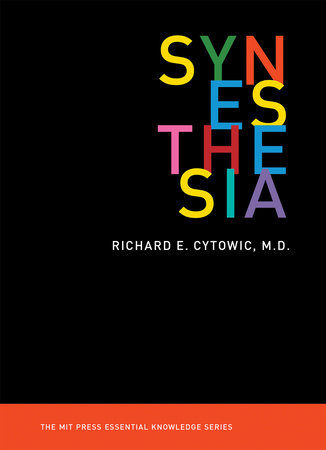
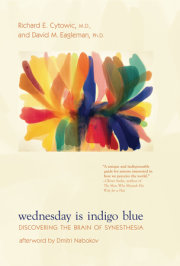
One in twenty-three people carry the genes for the synesthesia. Not a disorder but a neurological trait—like perfect pitch—synesthesia creates vividly felt cross-sensory couplings. A synesthete might hear a voice and at the same time see it as a color or shape, taste its distinctive flavor, or feel it as a physical touch. In this volume in the MIT Press Essential Knowledge series, Richard Cytowic, the expert who returned synesthesia to mainstream science after decades of oblivion, offers a concise, accessible primer on this fascinating human experience.
Cytowic explains that synesthesia's most frequent manifestation is seeing days of the week as colored, followed by sensing letters, numerals, and punctuation marks in different hues even when printed in black. Other manifestations include tasting food in shapes, seeing music in moving colors, and mapping numbers and other sequences spatially. One synesthete declares, “Chocolate smells pink and sparkly”; another invents a dish (chicken, vanilla ice cream, and orange juice concentrate) that tastes intensely blue. Cytowic, who in the 1980s revived scientific interest in synesthesia, sees it now understood as a spectrum, an umbrella term that covers five clusters of outwardly felt couplings that can occur via several pathways. Yet synesthetic or not, each brain uniquely filters what it perceives. Cytowic reminds us that each individual's perspective on the world is thoroughly subjective.
One in twenty-three people carry the genes for the synesthesia. Not a disorder but a neurological trait—like perfect pitch—synesthesia creates vividly felt cross-sensory couplings. A synesthete might hear a voice and at the same time see it as a color or shape, taste its distinctive flavor, or feel it as a physical touch. In this volume in the MIT Press Essential Knowledge series, Richard Cytowic, the expert who returned synesthesia to mainstream science after decades of oblivion, offers a concise, accessible primer on this fascinating human experience.
Cytowic explains that synesthesia's most frequent manifestation is seeing days of the week as colored, followed by sensing letters, numerals, and punctuation marks in different hues even when printed in black. Other manifestations include tasting food in shapes, seeing music in moving colors, and mapping numbers and other sequences spatially. One synesthete declares, “Chocolate smells pink and sparkly”; another invents a dish (chicken, vanilla ice cream, and orange juice concentrate) that tastes intensely blue. Cytowic, who in the 1980s revived scientific interest in synesthesia, sees it now understood as a spectrum, an umbrella term that covers five clusters of outwardly felt couplings that can occur via several pathways. Yet synesthetic or not, each brain uniquely filters what it perceives. Cytowic reminds us that each individual's perspective on the world is thoroughly subjective.







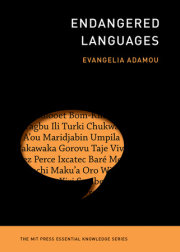
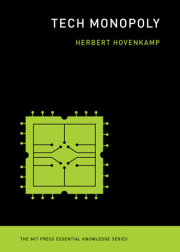
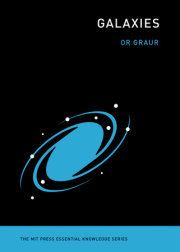
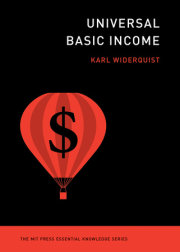





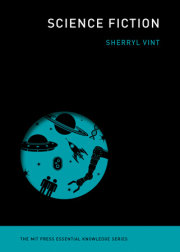
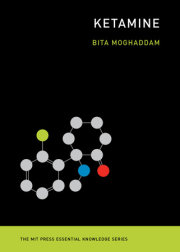
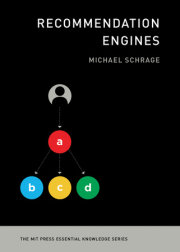
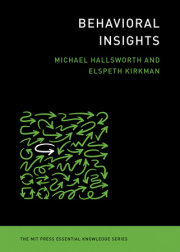



In celebration of Jewish American Heritage Month in May, we are sharing books by authors who share their individual stories, experiences, and lives. Find our full collection of books here.
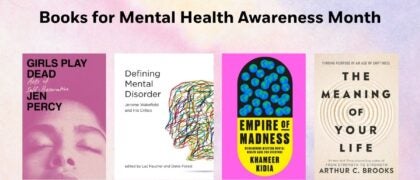
For Mental Health Awareness Month in May, we are sharing books to educate and raise awareness about mental health and the various factors that may affect it, and to provide tools and resources for student wellness. Find our full collection of titles here.
Each May, we honor the stories, histories, and cultures of Asian Americans, Native Hawaiians, and Pacific Islanders. Below is a selection of acclaimed fiction and nonfiction books by AANHPI creators to share with your students this month and throughout the year. Find our full collection of titles for Higher Education here.