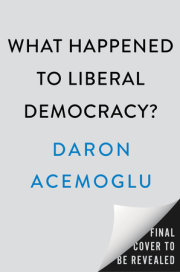
What Happened to Liberal Democracy?

Remaking a Politics of Shared Prosperity

Audiobook Download
On sale Aug 11, 2026 | 10 Hours and 0 Minutes | 9798217338443

See Additional Formats
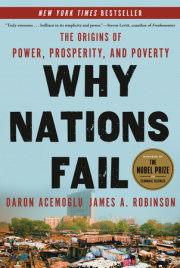
From Daron Acemoglu, 2024 Nobel laureate in economics and coauthor of Why Nations Fail, an ambitious and expansive inquiry into the biggest story in global politics over the last hundred years: the rise and fall of liberal democracy.

"A very important work and a must-read." —Thomas Piketty, #1 New York Times bestselling author of Capital in the Twenty-First Century

The dissolution of the Soviet Union in 1991 raised hopes that we were one step closer to the triumph of liberalism. Soon, many predicted, we would all be living in functional liberal democracies. Sustained economic growth would benefit all segments of society and war would be a relic of the past. A generation later, one can only ask: What happened?

Nobel laureate Daron Acemoglu argues in this powerful book that liberal democracy flourished when it pursued its core promises of shared prosperity, democratic governance, and the free pursuit of knowledge. But liberalism, a philosophy built to challenge power, never fully adjusted to becoming the establishment. Nor was it able to deal with the economic and social disruptions that digital technologies wrought. Worse, in the postindustrial economy, liberalism turned its back on its core promises. As a segment of college-educated elites became politically dominant and separated from the rest of society, they sowed the seeds of widespread inequality while intensifying efforts to reshape mass culture and values.

Acemoglu, using the wide interdisciplinary lens that has won him acclaim, documents the extraordinary, unparalleled progress that liberalism created, and recounts how liberal democratic institutions plunged themselves into crisis over the last several decades. Looking at rapid advances in technology, shifts in regulatory environments, global political history, and economics, Acemoglu lucidly lays out the successes and failures of our most important political system. And he envisions a new way forward, which he calls working-class liberalism: a philosophy that prioritizes shared prosperity, empowers communities, and accommodates a range of values and views.
© Bryce Vickmark
Daron Acemoglu is an Institute Professor at MIT. His previous books include the New York Times bestseller Why Nations Fail, The Narrow Corridor, and Power and Progress. He is a recipient of the John Bates Clark Medal, the BBVA award, the Erwin Plein Nemmers Prize in Economics, and the Nobel Memorial Prize in Economic Sciences. View titles by Daron Acemoglu
"This book makes a powerful case for rebuilding Roosevelt-like 'working-class liberalism.' A very important work and a must-read." —Thomas Piketty, #1 New York Times bestselling author of Capital in the Twenty-First Century

"Daron Acemoglu is arguably the greatest economist of our generation. He argues that tackling the gigantic economic divide is essential to renew liberalism itself. His call for a working class liberalism is a needed shot in the arm for a governing philosophy that has appeared tired and ineffective compared to the energetic demagoguery of our time." —Ro Khanna, member of Congress and author of Progressive Capitalism

"Why has liberal democracy, after being so successful at promoting prosperity for most of the 20th century, failed in recent years? How can ignorant people be made useful? Why does the average American now have many fewer friends than a few decades ago? How does the University of California at Berkeley resemble early Christianity and Chairman Mao’s Cultural Revolution? Questions such as these drew millions of readers to Daron Acemoglu’s previous books. They pepper this newest book of his. Millions more readers will now treasure his thoughtful proposed solution to the most important question of modern democracy." —Jared Diamond, Pulitzer Prize-winning author of Guns, Germs, and Steel

"This urgent book reminds us that the path charted by technology is not destiny, it is a moral and political choice. We can let AI replace and devalue human labor, ultimately taking away democracy as we know it. Or we can induce the tech oligarchs to develop these new tools in ways that empower workers and lead to shared prosperity. It won't come easily, but the problem is less that algorithms have a mind of their own, than, more prosaically the greed of elites and their grip on the system. In these unsettled times, Daron Acemoglu forces us to reckon with our very human responsibility to stand up for (and with) the less powerful." —Esther Duflo, 2019 Nobel laureate in Economics

"Daron Acemoglu is one of the most brilliant and insightful thinkers I’ve ever known. His particular genius is being able to look at impossibly complex problems and see right to the heart of what matters. In What Happened to Liberal Democracy?, Acemoglu pinpoints what is going wrong in the modern world, and even more importantly, charts a reasonable path to something much better. What Happened to Liberal Democracy? is a tour de force that left me feeling more optimistic about the future than I have in a long time." —Steven Levitt, #1 New York Times bestselling author of Freakonomics


"Has liberal democracy failed? Many think so, but not Daron Acemoglu. In this elegant and deeply informed book, he explains why liberalism is worth saving despite today’s widespread skepticism. Indeed, it must be saved, and he details what we need to do. The argument is both necessary and inspiring." —Angus Deaton, 2015 Nobel laureate in Economics

“Stop whatever you are doing and read this book. American democracy is on fire, and Daron Acemoglu has not only figured out why this happened, but he also knows how we can find a better future – through understanding how the economy really works and changing the path of innovation to create more good jobs. A must read for anyone interested in technology, economics, politics, sociology, and the future of the world.” —Simon Johnson, 2024 Nobel laureate in Economics and Former Chief Economist, International Monetary Fund

"Combining economic, historical and philosophical perspectives, Daron Acemoglu
not only gives us an outstanding analysis of why the liberal democratic dream has faded since its effulgence in the 1990’s; he also offers an energizing account of how, built around a range of values, the vision can be recruited in support of a shared prosperity, a vibrant community and a technology serving the public good. This is a book, perhaps the book, for our time." —Philip Pettit, L.S. Rockefeller University Professor of Human Values, Princeton University

“Daron Acemoglu wants liberalism to focus less on identity politics and more on shared prosperity, less on social engineering and more on equipping workers to flourish in the age of AI. One of the most creative economists of our time, Acemoglu argues that the direction of new technologies is not a fact of nature but a question for democratic citizens to decide. His ‘working-class liberalism’ would recall liberalism from its technocratic tendencies and make it an energizing force for solidarity and freedom.” —Michael Sandel, author of The Tyranny of Merit: Can We Find the Common Good?

"The title of this book poses the key question of governance for our era. Problems with the status quo are unignorable, but we have learned that the alternatives to liberal democracy are better at getting elected than at governing. We desperately need coherent visions for a liberal democracy of the 21st century, and in these pages Acemoglu lays one out with clarity, conviction, and nuance." —Steven Pinker, Johnstone Professor of Psychology, Harvard University, and bestselling author of Enlightenment Now

"One of the best economists of our age takes a close and penetrating look at the political crisis of liberal democracies. As thought-provoking as it is insightful, informed and incisive, this book is essential reading for anyone concerned about politics, power and populism in the twenty-first century." —Joel Mokyr, 2025 Nobel laureate in Economics

“In social science we have seriously neglected the ideational and philosophical bases of our institutions and public policies. This book is a major paradigm shift.” —James Robinson, 2024 Nobel laureate in Economics

About

From Daron Acemoglu, 2024 Nobel laureate in economics and coauthor of Why Nations Fail, an ambitious and expansive inquiry into the biggest story in global politics over the last hundred years: the rise and fall of liberal democracy.

"A very important work and a must-read." —Thomas Piketty, #1 New York Times bestselling author of Capital in the Twenty-First Century

The dissolution of the Soviet Union in 1991 raised hopes that we were one step closer to the triumph of liberalism. Soon, many predicted, we would all be living in functional liberal democracies. Sustained economic growth would benefit all segments of society and war would be a relic of the past. A generation later, one can only ask: What happened?

Nobel laureate Daron Acemoglu argues in this powerful book that liberal democracy flourished when it pursued its core promises of shared prosperity, democratic governance, and the free pursuit of knowledge. But liberalism, a philosophy built to challenge power, never fully adjusted to becoming the establishment. Nor was it able to deal with the economic and social disruptions that digital technologies wrought. Worse, in the postindustrial economy, liberalism turned its back on its core promises. As a segment of college-educated elites became politically dominant and separated from the rest of society, they sowed the seeds of widespread inequality while intensifying efforts to reshape mass culture and values.

Acemoglu, using the wide interdisciplinary lens that has won him acclaim, documents the extraordinary, unparalleled progress that liberalism created, and recounts how liberal democratic institutions plunged themselves into crisis over the last several decades. Looking at rapid advances in technology, shifts in regulatory environments, global political history, and economics, Acemoglu lucidly lays out the successes and failures of our most important political system. And he envisions a new way forward, which he calls working-class liberalism: a philosophy that prioritizes shared prosperity, empowers communities, and accommodates a range of values and views.

Author

© Bryce Vickmark
Daron Acemoglu is an Institute Professor at MIT. His previous books include the New York Times bestseller Why Nations Fail, The Narrow Corridor, and Power and Progress. He is a recipient of the John Bates Clark Medal, the BBVA award, the Erwin Plein Nemmers Prize in Economics, and the Nobel Memorial Prize in Economic Sciences. View titles by Daron Acemoglu

Praise

"This book makes a powerful case for rebuilding Roosevelt-like 'working-class liberalism.' A very important work and a must-read." —Thomas Piketty, #1 New York Times bestselling author of Capital in the Twenty-First Century

"Daron Acemoglu is arguably the greatest economist of our generation. He argues that tackling the gigantic economic divide is essential to renew liberalism itself. His call for a working class liberalism is a needed shot in the arm for a governing philosophy that has appeared tired and ineffective compared to the energetic demagoguery of our time." —Ro Khanna, member of Congress and author of Progressive Capitalism

"Why has liberal democracy, after being so successful at promoting prosperity for most of the 20th century, failed in recent years? How can ignorant people be made useful? Why does the average American now have many fewer friends than a few decades ago? How does the University of California at Berkeley resemble early Christianity and Chairman Mao’s Cultural Revolution? Questions such as these drew millions of readers to Daron Acemoglu’s previous books. They pepper this newest book of his. Millions more readers will now treasure his thoughtful proposed solution to the most important question of modern democracy." —Jared Diamond, Pulitzer Prize-winning author of Guns, Germs, and Steel

"This urgent book reminds us that the path charted by technology is not destiny, it is a moral and political choice. We can let AI replace and devalue human labor, ultimately taking away democracy as we know it. Or we can induce the tech oligarchs to develop these new tools in ways that empower workers and lead to shared prosperity. It won't come easily, but the problem is less that algorithms have a mind of their own, than, more prosaically the greed of elites and their grip on the system. In these unsettled times, Daron Acemoglu forces us to reckon with our very human responsibility to stand up for (and with) the less powerful." —Esther Duflo, 2019 Nobel laureate in Economics

"Daron Acemoglu is one of the most brilliant and insightful thinkers I’ve ever known. His particular genius is being able to look at impossibly complex problems and see right to the heart of what matters. In What Happened to Liberal Democracy?, Acemoglu pinpoints what is going wrong in the modern world, and even more importantly, charts a reasonable path to something much better. What Happened to Liberal Democracy? is a tour de force that left me feeling more optimistic about the future than I have in a long time." —Steven Levitt, #1 New York Times bestselling author of Freakonomics


"Has liberal democracy failed? Many think so, but not Daron Acemoglu. In this elegant and deeply informed book, he explains why liberalism is worth saving despite today’s widespread skepticism. Indeed, it must be saved, and he details what we need to do. The argument is both necessary and inspiring." —Angus Deaton, 2015 Nobel laureate in Economics

“Stop whatever you are doing and read this book. American democracy is on fire, and Daron Acemoglu has not only figured out why this happened, but he also knows how we can find a better future – through understanding how the economy really works and changing the path of innovation to create more good jobs. A must read for anyone interested in technology, economics, politics, sociology, and the future of the world.” —Simon Johnson, 2024 Nobel laureate in Economics and Former Chief Economist, International Monetary Fund

"Combining economic, historical and philosophical perspectives, Daron Acemoglu
not only gives us an outstanding analysis of why the liberal democratic dream has faded since its effulgence in the 1990’s; he also offers an energizing account of how, built around a range of values, the vision can be recruited in support of a shared prosperity, a vibrant community and a technology serving the public good. This is a book, perhaps the book, for our time." —Philip Pettit, L.S. Rockefeller University Professor of Human Values, Princeton University

“Daron Acemoglu wants liberalism to focus less on identity politics and more on shared prosperity, less on social engineering and more on equipping workers to flourish in the age of AI. One of the most creative economists of our time, Acemoglu argues that the direction of new technologies is not a fact of nature but a question for democratic citizens to decide. His ‘working-class liberalism’ would recall liberalism from its technocratic tendencies and make it an energizing force for solidarity and freedom.” —Michael Sandel, author of The Tyranny of Merit: Can We Find the Common Good?

"The title of this book poses the key question of governance for our era. Problems with the status quo are unignorable, but we have learned that the alternatives to liberal democracy are better at getting elected than at governing. We desperately need coherent visions for a liberal democracy of the 21st century, and in these pages Acemoglu lays one out with clarity, conviction, and nuance." —Steven Pinker, Johnstone Professor of Psychology, Harvard University, and bestselling author of Enlightenment Now

"One of the best economists of our age takes a close and penetrating look at the political crisis of liberal democracies. As thought-provoking as it is insightful, informed and incisive, this book is essential reading for anyone concerned about politics, power and populism in the twenty-first century." —Joel Mokyr, 2025 Nobel laureate in Economics

“In social science we have seriously neglected the ideational and philosophical bases of our institutions and public policies. This book is a major paradigm shift.” —James Robinson, 2024 Nobel laureate in Economics

Books for Asian American, Native Hawaiian, and Pacific Islander Heritage Month

Each May, we honor the stories, histories, and cultures of Asian Americans, Native Hawaiians, and Pacific Islanders. Below is a selection of acclaimed fiction and nonfiction books by AANHPI creators to share with your students this month and throughout the year. Find our full collection of titles for Higher Education here.

Read more