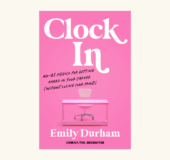
Download high-resolution image
Listen to a clip from the audiobook
audio play button
0:00
0:00

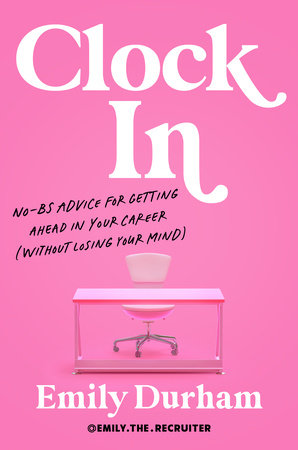
Clock In

No-BS Advice for Getting Ahead in Your Career (Without Losing Your Mind)

Author Emily Durham On Tour
Listen to a clip from the audiobook
audio play button
0:00
0:00
Career advice that actually works from a straight-shooter recruiter

Did you know the average job search takes more than five months? That’s because today’s job market is more challenging—and more confusing—than ever. How are we supposed to get hired, get paid, and get ahead in our careers? Why is everything so complicated and gatekept? 

That’s where Emily the Recruiter comes in. Using her years of experience as a recruiter and career coach, she pulls back the curtain on everything employment-related and tells you all you need to know about job hunting, networking, and not letting your boss drive you crazy. A much-needed antidote to the “gaslight, gatekeep, girlboss” ethos, this guidebook gives you the real talk you need to lock in when you clock in.

You’ll learn how to:

  • Optimize your résumé and LinkedIn profile
  • Network like a pro
  • Strike a healthy work-life balance
  • Crush job interviews and salary negotiations
  • Defeat impostor syndrome and communicate with confidence
  • Succeed in your career without making it your whole identity

If you’re ready to work smarter, not harder, Clock In is the no-filter, no-fluff resource you need to thrive in your nine-to-five—and beyond.
Chapter 1

Wake Up, the Dream Isn't Yours

I have a feeling the person who first said, "If you love your job, you'll never work a day in your life" is the same person who said, "You'll find love when you least expect it." So far, they're 0 for 2.

Think back to the first time someone asked you, "What do you want to be when you grow up?" You were probably five or six years old, sitting in a classroom with a well-intentioned teacher asking you to draw a picture of your dream job on construction paper. You could barely tie your shoes, and yet they were asking you to draw pictures of taxable activities. Very capitalism coded.

"What do you want to be when you grow up?"

"What are you going to study?"

"What are your career goals?"

All valid questions . . . for people who have fully developed frontal lobes. Sigh.

These same questions likely echoed in high school when suddenly you were seventeen and feeling the pressure to pick the perfect university program to help you land your dream job. If you didn't pick the right major, it seemed, your whole life would be thrown offtrack. You'd be working in the wrong field, miserable and making no money, unable to afford a place to live or a family. Teenage you-the same you who likely stole beers from your parents' fridge and lied about where you were going with your friends-was responsible for making a life-altering decision. A roughly $100,000 decision at that. You couldn't drive, vote, or order a martini, but you were somehow expected to have the entirety of your professional life mapped out.

Dare I say we're a little too comfortable asking kids to dream of labor?

Waking Up from
the Dream

Listen, I'm not going to get philosophical on your ass in every chapter, but you need to hear this. By the end of this book, you're going to feel completely equipped to navigate and redirect your career a million times over. But first, you'll need to emotionally detach from the process, otherwise it's going to eat you alive.

This starts with understanding that the "dream job" is just that: a dream. It doesn't actually exist.

Why is that? For one thing, the aspirations we dream up early in life are limited by our youth and lack of experience, and they often don't correspond with the way our careers actually turn out. In fact, a startling 50 percent of recent college grads are working in fields that don't use their degrees.

As a kid, when you were asked about your career aspirations, where did your answer come from? The careers we dream of are the careers we know exist and that we believe we have access to. Naturally as a seven-year-old, you aren't consciously processing these factors, but they are still very much at play.

Children's career ambitions are molded by what they see. For example, I knew my dad worked in sales, my mom worked in insurance, and most of the women I saw on TV worked in fashion or were stay-at-home moms. I also really liked my grade 4 teacher. She was cool. So here were the career options I could imagine:

Actress

Sales

Full-time mom

Fashion designer

Fashion model

Teacher

(Working in insurance was never on the list, even back then. Sorry, Mom.)

Chances are the dream job you had as a child was informed by your environment, too. And chances are the dream job you aspired to have as a young adult was, at least a little bit, informed by your childhood dream job or self-beliefs. It's all connected, and we can't get ahead until we disconnect.

Humor me. Make a list of the jobs you were interested in as a child, and then the jobs you were aiming to enter in high school and college. Notice any patterns? What beliefs did you hold about your skills and abilities?

Let's unpack that.

Not to state the obvious, but the jobs on your list were all jobs that you knew existed as a kid because you had exposure to them through your family, friends, or media. If a job was more obscure or unglamorous, you probably hadn't heard of it: Bob the Actuary or Bob the Warehouse Project Manager doesn't have quite the same ring as Bob the Builder. Other times, young people might know a career path exists but are discouraged from exploring it because of family expectations and pressures to pursue certain jobs. (I think my cousins are still disappointed I'm not a lawyer.)

Manufactured
Dreams

My point is: Our environment shapes our career ambitions and the confidence we have to pursue them. One of the best examples of this is the relative lack of women in fields related to STEM (science, technology, engineering, and math). In 2024, only about 30 percent of people working in STEM jobs were women, even though women, of course, represent about 50 percent of the population.

When they hear this statistic, some people think, Clearly, women just don't want to work in those fields. Or worse: Women are bad at STEM. But it isn't as simple as that.

In fact, it isn't simple at all. Because when we look at the impact of stereotypes, representation, support, and access, it becomes clear that succeeding in your career is not as simple as following your "dreams."

Stereotype Threat

Our dreams for our future start with our self-concept from an early age, even as early as elementary and middle school. Studies suggest that about 74 percent of middle-school girls have an interest in STEM subjects but that this number significantly drops when they reach high school. Why? For starters, there is a stereotype that math and science are inherently masculine and that boys are naturally better at these things. These stereotypes impact the way young girls see themselves at such a formative age that it directly impacts their academic performance.

A study conducted by UCLA and Xiamen University aimed to challenge the belief that boys are better than girls at math across eight thousand middle-school students in China. It found that middle-school girls typically scored better than boys on a math test both groups were given. (Slay.) However, the higher the proportion of students who believed that boys were better at math, the worse the girls performed on the test.

This phenomenon is known as stereotype threat. It tells us that how well girls tend to do in STEM is directly related to how well they believe they can do. Similarly, we only chase careers we think we will succeed in. See where I'm going? If we believe from a young age that we can't be good at certain jobs, those career dreams will be dead before we even imagine them.

The Importance
of Representation

In addition to our exposure to stereotypes, how much we believe we can accomplish is often limited by what we have seen others accomplish. For this, our main sources of influence are our parents and the media.

A Microsoft study shows that when young women know a woman in STEM, they're 20 percent more likely to "feel empowered by STEM activities." But only roughly 8 percent of the STEM workforce in 1970 were women. Eight percent! Statistically speaking, most of our grandmas, moms, and aunts were not in STEM. This means most young girls are less likely to feel capable of occupying a career in STEM and, even if they were interested, wouldn't know how to get there.

We also know the media doesn't always paint the most dynamic picture of women in the workforce, especially if you go back to the stuff we grew up with in the '90s and early 2000s (let alone before that). And as they grow older, these girls will see that most STEM professors are men. Most hiring managers in STEM are men. If they don't see people who look like them in STEM roles, why would they think they're capable of occupying those roles? Especially if most of their experience with STEM consists of being told they aren't naturally skilled at it? Ouch.

The difference between girls' and boys' ability to dream of STEM careers has ramifications in the real world. Boys end up with more access to education, training, and career opportunities (and may not understand the hurdles a young woman may have to overcome). A male new grad may very well have four years of tech internship experience, while his female counterpart may have only one-or none at all. Not because she isn't great but because she had to spend her time breaking down doors, not coding on the other side of them.

Facing Hostility

When women do break down the doors and enter STEM careers, they're not always given a warm welcome. In 2015, platform engineer Isis Wenger was featured in a recruitment marketing campaign for her company. In theory, this is exactly the kind of effort we need to show girls and young women that they can have STEM careers. In practice, well . . . you may need a coffee, or something stronger, for this one.

Wenger went viral, but the bad kind of viral. Thousands of people online claimed she was a "hired model" and was "too feminine and hot" to be an engineer. In response, Wenger posted a photo of herself holding a sign that read #ILookLikeAnEngineer to challenge the notion of what an engineer looked like. This hashtag eventually trended on social media and became the push for a global movement to challenge stereotypes of who can be an engineer.

This is a very public example of what waits for women on the other side of the door (and an example of how the stereotypes and lack of representation we previously discussed are perpetuated). But it's not at all unique. Many studies also show that women in STEM are often not taken as seriously as their male counterparts and are significantly more likely to experience workplace discrimination, sexism, and outright harassment. And the intersections of race, sexuality, ability, and gender can significantly worsen the impacts of these experiences. A dream job can quickly become a nightmare.

A Different Dream

What's my larger point here? Our dreams for our careers aren't ours alone. Whether it's something as simple as never having heard of a marketing manager or as complex as trying to enter a STEM field as a woman, our ideas about our dream jobs are largely shaped by the people and media around us.

Knowing that, what if we gave ourselves permission to detach all our hopes and dreams from our jobs? To stop thinking that what we do for work is an inherent part of who we are? Yes, work is important. But it isn't everything. The vast majority of us won't be on our deathbed wishing we could work another shift. You may love your job, but-much like my ex-boyfriend-it isn't going to love you back.

Given that your dream job isn't baked into your DNA, what if we took a minute to challenge the idea of what we thought we wanted and examine whether you're on the right path?

Before you panic: If you're studying or working in your dream industry, I love that for you. The best thing you'll ever do for your career is follow your passion. But that only works if you give yourself permission to change your passion and path as needed. I'm a big believer in checking in with yourself every year by saying, "Self, am I still doing what I want?" So, whether you're starting from scratch on your career or just checking in with yourself, let's forget the dreams and ask ourselves where we really want to be.

Your Hit List

Get out a pen and paper (or your iPad if you're an iPad kid). In this exercise, you're going to write the formula for your dream job-or, more accurately, your awake job. (It doesn't sound as sexy, but you'll enjoy it more.)

1. Start by writing a list of your natural strengths, such as public speaking, selling, or people skills. Write down as many as you can think of. If you're not sure you're "good enough" at a given skill to add it to this list, ask yourself why. What if you gave yourself a chance to be good at it? What if you told yourself that you could be? Add a couple more to the list-don't be modest! Next, circle the skills on the list you actually enjoy (or at least, enjoy enough if you're being paid to do them). This is called your Hit List.

2. In another list, write down the things you are legitimately bad at and/or really dislike. If you're not great at something, but you generally like it, there's hope of improving-that's not what this list is for. This list is for stuff you truly don't want to do in a job. This is called your Shit List.

3. Make a third and final list of your must-haves when it comes to work. Is a traditional nine-to-five better or worse for you? How important is work-life balance? Pay? Vacation? This is your Good Fit List.

4. Now open up your browser and search "job with" plus a couple of the circled skills on your Hit List. For example, when I search "jobs with people skills and public speaking," here are some of the results I get:

Tour guide

Teacher

Reporter

Sales representative

Public relations manager

Public speaking coach

Curator

Moderator

5. Write all the jobs down and then vet them by looking up job postings for each. For example, I might look up sales representative jobs in Toronto to see how many jobs are posted, what the average salary looks like for these roles, if the job descriptions actually sound interesting, and if the industries offering these jobs are up my alley. I may
also go on social media to watch videos from sales representatives vlogging their day or talking about
their experience, to get a better sense of whether the job
is the right fit for me.

6. As you do this research, evaluate how well each posting fits with your Hit List, Shit List, and Good Fit List. You should have a sense of what the job requirements are, what the responsibilities are, how much you can expect to be paid, what kinds of industries hire for this role, and whether there are many or very few opportunities available. If these core factors seem aligned with what you want, great! That means this is one of potentially several viable career paths you can consider as you continue reading this book!

VPL:
Validation, Purpose, Lifestyle

What you want in your career has largely been shaped by your environment, and there's nothing wrong with that. But there is so much power in understanding that what we have always wanted and what we will want in the future may evolve alongside our environment, circumstances, and sense of self. And there's even more power in bringing awareness to the self-beliefs we hold that were shaped by our childhood-and giving ourselves the chance to challenge them.
© Kayla Rocca
Emily Durham, better known as Emily the Recruiter, is a recruiter turned career coach and content creator. On her popular social media platform and her podcast, Clock In, she gives real-world advice to help people thrive in their careers. Her work has been featured on Good Morning America, BBC News, in the Globe and Mail, and more. She lives in Toronto. View titles by Emily Durham
Clock In is a pep talk, a kick in the butt, and your big sister’s best career advice all wrapped into one. Emily brings her deep workplace and recruitment expertise to create a career guide that’s both inspiring and refreshingly straightforward. This is a must-read for anyone ready to get their career (and life) back on track.”
—Sho Dewan, founder of Workhap

“Emily Durham writes in a relatable, no-pressure tone that makes the advice feel accessible, not intimidating, while still offering concrete tools and steps you can apply immediately. This is an empowering read for anyone feeling stuck or unsure of how to navigate their next career move.”
—Israa Nasir, author of Toxic Productivity and founder of @well.guide

“Emily Durham is your smartest, no-nonsense work bestie. She’s helped millions rethink how they show up, get hired, and get ahead. With warmth and practical insight, Clock In is her empowering playbook for building a career with intention and confidence.”
—Melissa Leong, author of Happy Go Money

“An excellent, thoughtful, and deeply motivating modern handbook for excelling in your career. In a challenging and often disheartening economy, Emily delivers sharp frameworks, actionable advice, and unwavering encouragement for creating a career on your own terms—one you’ll finish the book believing everyone deserves.”
—Alexis Barber, author of Too Smart for This and founder of Too Collective

Clock In is the book I wish I had when I was on the job hunt. It demystifies the complexities of launching and leveling up your career in the corporate world, and it’s chock full of practical, actionable advice delivered in an approachable and humorous way. It’s a must-read for anyone wanting to secure their ideal role and have a fruitful career.”
— Nidhi Tewari, LCSW, author of Working Well, and Fortune 500 speaker on work culture and wellbeing

About

Career advice that actually works from a straight-shooter recruiter

Did you know the average job search takes more than five months? That’s because today’s job market is more challenging—and more confusing—than ever. How are we supposed to get hired, get paid, and get ahead in our careers? Why is everything so complicated and gatekept? 

That’s where Emily the Recruiter comes in. Using her years of experience as a recruiter and career coach, she pulls back the curtain on everything employment-related and tells you all you need to know about job hunting, networking, and not letting your boss drive you crazy. A much-needed antidote to the “gaslight, gatekeep, girlboss” ethos, this guidebook gives you the real talk you need to lock in when you clock in.

You’ll learn how to:

  • Optimize your résumé and LinkedIn profile
  • Network like a pro
  • Strike a healthy work-life balance
  • Crush job interviews and salary negotiations
  • Defeat impostor syndrome and communicate with confidence
  • Succeed in your career without making it your whole identity

If you’re ready to work smarter, not harder, Clock In is the no-filter, no-fluff resource you need to thrive in your nine-to-five—and beyond.

Excerpt

Chapter 1

Wake Up, the Dream Isn't Yours

I have a feeling the person who first said, "If you love your job, you'll never work a day in your life" is the same person who said, "You'll find love when you least expect it." So far, they're 0 for 2.

Think back to the first time someone asked you, "What do you want to be when you grow up?" You were probably five or six years old, sitting in a classroom with a well-intentioned teacher asking you to draw a picture of your dream job on construction paper. You could barely tie your shoes, and yet they were asking you to draw pictures of taxable activities. Very capitalism coded.

"What do you want to be when you grow up?"

"What are you going to study?"

"What are your career goals?"

All valid questions . . . for people who have fully developed frontal lobes. Sigh.

These same questions likely echoed in high school when suddenly you were seventeen and feeling the pressure to pick the perfect university program to help you land your dream job. If you didn't pick the right major, it seemed, your whole life would be thrown offtrack. You'd be working in the wrong field, miserable and making no money, unable to afford a place to live or a family. Teenage you-the same you who likely stole beers from your parents' fridge and lied about where you were going with your friends-was responsible for making a life-altering decision. A roughly $100,000 decision at that. You couldn't drive, vote, or order a martini, but you were somehow expected to have the entirety of your professional life mapped out.

Dare I say we're a little too comfortable asking kids to dream of labor?

Waking Up from
the Dream

Listen, I'm not going to get philosophical on your ass in every chapter, but you need to hear this. By the end of this book, you're going to feel completely equipped to navigate and redirect your career a million times over. But first, you'll need to emotionally detach from the process, otherwise it's going to eat you alive.

This starts with understanding that the "dream job" is just that: a dream. It doesn't actually exist.

Why is that? For one thing, the aspirations we dream up early in life are limited by our youth and lack of experience, and they often don't correspond with the way our careers actually turn out. In fact, a startling 50 percent of recent college grads are working in fields that don't use their degrees.

As a kid, when you were asked about your career aspirations, where did your answer come from? The careers we dream of are the careers we know exist and that we believe we have access to. Naturally as a seven-year-old, you aren't consciously processing these factors, but they are still very much at play.

Children's career ambitions are molded by what they see. For example, I knew my dad worked in sales, my mom worked in insurance, and most of the women I saw on TV worked in fashion or were stay-at-home moms. I also really liked my grade 4 teacher. She was cool. So here were the career options I could imagine:

Actress

Sales

Full-time mom

Fashion designer

Fashion model

Teacher

(Working in insurance was never on the list, even back then. Sorry, Mom.)

Chances are the dream job you had as a child was informed by your environment, too. And chances are the dream job you aspired to have as a young adult was, at least a little bit, informed by your childhood dream job or self-beliefs. It's all connected, and we can't get ahead until we disconnect.

Humor me. Make a list of the jobs you were interested in as a child, and then the jobs you were aiming to enter in high school and college. Notice any patterns? What beliefs did you hold about your skills and abilities?

Let's unpack that.

Not to state the obvious, but the jobs on your list were all jobs that you knew existed as a kid because you had exposure to them through your family, friends, or media. If a job was more obscure or unglamorous, you probably hadn't heard of it: Bob the Actuary or Bob the Warehouse Project Manager doesn't have quite the same ring as Bob the Builder. Other times, young people might know a career path exists but are discouraged from exploring it because of family expectations and pressures to pursue certain jobs. (I think my cousins are still disappointed I'm not a lawyer.)

Manufactured
Dreams

My point is: Our environment shapes our career ambitions and the confidence we have to pursue them. One of the best examples of this is the relative lack of women in fields related to STEM (science, technology, engineering, and math). In 2024, only about 30 percent of people working in STEM jobs were women, even though women, of course, represent about 50 percent of the population.

When they hear this statistic, some people think, Clearly, women just don't want to work in those fields. Or worse: Women are bad at STEM. But it isn't as simple as that.

In fact, it isn't simple at all. Because when we look at the impact of stereotypes, representation, support, and access, it becomes clear that succeeding in your career is not as simple as following your "dreams."

Stereotype Threat

Our dreams for our future start with our self-concept from an early age, even as early as elementary and middle school. Studies suggest that about 74 percent of middle-school girls have an interest in STEM subjects but that this number significantly drops when they reach high school. Why? For starters, there is a stereotype that math and science are inherently masculine and that boys are naturally better at these things. These stereotypes impact the way young girls see themselves at such a formative age that it directly impacts their academic performance.

A study conducted by UCLA and Xiamen University aimed to challenge the belief that boys are better than girls at math across eight thousand middle-school students in China. It found that middle-school girls typically scored better than boys on a math test both groups were given. (Slay.) However, the higher the proportion of students who believed that boys were better at math, the worse the girls performed on the test.

This phenomenon is known as stereotype threat. It tells us that how well girls tend to do in STEM is directly related to how well they believe they can do. Similarly, we only chase careers we think we will succeed in. See where I'm going? If we believe from a young age that we can't be good at certain jobs, those career dreams will be dead before we even imagine them.

The Importance
of Representation

In addition to our exposure to stereotypes, how much we believe we can accomplish is often limited by what we have seen others accomplish. For this, our main sources of influence are our parents and the media.

A Microsoft study shows that when young women know a woman in STEM, they're 20 percent more likely to "feel empowered by STEM activities." But only roughly 8 percent of the STEM workforce in 1970 were women. Eight percent! Statistically speaking, most of our grandmas, moms, and aunts were not in STEM. This means most young girls are less likely to feel capable of occupying a career in STEM and, even if they were interested, wouldn't know how to get there.

We also know the media doesn't always paint the most dynamic picture of women in the workforce, especially if you go back to the stuff we grew up with in the '90s and early 2000s (let alone before that). And as they grow older, these girls will see that most STEM professors are men. Most hiring managers in STEM are men. If they don't see people who look like them in STEM roles, why would they think they're capable of occupying those roles? Especially if most of their experience with STEM consists of being told they aren't naturally skilled at it? Ouch.

The difference between girls' and boys' ability to dream of STEM careers has ramifications in the real world. Boys end up with more access to education, training, and career opportunities (and may not understand the hurdles a young woman may have to overcome). A male new grad may very well have four years of tech internship experience, while his female counterpart may have only one-or none at all. Not because she isn't great but because she had to spend her time breaking down doors, not coding on the other side of them.

Facing Hostility

When women do break down the doors and enter STEM careers, they're not always given a warm welcome. In 2015, platform engineer Isis Wenger was featured in a recruitment marketing campaign for her company. In theory, this is exactly the kind of effort we need to show girls and young women that they can have STEM careers. In practice, well . . . you may need a coffee, or something stronger, for this one.

Wenger went viral, but the bad kind of viral. Thousands of people online claimed she was a "hired model" and was "too feminine and hot" to be an engineer. In response, Wenger posted a photo of herself holding a sign that read #ILookLikeAnEngineer to challenge the notion of what an engineer looked like. This hashtag eventually trended on social media and became the push for a global movement to challenge stereotypes of who can be an engineer.

This is a very public example of what waits for women on the other side of the door (and an example of how the stereotypes and lack of representation we previously discussed are perpetuated). But it's not at all unique. Many studies also show that women in STEM are often not taken as seriously as their male counterparts and are significantly more likely to experience workplace discrimination, sexism, and outright harassment. And the intersections of race, sexuality, ability, and gender can significantly worsen the impacts of these experiences. A dream job can quickly become a nightmare.

A Different Dream

What's my larger point here? Our dreams for our careers aren't ours alone. Whether it's something as simple as never having heard of a marketing manager or as complex as trying to enter a STEM field as a woman, our ideas about our dream jobs are largely shaped by the people and media around us.

Knowing that, what if we gave ourselves permission to detach all our hopes and dreams from our jobs? To stop thinking that what we do for work is an inherent part of who we are? Yes, work is important. But it isn't everything. The vast majority of us won't be on our deathbed wishing we could work another shift. You may love your job, but-much like my ex-boyfriend-it isn't going to love you back.

Given that your dream job isn't baked into your DNA, what if we took a minute to challenge the idea of what we thought we wanted and examine whether you're on the right path?

Before you panic: If you're studying or working in your dream industry, I love that for you. The best thing you'll ever do for your career is follow your passion. But that only works if you give yourself permission to change your passion and path as needed. I'm a big believer in checking in with yourself every year by saying, "Self, am I still doing what I want?" So, whether you're starting from scratch on your career or just checking in with yourself, let's forget the dreams and ask ourselves where we really want to be.

Your Hit List

Get out a pen and paper (or your iPad if you're an iPad kid). In this exercise, you're going to write the formula for your dream job-or, more accurately, your awake job. (It doesn't sound as sexy, but you'll enjoy it more.)

1. Start by writing a list of your natural strengths, such as public speaking, selling, or people skills. Write down as many as you can think of. If you're not sure you're "good enough" at a given skill to add it to this list, ask yourself why. What if you gave yourself a chance to be good at it? What if you told yourself that you could be? Add a couple more to the list-don't be modest! Next, circle the skills on the list you actually enjoy (or at least, enjoy enough if you're being paid to do them). This is called your Hit List.

2. In another list, write down the things you are legitimately bad at and/or really dislike. If you're not great at something, but you generally like it, there's hope of improving-that's not what this list is for. This list is for stuff you truly don't want to do in a job. This is called your Shit List.

3. Make a third and final list of your must-haves when it comes to work. Is a traditional nine-to-five better or worse for you? How important is work-life balance? Pay? Vacation? This is your Good Fit List.

4. Now open up your browser and search "job with" plus a couple of the circled skills on your Hit List. For example, when I search "jobs with people skills and public speaking," here are some of the results I get:

Tour guide

Teacher

Reporter

Sales representative

Public relations manager

Public speaking coach

Curator

Moderator

5. Write all the jobs down and then vet them by looking up job postings for each. For example, I might look up sales representative jobs in Toronto to see how many jobs are posted, what the average salary looks like for these roles, if the job descriptions actually sound interesting, and if the industries offering these jobs are up my alley. I may
also go on social media to watch videos from sales representatives vlogging their day or talking about
their experience, to get a better sense of whether the job
is the right fit for me.

6. As you do this research, evaluate how well each posting fits with your Hit List, Shit List, and Good Fit List. You should have a sense of what the job requirements are, what the responsibilities are, how much you can expect to be paid, what kinds of industries hire for this role, and whether there are many or very few opportunities available. If these core factors seem aligned with what you want, great! That means this is one of potentially several viable career paths you can consider as you continue reading this book!

VPL:
Validation, Purpose, Lifestyle

What you want in your career has largely been shaped by your environment, and there's nothing wrong with that. But there is so much power in understanding that what we have always wanted and what we will want in the future may evolve alongside our environment, circumstances, and sense of self. And there's even more power in bringing awareness to the self-beliefs we hold that were shaped by our childhood-and giving ourselves the chance to challenge them.

Author

© Kayla Rocca
Emily Durham, better known as Emily the Recruiter, is a recruiter turned career coach and content creator. On her popular social media platform and her podcast, Clock In, she gives real-world advice to help people thrive in their careers. Her work has been featured on Good Morning America, BBC News, in the Globe and Mail, and more. She lives in Toronto. View titles by Emily Durham

Praise

Clock In is a pep talk, a kick in the butt, and your big sister’s best career advice all wrapped into one. Emily brings her deep workplace and recruitment expertise to create a career guide that’s both inspiring and refreshingly straightforward. This is a must-read for anyone ready to get their career (and life) back on track.”
—Sho Dewan, founder of Workhap

“Emily Durham writes in a relatable, no-pressure tone that makes the advice feel accessible, not intimidating, while still offering concrete tools and steps you can apply immediately. This is an empowering read for anyone feeling stuck or unsure of how to navigate their next career move.”
—Israa Nasir, author of Toxic Productivity and founder of @well.guide

“Emily Durham is your smartest, no-nonsense work bestie. She’s helped millions rethink how they show up, get hired, and get ahead. With warmth and practical insight, Clock In is her empowering playbook for building a career with intention and confidence.”
—Melissa Leong, author of Happy Go Money

“An excellent, thoughtful, and deeply motivating modern handbook for excelling in your career. In a challenging and often disheartening economy, Emily delivers sharp frameworks, actionable advice, and unwavering encouragement for creating a career on your own terms—one you’ll finish the book believing everyone deserves.”
—Alexis Barber, author of Too Smart for This and founder of Too Collective

Clock In is the book I wish I had when I was on the job hunt. It demystifies the complexities of launching and leveling up your career in the corporate world, and it’s chock full of practical, actionable advice delivered in an approachable and humorous way. It’s a must-read for anyone wanting to secure their ideal role and have a fruitful career.”
— Nidhi Tewari, LCSW, author of Working Well, and Fortune 500 speaker on work culture and wellbeing

Books for Asian American, Native Hawaiian, and Pacific Islander Heritage Month

Each May, we honor the stories, histories, and cultures of Asian Americans, Native Hawaiians, and Pacific Islanders. Below is a selection of acclaimed fiction and nonfiction books by AANHPI creators to share with your students this month and throughout the year. Find our full collection of titles for Higher Education here.

Read more

A Letter to Educators from Emily Durham, Author of Clock In

By: Emily Durham, Career Coach, Host of Clock In Podcast & Content Creator When I first started my career in recruitment ten years ago, I was responsible for hiring hundreds of new-graduate and early-career talent at a large Canadian bank. The work was incredibly rewarding; connecting students to jobs that would change the course of

Read more