Black Beauty

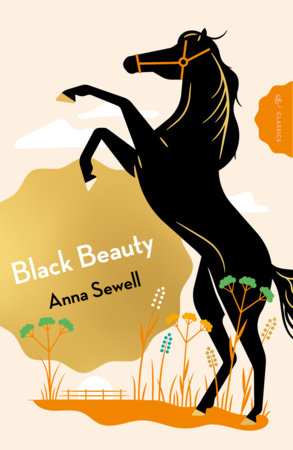
A gorgeous new deluxe paperback edition from the Pushkin Press Classics series of one of the most famous animal stories in the world.

Featuring a stunning foiled cover, inside cover printings, and beautiful designed flaps!


An enduringly beloved classic of children’s literature, Black Beauty is one of the most famous animal stories ever written. Told from the perspective of its horse protagonist, Black Beauty, Anna Sewell’s only novel exposes the cruelty experienced by animals at the hand of humans. It is a poignant and heartwarming entreaty for kindness and empathy that every child should read.

The novel begins with Black Beauty’s memories of his idyllic life as a young colt. In particular, he recalls the teachings of his mother, Duchess, who tells Black Beauty that he must always be gentle and good. When he moves to a new home after being purchased by the kindly Squire Gordon, Black Beauty tries his best to make Duchess proud.

But though his early years are happy, Black Beauty’s luck soon turns when his loving owners are forced to sell him. Passed from home to home, Black Beauty’s life turns from one of comfort and kindness to one of hard labor and cruelty. But despite the many hardships he faces, Black Beauty’s spirit never breaks, and he continues to treat everyone with the compassion and respect that Duchess once taught him. 

Part of the gorgeous Pushkin Children’s Classics series, this deluxe paperback edition is the perfect addition to a young reader's library.
I My Early Home 7
II The Hunt 10
III My Breaking In 14
IV Birtwick Park 19
V A Fair Start 23
VI Liberty 28
VII Ginger 30
VIII Ginger’s Story Continued 36
IX Merrylegs 41
X A Talk in the Orchard 45
XI Plain Speaking 52
XII A Stormy Day 56
XIII The Devil’s Trademark 60
XIV James Howard 64
XV The Old Ostler 68
XVI The Fire 72
XVII John Manly’s Talk 77
XVIII Going for the Doctor 82
XIX Only Ignorance 87
XX Joe Green 90
XXI The Parting 94
XXII Earlshall 98
XXIII A Strike for Liberty 103
XXIV Lady Anne, or a Runaway Horse 107
XXV Reuben Smith 115
XXVI How it Ended 120 XXVII Ruined, and Going Downhill 124
XXVIII A Job Horse and his Drivers 128
XXIX Cockneys 133
XXX A Thief 141
XXXI A Humbug 144
XXXII A Horse Fair 148
XXXIII A London Cab Horse 153
XXXIV An Old War Horse 158
XXXV Jerry Barker 164
XXXVI The Sunday Cab 171
XXXVII The Golden Rule 177
XXXVIII Dolly and a Real Gentleman 182
XXXIX Seedy Sam 187
XL Poor Ginger 192
XLI The Butcher 195
XLII The Election 199
XLIII A Friend in Need 202
XLIV Old Captain and his Successor 207
XLV Jerry’s New Year 212
XLVI Jakes and the Lady 219
XLVII Hard Times 224
XLVIII Farmer Thoroughgood and his Grandson Willie 229
XLIX My Last Home 234
The first place that I can well remember, was a large pleasant meadow with a pond of clear water in it. Some trees overshadowed the pond, and rushes and water-lilies grew at the deep end. Over the hedge on one side we looked into a ploughed field; and on the other, we looked over a gate at our master’s house which stood by the roadside. At the top of the meadow was a plantation of fir trees; and at the bottom, a running brook overhung by a steep bank.

Whilst I was young I lived upon my mother’s milk, as I could not eat grass. In the daytime I ran by her side, and at night I lay down close by her. When it was hot, we used to stand by the pond in the shade of the trees; and when it was cold, we had a nice warm shed near the plantation.

As soon as I was old enough to eat grass, my mother used to go out to work in the daytime, and to come back in the evening.

There were six young colts in the meadow besides me. They were older than I was; some were nearly as large as grown-up horses. I used to run with them, and have great fun.
We used to gallop all together round and round the field, as hard as we could go. Sometimes we had rather rough play, for they would frequently bite and kick as well as gallop.

One day, when there was a good deal of kicking, my mother whinnied to me to come to her; and then she said: ‘I wish you to pay attention to what I am going to say to you. The colts who live here are very good colts, but they are carthorse colts, and, of course, they have not learned good manners.

‘You have been well bred and well born; your father has a great name in these parts, and your grandfather twice won the Cup at the Newmarket races; your grandmother had the sweetest temper of any horse I ever knew, and I think you have never seen me kick or bite.

‘I hope you will grow up gentle and good, and never learn bad ways. Do your work with a good will; lift up your feet well when you trot, and never bite or kick even in play.’ I have never forgotten my mother’s advice; I knew she was a wise old horse, and our master thought a great deal of her. Her name was Duchess, but he often called her Pet.

Our master was a good, kind man. He gave us good food, good lodging, and kind words; and he spoke as kindly to us as he did to his little children. We were all fond of him, and my mother loved him very much. When she saw him at the gate, she would neigh with joy, and trot up to him. He would pat and stroke her and say, ‘Well, old Pet! How is your little Darkie?’ I was a dull black, so he called me Darkie.

Then he would give me a piece of bread, which was very good, and sometimes he brought a carrot for my mother.
All the horses would come to him, but I think we were his favourites. My mother always took him to the town on a market day in a light gig.

There was a ploughboy, Dick, who sometimes came into our field to pluck blackberries from the hedge. When he had eaten all he wanted, he would have, what he called, fun with the colts, throwing sticks and stones at them to make them gallop. We did not much mind him, for we could gallop off; but sometimes a stone would hit and hurt us.

One day he was at this game, and did not know that the master was in the next field; but he was there, watching what was going on. Over the hedge he jumped in a moment, and catching Dick by the arm, gave him such a box on the ear as made him roar with pain. As soon as we saw the master, we trotted up nearer to see what was going on.

‘Bad boy!’ he said, ‘bad boy! to chase the colts. This is not the first time nor the second, but it shall be the last. There, take your money and go home; I shall not want you on my farm again.’ So we never saw Dick again.

Old Daniel, the man who looked after the horses, was just as gentle as our master, so we were well off.
Anna Sewell (1820-1878) was an English novelist who wrote the 1877 novel Black Beauty, her only published work. It is considered one of the best-selling children’s novels of all time, although the author originally intended it for adults.

About

A gorgeous new deluxe paperback edition from the Pushkin Press Classics series of one of the most famous animal stories in the world.

Featuring a stunning foiled cover, inside cover printings, and beautiful designed flaps!


An enduringly beloved classic of children’s literature, Black Beauty is one of the most famous animal stories ever written. Told from the perspective of its horse protagonist, Black Beauty, Anna Sewell’s only novel exposes the cruelty experienced by animals at the hand of humans. It is a poignant and heartwarming entreaty for kindness and empathy that every child should read.

The novel begins with Black Beauty’s memories of his idyllic life as a young colt. In particular, he recalls the teachings of his mother, Duchess, who tells Black Beauty that he must always be gentle and good. When he moves to a new home after being purchased by the kindly Squire Gordon, Black Beauty tries his best to make Duchess proud.

But though his early years are happy, Black Beauty’s luck soon turns when his loving owners are forced to sell him. Passed from home to home, Black Beauty’s life turns from one of comfort and kindness to one of hard labor and cruelty. But despite the many hardships he faces, Black Beauty’s spirit never breaks, and he continues to treat everyone with the compassion and respect that Duchess once taught him. 

Part of the gorgeous Pushkin Children’s Classics series, this deluxe paperback edition is the perfect addition to a young reader's library.

Table of Contents

I My Early Home 7
II The Hunt 10
III My Breaking In 14
IV Birtwick Park 19
V A Fair Start 23
VI Liberty 28
VII Ginger 30
VIII Ginger’s Story Continued 36
IX Merrylegs 41
X A Talk in the Orchard 45
XI Plain Speaking 52
XII A Stormy Day 56
XIII The Devil’s Trademark 60
XIV James Howard 64
XV The Old Ostler 68
XVI The Fire 72
XVII John Manly’s Talk 77
XVIII Going for the Doctor 82
XIX Only Ignorance 87
XX Joe Green 90
XXI The Parting 94
XXII Earlshall 98
XXIII A Strike for Liberty 103
XXIV Lady Anne, or a Runaway Horse 107
XXV Reuben Smith 115
XXVI How it Ended 120 XXVII Ruined, and Going Downhill 124
XXVIII A Job Horse and his Drivers 128
XXIX Cockneys 133
XXX A Thief 141
XXXI A Humbug 144
XXXII A Horse Fair 148
XXXIII A London Cab Horse 153
XXXIV An Old War Horse 158
XXXV Jerry Barker 164
XXXVI The Sunday Cab 171
XXXVII The Golden Rule 177
XXXVIII Dolly and a Real Gentleman 182
XXXIX Seedy Sam 187
XL Poor Ginger 192
XLI The Butcher 195
XLII The Election 199
XLIII A Friend in Need 202
XLIV Old Captain and his Successor 207
XLV Jerry’s New Year 212
XLVI Jakes and the Lady 219
XLVII Hard Times 224
XLVIII Farmer Thoroughgood and his Grandson Willie 229
XLIX My Last Home 234

Excerpt

The first place that I can well remember, was a large pleasant meadow with a pond of clear water in it. Some trees overshadowed the pond, and rushes and water-lilies grew at the deep end. Over the hedge on one side we looked into a ploughed field; and on the other, we looked over a gate at our master’s house which stood by the roadside. At the top of the meadow was a plantation of fir trees; and at the bottom, a running brook overhung by a steep bank.

Whilst I was young I lived upon my mother’s milk, as I could not eat grass. In the daytime I ran by her side, and at night I lay down close by her. When it was hot, we used to stand by the pond in the shade of the trees; and when it was cold, we had a nice warm shed near the plantation.

As soon as I was old enough to eat grass, my mother used to go out to work in the daytime, and to come back in the evening.

There were six young colts in the meadow besides me. They were older than I was; some were nearly as large as grown-up horses. I used to run with them, and have great fun.
We used to gallop all together round and round the field, as hard as we could go. Sometimes we had rather rough play, for they would frequently bite and kick as well as gallop.

One day, when there was a good deal of kicking, my mother whinnied to me to come to her; and then she said: ‘I wish you to pay attention to what I am going to say to you. The colts who live here are very good colts, but they are carthorse colts, and, of course, they have not learned good manners.

‘You have been well bred and well born; your father has a great name in these parts, and your grandfather twice won the Cup at the Newmarket races; your grandmother had the sweetest temper of any horse I ever knew, and I think you have never seen me kick or bite.

‘I hope you will grow up gentle and good, and never learn bad ways. Do your work with a good will; lift up your feet well when you trot, and never bite or kick even in play.’ I have never forgotten my mother’s advice; I knew she was a wise old horse, and our master thought a great deal of her. Her name was Duchess, but he often called her Pet.

Our master was a good, kind man. He gave us good food, good lodging, and kind words; and he spoke as kindly to us as he did to his little children. We were all fond of him, and my mother loved him very much. When she saw him at the gate, she would neigh with joy, and trot up to him. He would pat and stroke her and say, ‘Well, old Pet! How is your little Darkie?’ I was a dull black, so he called me Darkie.

Then he would give me a piece of bread, which was very good, and sometimes he brought a carrot for my mother.
All the horses would come to him, but I think we were his favourites. My mother always took him to the town on a market day in a light gig.

There was a ploughboy, Dick, who sometimes came into our field to pluck blackberries from the hedge. When he had eaten all he wanted, he would have, what he called, fun with the colts, throwing sticks and stones at them to make them gallop. We did not much mind him, for we could gallop off; but sometimes a stone would hit and hurt us.

One day he was at this game, and did not know that the master was in the next field; but he was there, watching what was going on. Over the hedge he jumped in a moment, and catching Dick by the arm, gave him such a box on the ear as made him roar with pain. As soon as we saw the master, we trotted up nearer to see what was going on.

‘Bad boy!’ he said, ‘bad boy! to chase the colts. This is not the first time nor the second, but it shall be the last. There, take your money and go home; I shall not want you on my farm again.’ So we never saw Dick again.

Old Daniel, the man who looked after the horses, was just as gentle as our master, so we were well off.

Author

Anna Sewell (1820-1878) was an English novelist who wrote the 1877 novel Black Beauty, her only published work. It is considered one of the best-selling children’s novels of all time, although the author originally intended it for adults.