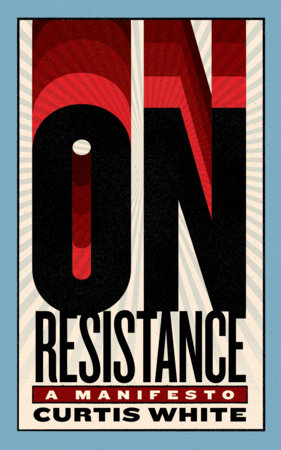
On Resistance

A Manifesto

Ebook
On sale Aug 11, 2026 | 144 Pages | 9781685892708

See Additional Formats
From the writer Elle calls the "most inspiringly wicked social critic of the moment" comes a hands-on, don't-lose-hope study of how writers, painters, musicians, and other cultural figures respond to fascism …

From a veteran writer and activist comes a concise yet potent guide to standing up to the myriad tyrannies of our current political landscape. We live in a time where independent thinking, love of literature and ideas, and passion for human expression are all under attack from a ruthless and uncaring government and a culture that values only immediate gratification and digital flash.

In On Resistance, Curtis White offers spiritual hope and intellectual fortification for those in despair about the bankruptcy of American life. Drawing on a range of books, films, essays, and artworks, White shows how our rich collective literary heritage gives us mental ammunition for our fight against the forces that would reduce us all to commodities and consumers. In doing so, he has penned a new classic in the noble history of American polemics.
In the United States, everyone may enjoy freedom of speech so long as it doesn’t matter. For those who would like what they say to matter, freedom of speech is very expensive. It is for this reason that organizations with a strong sense of public mission but not much money are dependent on the blonde child of capitalism, private philanthropy. Working with this child has its challenges, not the least of which is the risk that the philanthropist will end up dominating the mission of the organizations it funds. According to one source with decades of experience in philanthropy, foundation grants are too often a drama between “gods” and the “little people” who fulfill the destiny of the gods.

Like the system of patronage that served the arts and charity from the Renaissance through the eighteenth century, private foundations have the rarest privilege of all: They do not have to explain themselves. They do not have to justify the origins of their wealth, or how they use that wealth, or what the real benefit of their largesse is. To quote an unlikely source, Steve Forbes has written that “there is one, largely unaccountable aristocracy in American life today: foundations . . . They do not answer to the marketplace or an electorate.”

Generally speaking, private philanthropy gets a pass in the press. I assume that journalists think they have better things to do than criticize rich people for giving their money away, especially when they are funding good causes. But even if it has been mostly voiced off the public stage, criticism of the culture of philanthropy in America, from both the left and the right, cuts deep. Foundations have been described by both wings of American politics as arrogant, elitist, plutocratic, insular, opaque, capricious, inbred, intellectually deficient, bureaucratic, and bewildered. These are surprising but not necessarily hurtful words for private philanthropy, because the people most connected to private foundations already know they are aristocratic and unaccountable and are rather pleased with the fact. These people serve on each other’s boards, share in prestige’s warm mutuality, and make certain that foundations are compliant with the values of the donor class. Moreover, this arrangement is careful to perpetuate itself. According to Stephen Viederman, former director of the Jessie Smith Noyes Foundation (a foundation that focuses on environmental and economic justice), replacements for departing foundation board members are almost always from the “world of top people” and are of the “same race, class, or occupational group as those who had served before.”

In the end, the philanthropist’s philosophy is this: We are virtuous because we have money. We are virtuous for giving away some of it each year. We give money only to the best causes that fall within our mission. We will tell you what the best causes are. We are under no obligation to tell you why the best causes are the best.

This may sound extreme, but it is not a new criticism. Parts of this critique have been in circulation since the first corporate philanthropic foundations were formed in the early twentieth century. Upon the formation of the Carnegie and Rockefeller foundations, there was fierce debate about their provenance, legality, and lack of accountability. Observers worried that non-tax-paying entities with massive resources and little accountability would be just another way for the wealthy to turn money into power.
© Curtis White
Curtis White is a novelist and social critic whose works include Memories of My Father Watching TV, The Middle Mind, and, more recently, The Science Delusion, We Robots, and Lacking Character. His essays have appeared in Harpers and Tricycle.He taught English at  Illinois State University. He is the founder (with Ronald Sukenick) of FC2, a publisher of innovative fiction run collectively by its authors. He lives in Port Townsend, WA. View titles by Curtis White
"In On Resistance: a Manifesto, Curtis White offers us a trail guide through our disorienting and perilous political landscape. It’s a concise and sharply envisioned look forward, into the darkening now. White is less concerned with how we got here than how we get out, alive, spiritually intact, and together, as a community of resistance against the growing forces of dehumanization and planetary ruin. Like everything White has written, On Resistance hums with moral clarity in our increasingly obscure times and, as such, is a visionary text that has arrived at precisely the desperate moment we need it most." —Jeffrey St. Clair, editor of CounterPunch, author of Born Under a Bad Sky

"On Resistance
demolishes the self-congratulatory mythology of American philanthropy and the creeping corporate capture of cultural life—and does it with wit." —Bhaskar Sunkara, president, The Nation

About

From the writer Elle calls the "most inspiringly wicked social critic of the moment" comes a hands-on, don't-lose-hope study of how writers, painters, musicians, and other cultural figures respond to fascism …

From a veteran writer and activist comes a concise yet potent guide to standing up to the myriad tyrannies of our current political landscape. We live in a time where independent thinking, love of literature and ideas, and passion for human expression are all under attack from a ruthless and uncaring government and a culture that values only immediate gratification and digital flash.

In On Resistance, Curtis White offers spiritual hope and intellectual fortification for those in despair about the bankruptcy of American life. Drawing on a range of books, films, essays, and artworks, White shows how our rich collective literary heritage gives us mental ammunition for our fight against the forces that would reduce us all to commodities and consumers. In doing so, he has penned a new classic in the noble history of American polemics.

Excerpt

In the United States, everyone may enjoy freedom of speech so long as it doesn’t matter. For those who would like what they say to matter, freedom of speech is very expensive. It is for this reason that organizations with a strong sense of public mission but not much money are dependent on the blonde child of capitalism, private philanthropy. Working with this child has its challenges, not the least of which is the risk that the philanthropist will end up dominating the mission of the organizations it funds. According to one source with decades of experience in philanthropy, foundation grants are too often a drama between “gods” and the “little people” who fulfill the destiny of the gods.

Like the system of patronage that served the arts and charity from the Renaissance through the eighteenth century, private foundations have the rarest privilege of all: They do not have to explain themselves. They do not have to justify the origins of their wealth, or how they use that wealth, or what the real benefit of their largesse is. To quote an unlikely source, Steve Forbes has written that “there is one, largely unaccountable aristocracy in American life today: foundations . . . They do not answer to the marketplace or an electorate.”

Generally speaking, private philanthropy gets a pass in the press. I assume that journalists think they have better things to do than criticize rich people for giving their money away, especially when they are funding good causes. But even if it has been mostly voiced off the public stage, criticism of the culture of philanthropy in America, from both the left and the right, cuts deep. Foundations have been described by both wings of American politics as arrogant, elitist, plutocratic, insular, opaque, capricious, inbred, intellectually deficient, bureaucratic, and bewildered. These are surprising but not necessarily hurtful words for private philanthropy, because the people most connected to private foundations already know they are aristocratic and unaccountable and are rather pleased with the fact. These people serve on each other’s boards, share in prestige’s warm mutuality, and make certain that foundations are compliant with the values of the donor class. Moreover, this arrangement is careful to perpetuate itself. According to Stephen Viederman, former director of the Jessie Smith Noyes Foundation (a foundation that focuses on environmental and economic justice), replacements for departing foundation board members are almost always from the “world of top people” and are of the “same race, class, or occupational group as those who had served before.”

In the end, the philanthropist’s philosophy is this: We are virtuous because we have money. We are virtuous for giving away some of it each year. We give money only to the best causes that fall within our mission. We will tell you what the best causes are. We are under no obligation to tell you why the best causes are the best.

This may sound extreme, but it is not a new criticism. Parts of this critique have been in circulation since the first corporate philanthropic foundations were formed in the early twentieth century. Upon the formation of the Carnegie and Rockefeller foundations, there was fierce debate about their provenance, legality, and lack of accountability. Observers worried that non-tax-paying entities with massive resources and little accountability would be just another way for the wealthy to turn money into power.

Author

© Curtis White
Curtis White is a novelist and social critic whose works include Memories of My Father Watching TV, The Middle Mind, and, more recently, The Science Delusion, We Robots, and Lacking Character. His essays have appeared in Harpers and Tricycle.He taught English at  Illinois State University. He is the founder (with Ronald Sukenick) of FC2, a publisher of innovative fiction run collectively by its authors. He lives in Port Townsend, WA. View titles by Curtis White

Praise

"In On Resistance: a Manifesto, Curtis White offers us a trail guide through our disorienting and perilous political landscape. It’s a concise and sharply envisioned look forward, into the darkening now. White is less concerned with how we got here than how we get out, alive, spiritually intact, and together, as a community of resistance against the growing forces of dehumanization and planetary ruin. Like everything White has written, On Resistance hums with moral clarity in our increasingly obscure times and, as such, is a visionary text that has arrived at precisely the desperate moment we need it most." —Jeffrey St. Clair, editor of CounterPunch, author of Born Under a Bad Sky

"On Resistance
demolishes the self-congratulatory mythology of American philanthropy and the creeping corporate capture of cultural life—and does it with wit." —Bhaskar Sunkara, president, The Nation