
Books for Arab American Heritage Month
In honor of Arab American Heritage Month in April, we are sharing books by Arab and Arab American authors that share their culture, history, and personal lives.
In the tradition of Jaron Lanier’s You Are Not a Gadget, a rousing, sharply argued—and, yes, inspiring!—reckoning with our blind faith in technology
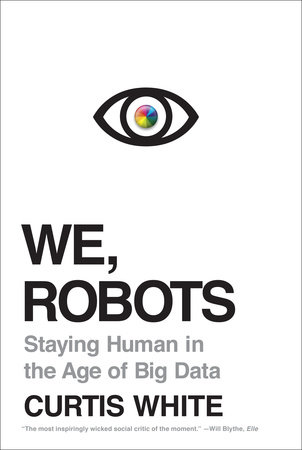
Can technology solve all our problems? Despite overwhelming evidence to the contrary, many of our most famous journalists, pundits, and economists seem to think so. According to them, “intelligent machines” and big data will free us from work, educate our children, transform our environment, and even make religion more user-friendly. This is the story they’re telling us: that we should stop worrying and love our robot future.
But just because you tell a story over and over again doesn’t make it true. Curtis White, one of our most brilliant and perceptive social critics, knows all about the danger of a seductive story, and in We, Robots, he tangles with the so-called thinkers who are convinced that the future is rose-colored and robotically enhanced.
With tremendous erudition and a punchy wit, White argues that we must be skeptical of anyone who tries to sell us on technological inevitability. And he gives us an alternative set of stories: taking inspiration from artists as disparate as Sufjan Stevens, Lars von Trier, and François Rabelais, White shows us that by looking to art, we can imagine a different kind of future.
No robots required.
In the tradition of Jaron Lanier’s You Are Not a Gadget, a rousing, sharply argued—and, yes, inspiring!—reckoning with our blind faith in technology
Can technology solve all our problems? Despite overwhelming evidence to the contrary, many of our most famous journalists, pundits, and economists seem to think so. According to them, “intelligent machines” and big data will free us from work, educate our children, transform our environment, and even make religion more user-friendly. This is the story they’re telling us: that we should stop worrying and love our robot future.
But just because you tell a story over and over again doesn’t make it true. Curtis White, one of our most brilliant and perceptive social critics, knows all about the danger of a seductive story, and in We, Robots, he tangles with the so-called thinkers who are convinced that the future is rose-colored and robotically enhanced.
With tremendous erudition and a punchy wit, White argues that we must be skeptical of anyone who tries to sell us on technological inevitability. And he gives us an alternative set of stories: taking inspiration from artists as disparate as Sufjan Stevens, Lars von Trier, and François Rabelais, White shows us that by looking to art, we can imagine a different kind of future.
No robots required.
In honor of Arab American Heritage Month in April, we are sharing books by Arab and Arab American authors that share their culture, history, and personal lives.
For National Poetry Month in April, we are sharing poetry collections and books about poetry by authors who have their own stories to tell. These poets delve into history, reimagine the present, examine poetry itself—from traditional poems many know and love to poems and voices that are new and original.