Crucible

Author John Sayles On Tour
Look inside
Hardcover
$32.99 US
On sale Jan 20, 2026 | 496 Pages | 9781685892272

See Additional Formats
"Crucible' is a sprawling, mural-like novel that engages with the process, the spirit and especially the conflicts of breakneck industrial progress.. . . [with] a dynamic vision of American history." — Sam Sacks, The Wall Street Journal

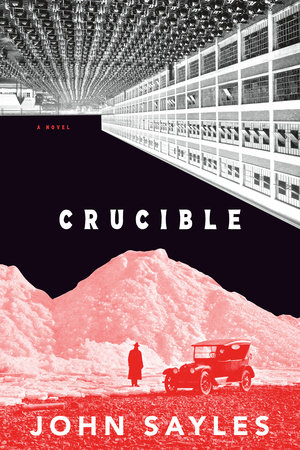
From the Oscar-nominated filmmaker comes a complex and sweeping historical novel about Henry Ford — the Elon Musk of his day — and his attempt to rule not only an automotive empire but the rambunctious city of Detroit. It is an epic tale ranging from the 1920s through the second World War, featuring violent labor disputes, misbegotten jungle expeditions, a tragic race riot, and the gestapo tactics of Ford’s private army . . .


Already the gateway for illegal Canadian liquor during Prohibition, the Motor City becomes a crucible for American class conflict during the Great Depression, with an army of laid off Ford workers drifting into the ranks of the burgeoning union movement — Henry Ford's worst nightmare.  To keep the hundreds of thousands still employed by him in thrall, the man who was formerly 'America's favorite tycoon' recruits black laborers migrating from the deep South to serve as 'strike insurance', and gives Harry Bennett, pugnacious as he is diminutive, free reign over the legion of barroom brawlers and ex-cons who make up the company’s 'Security Department'.

The Model T mogul has also bought a sizable chunk of Brazil's Amazonian rainforest, vowing to grow his own rubber for tires, but stubbornly refusing to include a botanist in his troop of would-be jungle tamers. As a series of biological plagues descend on the Fordlandia plantation, the racial melting pot he has created in Detroit begins to boil over, and not even the Sage of Dearborn can control the forces that have been unleashed.

The novel's cast — Ford workers black and white and their families, young radicals, cynical newsmen, gangsters, Brazilian rubber tappers, cameos from boxer Joe Louis and muralist Diego Rivera — create the tapestry of differing points of view that John Sayles has become famous for, the events portrayed fundamental to the country we live in today.
The driver does not spare the whip. Despite the rutted roads, the patches of unfrozen mud, the eddies of snow swirling up and over the windshield, he keeps his foot on one of the additions to the New Ford Car—a gas pedal—and tips the odometer past sixty a few times, all the while babbling the Company spiel—‘standard gearshift, four-wheel brakes, hydraulic shock absorbers, automatic windshield wiper’ and a host of lesser innovations having to do with things Smitty does not understand and does not wish to. He hears Breen from the Times making little gasping noises
in the back seat, and is comforted to know somebody in the automobile is more terrified than he is.

“How’d you like it?” grins the young buck at the wheel when they careen back into the lot at the Engineering Laboratory.

“Son, you’ve made a Christian of me,” Smitty answers, then staggers to join the other inkslingers in their quest to grab a few quotables from the Woeful Prince and the aptly named Liebold. They’ve got Edsel surrounded, his back up against a spanking-new Tudor Sedan in what the Company handout says is ‘Niagara Blue.’

“Mr. Ford—over here!”

“Mr. Ford!”

“Give us a big smile—”

“Look in the lens, Mr. Ford—”

“They say she’ll do sixty miles an hour, Mr. Ford—”

“In reverse,” says the heir apparent, grinning, and the newsmen laugh.

“Rumor has it,” calls Smitty, “that your dad wanted to just keep making
the Model T.”

The Sage of Dearborn is allegedly ‘out of town’ for this important sneak peek, a hint, perhaps, that he really did oppose the redesign as long as was fiscally possible, occasionally applying wrathful bootheel and lug wrench to the bodies of early prototypes. Yes, the Founder held out for a planetary transmission, whatever that is, and resented being forced to modify the brakes due to new government regulations, but Smitty figures he’s just a stubborn old cuss used to being right about everything.
© Mary Cybulski
John Sayles is an American independent film director, screenwriter, actor, and novelist. He has twice been nominated for the Academy Award for Best Original Screenplay, for Passion Fish (1992) and Lone Star (1996). He has written seven novels, the most recent being Yellow Earth (2020) and A Moment in the Sun (2011). View titles by John Sayles
A Southern California Independent Bookstore Best Seller

"Rich, Enthralling. . . rambunctious. . ." -- Alida Becker, The New York Times


"A sprawling, mural-like novel that engages with the process, the spirit and especially the conflicts of breakneck industrial progress ... [with] a dynamic vision of American history." -- Sam Sacks, The Wall Street Journal

". . . an ambitious, polyphonic tale that captures America’s industrial history through the panoramic lens of a social historian and the moral scrutiny of a dramatist. . . . A veritable ecosystem of struggle and aspiration, Sayles' historical tale is a fierce, symphonic reckoning with the cost of American progress." -- Booklist


". . . Sayles offers a propulsive view into the era’s rapacious capitalism and rapid social changes. This textured tale will resonate with readers concerned about workers’ rights and corporate greed." -- Publishers Weekly


". . .the message is simple and potent: Unchecked corporate power is a path to the mistreatment of humans, but people have the capacity, together, to win back their dignity. . . well-researched. . ." -- Kirkus Reviews

"An epic tale focused on the legendary automobile tycoon Henry Ford." -- The Times (UK)

About

"Crucible' is a sprawling, mural-like novel that engages with the process, the spirit and especially the conflicts of breakneck industrial progress.. . . [with] a dynamic vision of American history." — Sam Sacks, The Wall Street Journal

From the Oscar-nominated filmmaker comes a complex and sweeping historical novel about Henry Ford — the Elon Musk of his day — and his attempt to rule not only an automotive empire but the rambunctious city of Detroit. It is an epic tale ranging from the 1920s through the second World War, featuring violent labor disputes, misbegotten jungle expeditions, a tragic race riot, and the gestapo tactics of Ford’s private army . . .


Already the gateway for illegal Canadian liquor during Prohibition, the Motor City becomes a crucible for American class conflict during the Great Depression, with an army of laid off Ford workers drifting into the ranks of the burgeoning union movement — Henry Ford's worst nightmare.  To keep the hundreds of thousands still employed by him in thrall, the man who was formerly 'America's favorite tycoon' recruits black laborers migrating from the deep South to serve as 'strike insurance', and gives Harry Bennett, pugnacious as he is diminutive, free reign over the legion of barroom brawlers and ex-cons who make up the company’s 'Security Department'.

The Model T mogul has also bought a sizable chunk of Brazil's Amazonian rainforest, vowing to grow his own rubber for tires, but stubbornly refusing to include a botanist in his troop of would-be jungle tamers. As a series of biological plagues descend on the Fordlandia plantation, the racial melting pot he has created in Detroit begins to boil over, and not even the Sage of Dearborn can control the forces that have been unleashed.

The novel's cast — Ford workers black and white and their families, young radicals, cynical newsmen, gangsters, Brazilian rubber tappers, cameos from boxer Joe Louis and muralist Diego Rivera — create the tapestry of differing points of view that John Sayles has become famous for, the events portrayed fundamental to the country we live in today.

Excerpt

The driver does not spare the whip. Despite the rutted roads, the patches of unfrozen mud, the eddies of snow swirling up and over the windshield, he keeps his foot on one of the additions to the New Ford Car—a gas pedal—and tips the odometer past sixty a few times, all the while babbling the Company spiel—‘standard gearshift, four-wheel brakes, hydraulic shock absorbers, automatic windshield wiper’ and a host of lesser innovations having to do with things Smitty does not understand and does not wish to. He hears Breen from the Times making little gasping noises
in the back seat, and is comforted to know somebody in the automobile is more terrified than he is.

“How’d you like it?” grins the young buck at the wheel when they careen back into the lot at the Engineering Laboratory.

“Son, you’ve made a Christian of me,” Smitty answers, then staggers to join the other inkslingers in their quest to grab a few quotables from the Woeful Prince and the aptly named Liebold. They’ve got Edsel surrounded, his back up against a spanking-new Tudor Sedan in what the Company handout says is ‘Niagara Blue.’

“Mr. Ford—over here!”

“Mr. Ford!”

“Give us a big smile—”

“Look in the lens, Mr. Ford—”

“They say she’ll do sixty miles an hour, Mr. Ford—”

“In reverse,” says the heir apparent, grinning, and the newsmen laugh.

“Rumor has it,” calls Smitty, “that your dad wanted to just keep making
the Model T.”

The Sage of Dearborn is allegedly ‘out of town’ for this important sneak peek, a hint, perhaps, that he really did oppose the redesign as long as was fiscally possible, occasionally applying wrathful bootheel and lug wrench to the bodies of early prototypes. Yes, the Founder held out for a planetary transmission, whatever that is, and resented being forced to modify the brakes due to new government regulations, but Smitty figures he’s just a stubborn old cuss used to being right about everything.

Author

© Mary Cybulski
John Sayles is an American independent film director, screenwriter, actor, and novelist. He has twice been nominated for the Academy Award for Best Original Screenplay, for Passion Fish (1992) and Lone Star (1996). He has written seven novels, the most recent being Yellow Earth (2020) and A Moment in the Sun (2011). View titles by John Sayles

Praise

A Southern California Independent Bookstore Best Seller

"Rich, Enthralling. . . rambunctious. . ." -- Alida Becker, The New York Times


"A sprawling, mural-like novel that engages with the process, the spirit and especially the conflicts of breakneck industrial progress ... [with] a dynamic vision of American history." -- Sam Sacks, The Wall Street Journal

". . . an ambitious, polyphonic tale that captures America’s industrial history through the panoramic lens of a social historian and the moral scrutiny of a dramatist. . . . A veritable ecosystem of struggle and aspiration, Sayles' historical tale is a fierce, symphonic reckoning with the cost of American progress." -- Booklist


". . . Sayles offers a propulsive view into the era’s rapacious capitalism and rapid social changes. This textured tale will resonate with readers concerned about workers’ rights and corporate greed." -- Publishers Weekly


". . .the message is simple and potent: Unchecked corporate power is a path to the mistreatment of humans, but people have the capacity, together, to win back their dignity. . . well-researched. . ." -- Kirkus Reviews

"An epic tale focused on the legendary automobile tycoon Henry Ford." -- The Times (UK)