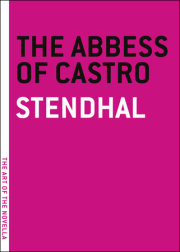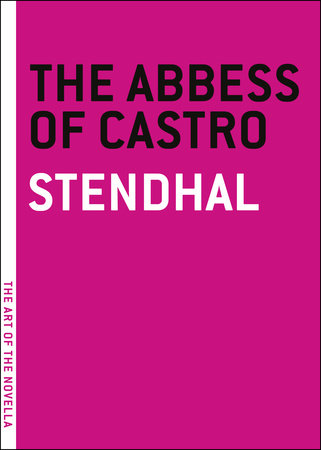

The Abbess of Castro

Author Stendhal
Brigands, convents under siege, a prince who’d do Machiavelli proud . . . This adventurous novella from a writer famous for far longer works is a singular take on love and war in Renaissance Italy. 

Claiming to be translating from sixteenth-century manuscripts, Stendhal tells the story of two doomed young lovers—one the daughter of the wealthiest man in the district, the other a brigand. It’s a genuinely moving tale of impossible love—with plenty of swordfights thrown in—that’s unique in Stendhal’s oeuvre, not least in its portrait of an intelligent woman who, ill-starred in love, turns to worldly power. There’s also some sparkling analysis of the conditions that produced the great art of the Renaissance.

But The Abbess of Castro—first published in the same year as Stendhal’s novel The Charterhouse of Parma—is also characterized by themes that pervade his longer novels: political and familial machinations, a profoundly unsentimental view of war, ambitious individuals undone by passion. 

Never before available as a standalone edition, the novella is a powerful dose of the writer at the peak of his skills.
© Adobe Stock Images
HENRI MARIE BEYLE (1783-1842) had a post in the Ministry of War and followed Napoleon's campaigns before retiring to Italy. There as 'Stendhal', he began writing on art, music and travel. He later wrote novels, literary criticism, and various biographical and autobiographical works. View titles by Stendhal

About

Brigands, convents under siege, a prince who’d do Machiavelli proud . . . This adventurous novella from a writer famous for far longer works is a singular take on love and war in Renaissance Italy. 

Claiming to be translating from sixteenth-century manuscripts, Stendhal tells the story of two doomed young lovers—one the daughter of the wealthiest man in the district, the other a brigand. It’s a genuinely moving tale of impossible love—with plenty of swordfights thrown in—that’s unique in Stendhal’s oeuvre, not least in its portrait of an intelligent woman who, ill-starred in love, turns to worldly power. There’s also some sparkling analysis of the conditions that produced the great art of the Renaissance.

But The Abbess of Castro—first published in the same year as Stendhal’s novel The Charterhouse of Parma—is also characterized by themes that pervade his longer novels: political and familial machinations, a profoundly unsentimental view of war, ambitious individuals undone by passion. 

Never before available as a standalone edition, the novella is a powerful dose of the writer at the peak of his skills.

Author

© Adobe Stock Images
HENRI MARIE BEYLE (1783-1842) had a post in the Ministry of War and followed Napoleon's campaigns before retiring to Italy. There as 'Stendhal', he began writing on art, music and travel. He later wrote novels, literary criticism, and various biographical and autobiographical works. View titles by Stendhal

Books for Asian American, Native Hawaiian, and Pacific Islander Heritage Month

Each May, we honor the stories, histories, and cultures of Asian Americans, Native Hawaiians, and Pacific Islanders. Below is a selection of acclaimed fiction and nonfiction books by AANHPI creators to share with your students this month and throughout the year. Find our full collection of titles for Higher Education here.

Read more