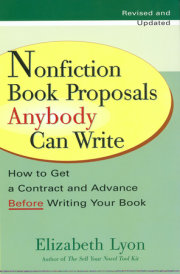

· Choosing a topic based on current trends and competing titles
· Drafting the perfect concept statement—daring agents and editors to reject you
· Defining and targeting your readership—then connecting with them
· Preparing a table of contents and chapter summaries
· Submitting exciting and well-written sample chapters
· Writing query letters
· Devising a marketing plan that will excite agents and publishers
Appendices:
Proposal Writers Who Contributed to This Book and the Status of Their Books
Resource Directory
Publication Consent Agreement
Model Author/Agent Agreement
Index
About the Author
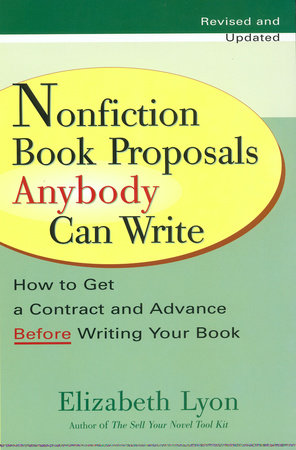
“Elizabeth Lyon knows book proposals the way a surgeon knows anatomy.”—Gary Provost, author of 22 books including 100 Ways to Improve Your Writing
“This book is pure gold! I received an offer from a large publisher who stated that my proposal was professional and well-written; even my agent said it would be the standard in the industry. I owe a debt of gratitude to Ms. Lyon.” —Mary Jeanne Menna, author of Mom to New Mom: Practical Tips and Advice for the New Mom
“Don’t try to sell your next nonfiction book without consulting it.” —Gerald Gross, author of Editors on Editing: What Writers Need to Know About What Editors Do
“Nonfiction Book Proposals Anybody Can Write gave me the structure I needed to produce a coherent, organized proposal. Everything my agent wanted to see in my proposal was there because of Elizabeth’s book. I was able to send my proposal within a week, and three months later, my agent was responding to bids from four large publishing houses. One of them paid me an unusually high advance for a first-time author. I will always be grateful to Elizabeth.” —Sallirae Henderson, M.Div., author of A Life Complete: Emotional and Spiritual Growth for Midlife and Beyond
· Choosing a topic based on current trends and competing titles
· Drafting the perfect concept statement—daring agents and editors to reject you
· Defining and targeting your readership—then connecting with them
· Preparing a table of contents and chapter summaries
· Submitting exciting and well-written sample chapters
· Writing query letters
· Devising a marketing plan that will excite agents and publishers
Appendices:
Proposal Writers Who Contributed to This Book and the Status of Their Books
Resource Directory
Publication Consent Agreement
Model Author/Agent Agreement
Index
About the Author
“Elizabeth Lyon knows book proposals the way a surgeon knows anatomy.”—Gary Provost, author of 22 books including 100 Ways to Improve Your Writing
“This book is pure gold! I received an offer from a large publisher who stated that my proposal was professional and well-written; even my agent said it would be the standard in the industry. I owe a debt of gratitude to Ms. Lyon.” —Mary Jeanne Menna, author of Mom to New Mom: Practical Tips and Advice for the New Mom
“Don’t try to sell your next nonfiction book without consulting it.” —Gerald Gross, author of Editors on Editing: What Writers Need to Know About What Editors Do
“Nonfiction Book Proposals Anybody Can Write gave me the structure I needed to produce a coherent, organized proposal. Everything my agent wanted to see in my proposal was there because of Elizabeth’s book. I was able to send my proposal within a week, and three months later, my agent was responding to bids from four large publishing houses. One of them paid me an unusually high advance for a first-time author. I will always be grateful to Elizabeth.” —Sallirae Henderson, M.Div., author of A Life Complete: Emotional and Spiritual Growth for Midlife and Beyond