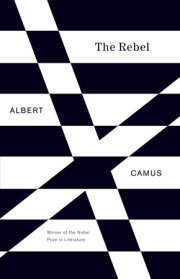
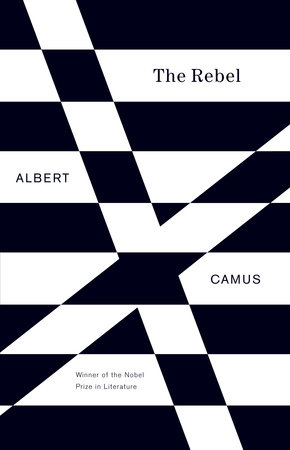
Camus' major essay on the nature and origins of rebellion demonstrates how revolution, by its very nature, inevitably leads to a new tyranny. For Camus, the urge to rebel is manifested in man's timeless Promethean struggle against the conditions of his existence, as well as the popular uprisings against established orders throughout history. Camus also shows how rebellion can lead to tyranny. Translated from the French by Anthony Bower.
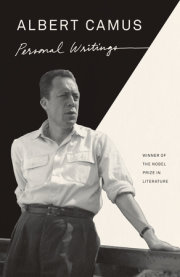
ALBERT CAMUS was born in Algeria in 1913. He spent the early years of his life in North Africa, where he became a journalist. During World War II, he was one of the leading writers of the French Resistance and an editor of Combat, an underground newspaper he helped found. His fiction, including The Stranger, The Plague, The Fall, and Exile and the Kingdom; his philosophical essays The Myth of Sisyphus and The Rebel and his plays The Just Assassins, The Misunderstanding, and Caligula have assured his preeminent position in modern literature and philosophy. In 1957, Camus was awarded the Nobel Prize in Literature. On January 4, 1960, he was killed in a car accident.
View titles by Albert Camus
"The Rebel is a piece of reasoning in the great tradition of French logic....But what is so exhilarating about Camus's essay is that here is the voice of a man of unshakable decency." -- Atlantic
"Camus's book is one of the extremely few that express the contemporary hour...yet profoundly transcend it." -- New Republic
Camus' major essay on the nature and origins of rebellion demonstrates how revolution, by its very nature, inevitably leads to a new tyranny. For Camus, the urge to rebel is manifested in man's timeless Promethean struggle against the conditions of his existence, as well as the popular uprisings against established orders throughout history. Camus also shows how rebellion can lead to tyranny. Translated from the French by Anthony Bower.
Author
ALBERT CAMUS was born in Algeria in 1913. He spent the early years of his life in North Africa, where he became a journalist. During World War II, he was one of the leading writers of the French Resistance and an editor of Combat, an underground newspaper he helped found. His fiction, including The Stranger, The Plague, The Fall, and Exile and the Kingdom; his philosophical essays The Myth of Sisyphus and The Rebel and his plays The Just Assassins, The Misunderstanding, and Caligula have assured his preeminent position in modern literature and philosophy. In 1957, Camus was awarded the Nobel Prize in Literature. On January 4, 1960, he was killed in a car accident.
View titles by Albert Camus
Praise
"The Rebel is a piece of reasoning in the great tradition of French logic....But what is so exhilarating about Camus's essay is that here is the voice of a man of unshakable decency." -- Atlantic
"Camus's book is one of the extremely few that express the contemporary hour...yet profoundly transcend it." -- New Republic