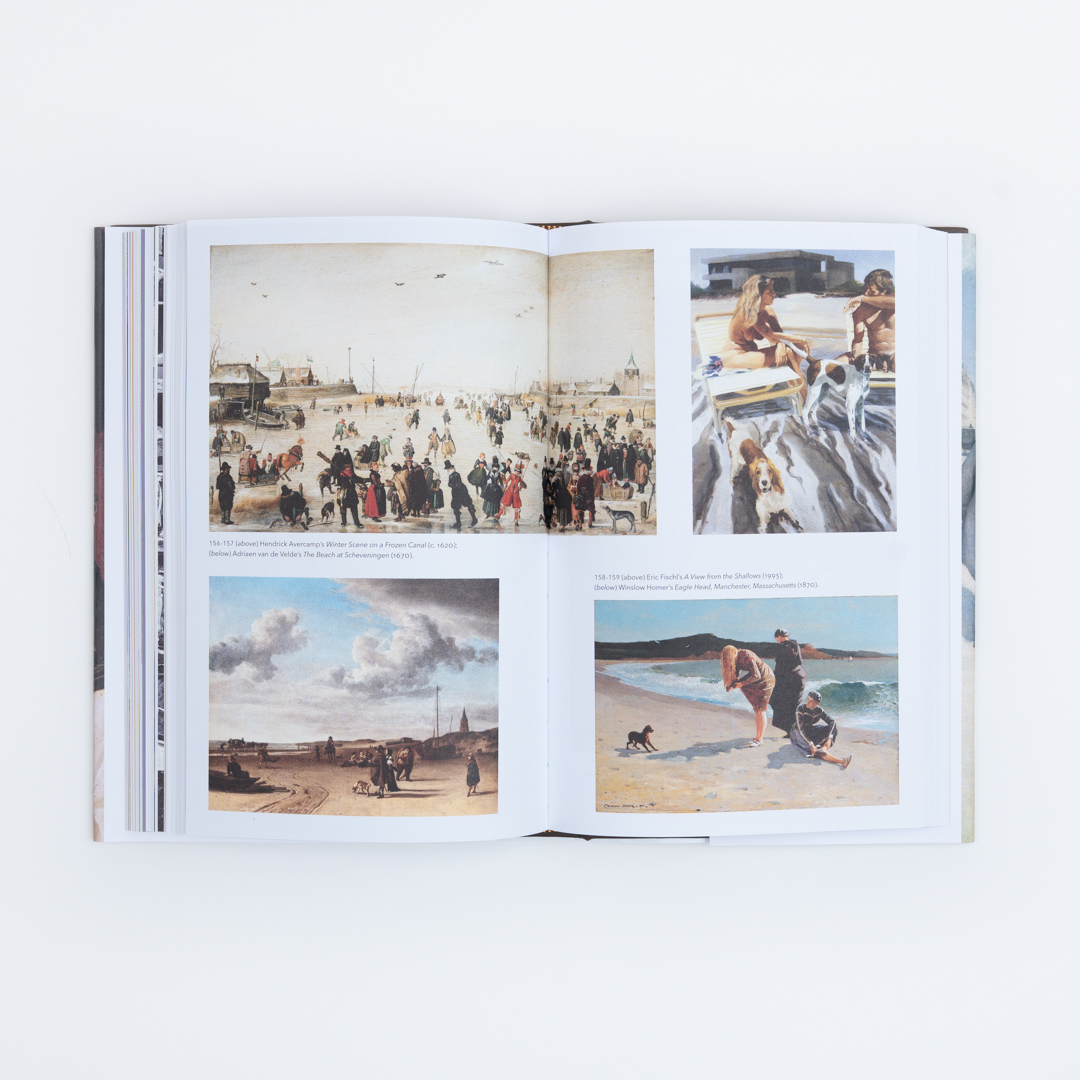
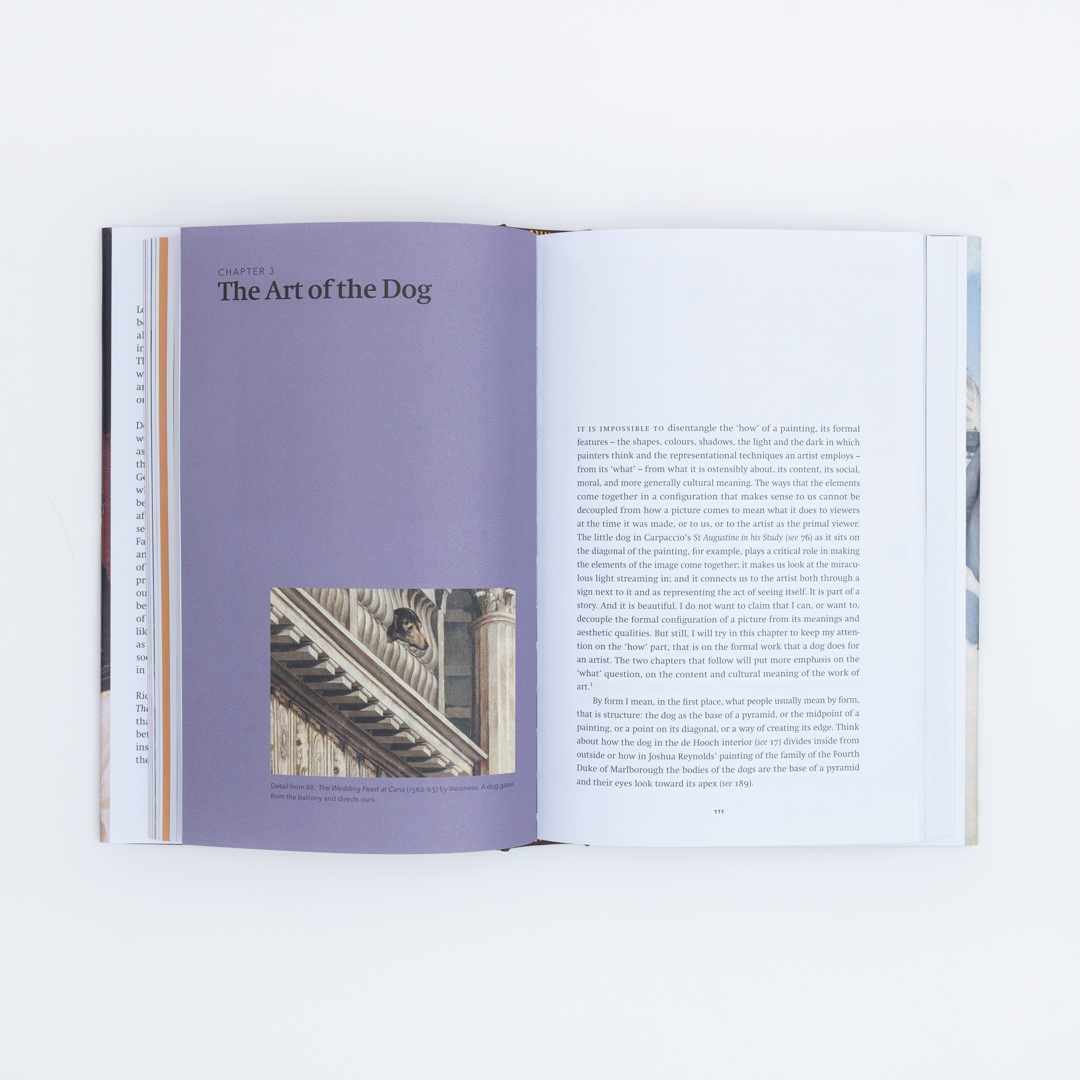
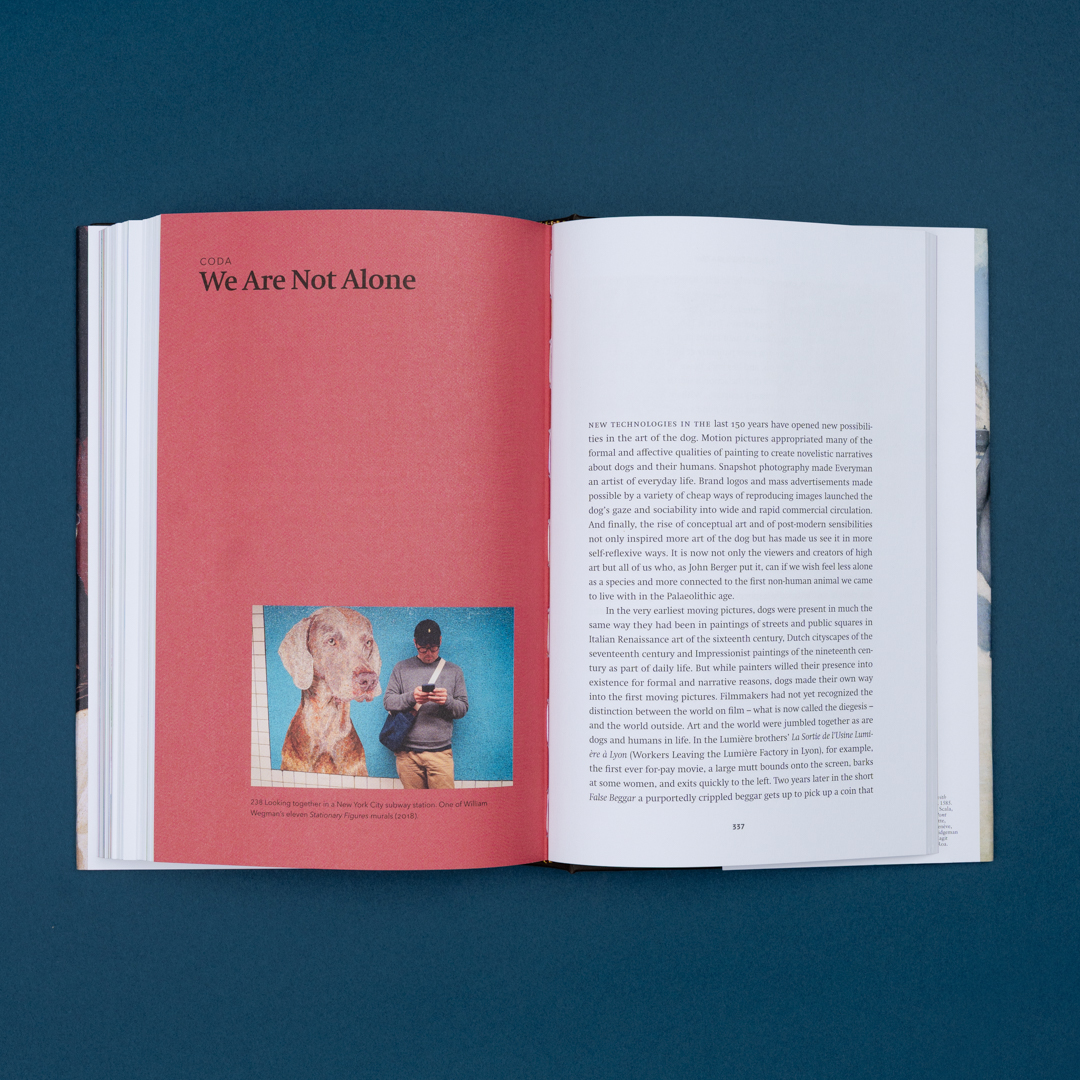
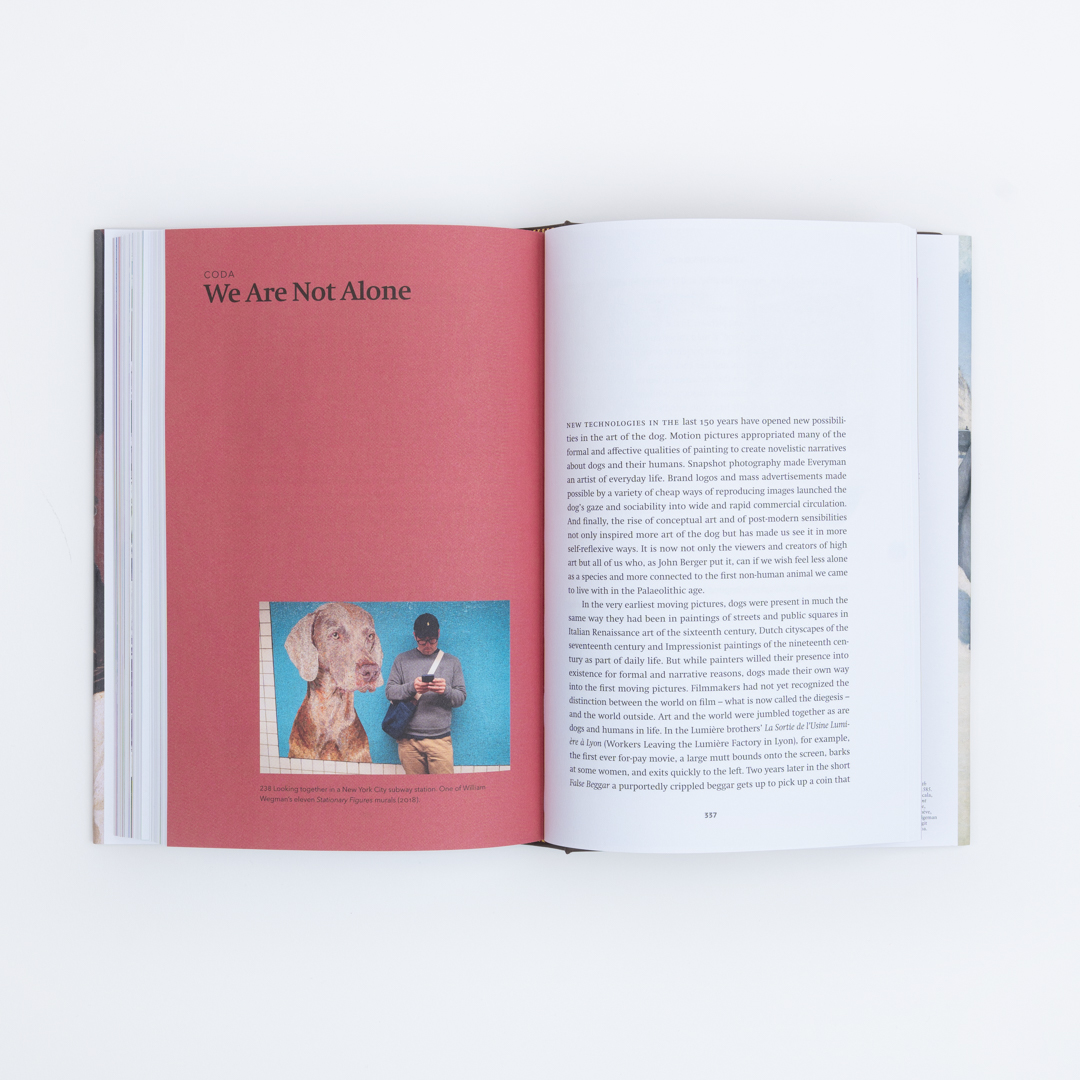
Download high-resolution image Look inside
Listen to a clip from the audiobook
audio play button
0:00
0:00

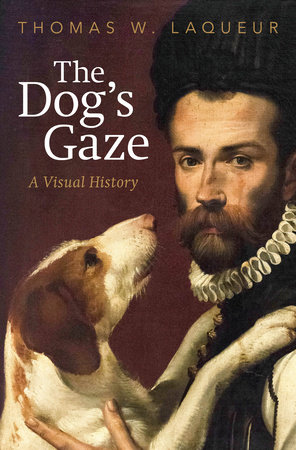
The Dog's Gaze

A Visual History

Look inside
Listen to a clip from the audiobook
audio play button
0:00
0:00
"It is difficult to think of many other books that are at once so brilliant, so wonderfully entertaining, and so moving . . . The Dog’s Gaze is full of exuberant insights about our canine friends, about art, and about the human condition." —Stephen Greenblatt

“A splendid blend of histories: natural, cultural, and artistic . . . A delight for dog-loving art connoisseurs, and vice versa.” —Kirkus (starred review)

From award-winning cultural historian, an enlightening and unique meditation on the presence of dogs in art, from the Paleolithic era to the present, and what our intertwined human-canine relationship reveals about human nature


Long before the phrase man’s best friend became common parlance, dogs were already standing beside us in art as in life. In The Dog’s Gaze, the historian Thomas W. Laqueur invites us to explore why they feature more than any other animal in the ways in which we picture ourselves and our stories.

Dogs have been ubiquitous in the worldmaking of visual artists as far back as the Paleolithic age. Looking across the Western tradition, from Giotto to Goya and Rubens to Rego, Laqueur shows what their presence—as hunting partners, beloved friends, and even conduits to the afterlife—reveals about our own ways of seeing and how we want to be remembered. Far from being mere motifs, dogs are an integral and intentional element of the images in which they appear: They provide narrative coherence; they look out and bear witness, often on the artist’s behalf; they illuminate our understanding of morality and melancholy and some, like us, become celebrities. Indeed, as Laqueur reveals, dogs in art are our social doppelgängers, our companions in looking and being.

Richly illustrated and lovingly written, The Dog’s Gaze is a unique visual history that examines the remarkable social bond between two species, shedding new light on the human condition through the eyes of our canine companions.
Preface
Dogs and Me 8

Chapter 1
The Dog's Gaze 28

Chapter 2
The Deep Time of the Dog 62

Chapter 3
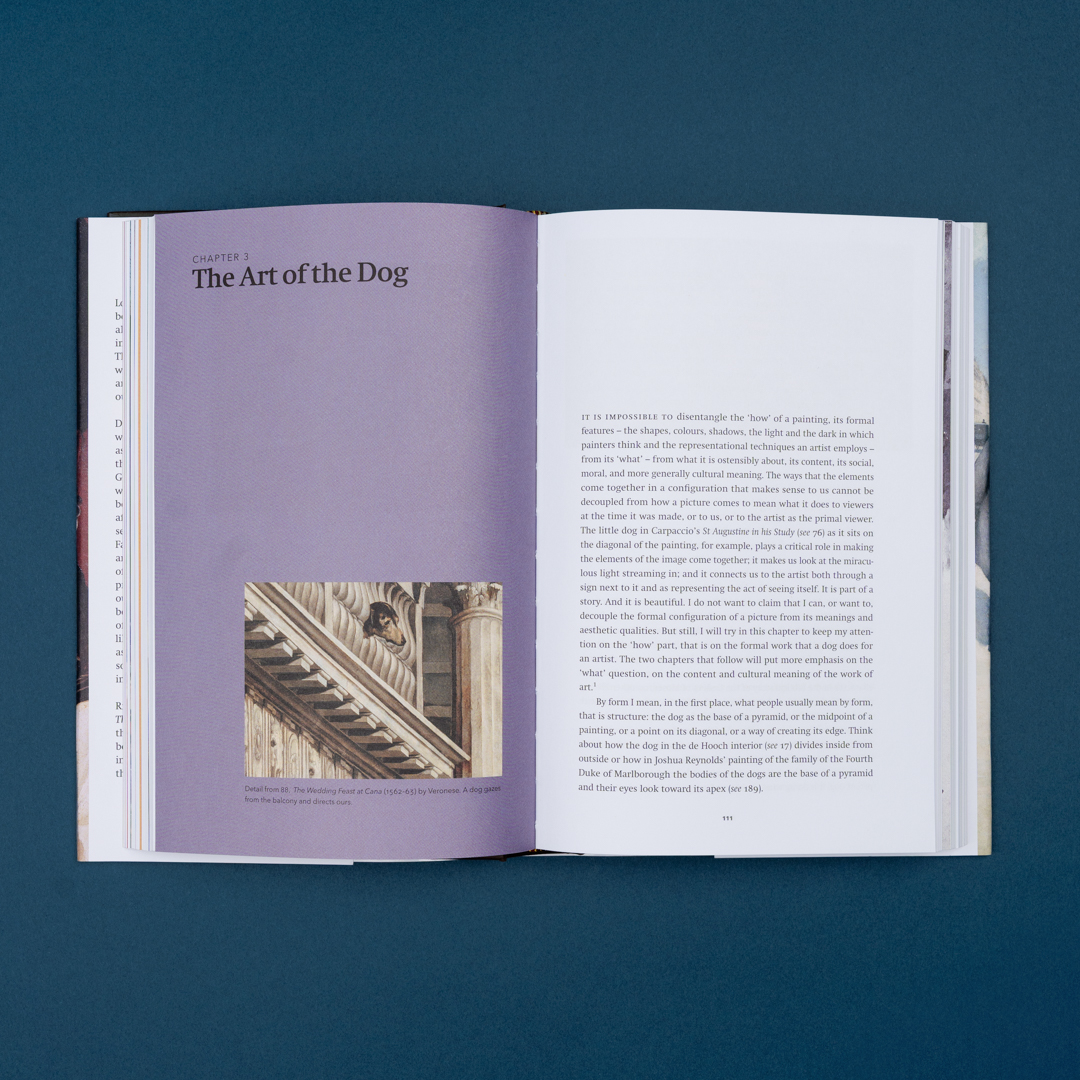
The Art of the Dog 110

Chapter 4
Dogs and the Human Condition 170

Chapter 5
Dogs in the Art of Modern Life 236

Chapter 6
Dogs and the Moral Imagination 294

Coda
We Are Not Alone 336

NOTES 351

LIST OF ILLUSTRATIONS AND PHOTO CREDITS 379

ACKNOWLEDGEMENTS 390
INDEX 394
I did not come to this book from a lifelong love of dogs. My first pet, acquired in my late twenties, was a cat named Lydgate, after Tertius Lyd-gate, the doctor-reformer in George Eliot’s Middlemarch. In my teens and all through graduate school I was passionate about horses. Dogs entered my life late. Or at least as I remember them because there is a picture of me when I was three or four taken by my father in Kuzguncuk on the Bosporus straits with a dog in whose dinner I seem interested. He labelled it, ‘Thomas und Job beim Hundefressen’ (‘Thomas and Job as the dog feeds’) [2]. We are both looking intensely at his bowl. My parents were in Turkey as refugees from Nazi Germany.

My family had dogs when I was growing up but my relationship to them was shallow and vicarious. They were my mother’s, and I remember her through them. I don’t know what dogs meant to her; what childhood memories she had of them. She grew up in a large house with land around it in Holzminden an der Weser, a small town in the north-west of Germany, the daughter of a Jewish grain and animal merchant. I suspect her family had dogs but have no evidence for this.

I know that very soon after we arrived in Bluefield, West Virginia, from Istanbul in 1950, my mother acquired a dog – a boxer. She named her Heidi, the first of a succession of boxers with that name. I have a stuffed boxer, whose leg was broken and splinted at some point, that I retrieved from my mother’s house after she died. I don’t remember how it originally came into my life or how it was injured, and I don’t remember it ever meaning much to me. I keep it now because she kept it.

After the Heidis came a succession of cocker spaniels: Sapphos, a name suggested by my best friend from college – and ever after – a Greek who was visiting over the Christmas break. In the last decades of my mother’s life came Airedales, two of them in succession both named Druze – Serbian for ‘comrade’. My mother did not speak Serbian. Tante Elli gave my mother the first of this line and he came with the name; she had escaped the Nazis by going to Yugoslavia and had Airedales after she got to America. Dogs as gifts between rulers, friends, lovers, and family, as if they carried with them a declaration of intimacy, will appear often in this book [3–5].

My mother in her eighties made heroic efforts to care for Druze II; she broke her hip carrying a twenty-pound bag of kibble on slippery ice but recovered from that. When he died, she lost interest in living; the dog’s death seemed to signal that it was her time to die too.

Before starting to write this book I had never noticed the dog in a photograph of my father, mother, and little brother on the porch of our house that I must have taken when I was eleven or twelve. (In fact, I never noticed the dogs in so many of my early family pictures.) In 6, Heidi I is coming into our world, that is, entering the frame of the picture as dogs do in a great deal of the art in this book. Maybe my mother had called her, although I don’t remember her calling her dogs very often. I do remember her sending them away. ‘Go to your place’ in heavily German-accented English sent generations of Heidis, Sapphos and Druzes obediently to their beds.

My father had little interest in my mother’s dogs or dogs in general. I did not know his father, my paternal grandfather Walther Laqueur, who died in 1927. But I know he had a dog who was important enough to him to have commissioned a professional photographer to take a formal portrait of the two of them in the early 1920s on the steps of a large brownstone at 106 Hochallee in Hamburg [7]. My grandmother took the photograph with her when she narrowly escaped Germany in December 1939, aged almost seventy. My father learned that she been ordered to report to the Gestapo and managed very late in the day to persuade her to secure a Turkish visa and transit to Istanbul where he and my mother lived. (Her eldest daughter, my Tante Toni, who had emigrated to Holland and was subsequently murdered at Sobibor, had been urging her to come to Amsterdam.) The dual portrait of her husband and his dog sat in a silver frame on my grandmother’s desk in West Virginia from 1950 until five years before she died at age 100 in 1973. It is now, in the same silver frame, on my desk.

My grandfather Walther and his dog are poised in mid-action. The dog is coatless; his master fashionably bundled up against the cold – there is snow on the steps – and ready for a walk. I can imagine my grandfather as the narrator in Thomas Mann’s ‘Herr und Hund’ (A Man and His Dog), the longest of his short stories and clearly an autobiographical account of his life with a pointer-mix named Bashan. I do not know the name of Walther’s dog. I think the two of them are heading out rather than coming back from a walk. The lead is in my grandfather’s left hand; if he were turning to go up the stairs, he would have tripped over it or over the dog. The dog’s eyes, so clearly visible along the vertical axis of the photograph, are directed to the right, away from the stairs, and toward grandfather’s cane in his right hand and the street. My sense is that this dog, unlike Thomas Mann’s on many occasions, would not be disappointed when his master headed for city streets.

An image like this invites questions about both the immediate circumstances in which it was made – exactly what is going on between this Herr and this Hund ? – and about its broader social and cultural context. We know that they are posed together and professionally photographed in an artfully arranged tableau: a diagonal line runs from the main character sharply in focus on the lower left to the unknown well-dressed, coatless, man with the fob watch highlighting his waistcoat, who is more of a blur on the upper right. The dog is indispensable to the architecture of the image. We know the photograph was important to the subject’s widow, my grandmother.

We know also that it stands in a long tradition of man and dog portraiture that continues into the present, great hound and prince, formal and majestic, in the paintings of Titian, Velázquez, Van Dyck, Goya and, by the eighteenth century of a broader social range of sitters, in a variety of poses, in paintings and later photographs by hundreds of artists. There are far fewer paintings from the earlier period of women with dogs any-where near the size of those featuring men: those we have are mostly of women with lapdogs who are almost, but not quite, lap cats. They are more attentive to both the subject and the viewer than a curled-up cat would be. Images of the hunter goddess Diana and of aristocratic women represented as Diana for the hunt are exceptions until the late eighteenth century, when portraits of women with sizeable dogs started being painted; by the 1880s the new woman with a large dog in the country, on city streets, and in the home had become almost a cliché.

Like all portraits, that of my grandfather is about the private world of its sitters as well as their social position and setting. It is a good likeness when I compare it to other pictures of him: a representation of this appropriately dressed man in a conventionally gendered pose at a particular time and place in a particular relationship. But what my familial ‘Herr und Hund’ might mean in a more general sense, and specifically what the dog means or represents, is harder to say.

Iconography – enquiries about what an element in a painting might symbolize or stand for – is often the place where people begin when thinking about why there is a dog in the picture. The claim that it represents faithfulness or fidelity is a starting point and at the most abstract level that is probably true in art and in life. As the first animal to be domesticated and the first animal that could, and indeed wanted to, live intimately with humans, it has become a way for us to imagine that all is well between us and nature and between each of us and the social world we live in. In the face of famine, disease, ecological disasters, death, war, betrayal, and all the ills of civilization, dogs are a sort of intellectual, or in this context, visual comfort food. They have their lapses, but they seem resigned to living with what we have wrought and, despite our many sins and weaknesses, remain faithful to the relationship that evolution wrought tens of thousands of years ago.

But there are many other possibilities for what a dog might represent other than faithfulness: the art historian Simona Cohen, for example, argues that it stands for heresy in one version of a Tintoretto Last Supper, and ‘wise perception’ in another where it seems to identify the traitor. Erwin Panofsky, one of the most influential art historians of the twenti-eth century, interprets the dog in Albrecht Dürer’s Knight, Death, and the Devil as standing for ‘lesser virtues . . . untiring zeal, learning, and truthful reasoning’ (see 146). That dogs can be interpreted to mean so many things is evidence for how deeply they are implicated in the ways that artists create a visually coherent world through representing our relationship with them.

In specific instances iconography is helpful in understanding that imagined world. Renaissance scholars and artists, for example, thought that Egyptian hieroglyphics represented an almost Adamic language. So, when a fifth-century C& text discovered in the early fifteenth century claimed that when the Egyptians wanted to represent a scholar:

. . . they draw a dog . . . since he who wishes to become an accomplished scribe must study many things and must bark continually and be fierce and show favours to none, just like dogs.

They therefore had new grounds for the meaning of a dog in an image. Dürer was among the first to take up the idea. But there are lots of images of dogs in studies before the discovery and printing of this text, and also lots of images after, which owe nothing to the ancient associations.

Decoding iconographical associations is seldom a sufficient interpre-tive strategy. The two dogs playing near a man and woman kneeling on a wing of an altarpiece are without doubt symbols of faithfulness [8]. But why, we might ask, would a couple kneeling at an altarpiece that they paid for need dogs to attest to their faith? What do the dogs add? The answer starts with thinking about what living creatures of another species sharing a space with us, looking at one another, at us, or at something else, add to an image. The humans are still; the dogs are in action, playing. They draw us into the picture.

More generally, looking at pictures iconographically can become something of a fool’s errand. The history of how art historians have struggled to interpret Jan van Eyck’s so-called Arnolfini Portrait – one of the world’s most famous paintings with one of the most famous dogs in Western art – offers a warning [9]. It got the label largely because in 1934 Panofsky argued that the signature in the background – ‘Johannes de Eyck fuit hic ’ [‘Jan van Eyck was here’] – meant that the artist was a witness to what he thought was the wedding of Giovanni de Arrigo Arnolfini and Jeanne de Cename. (It had before been thought that the couple was van Eyck himself and his wife.) The painting thus became, in Panofsky’s account, a visual, symbolic marriage contract. Subsequently, a great deal of learning and ingenuity went into identifying each element in the picture in support of this interpretation. The burning candle, for example, symbolized the matrimonial oath and the little terrier symbolized fidelity. Or, others argued, the dog represented lust in the interest of procreation.
© Hagit Caspi
Thomas W. Laqueur is the Helen Fawcett Distinguished Professor of History Emeritus at the University of California, Berkeley. An internationally renowned cultural historian, he has published books on topics ranging from working class religion and education to the history of sexuality and the body. He is a member of both the American Academy of Arts and Sciences and the American Philosophical Society and recipient of the 2007 Mellon Foundation Distinguished Achievement Award and the 2016 Cundill History Prize. His work has been translated into twenty languages. View titles by Thomas W. Laqueur
“Dogs have been bred over millennia to meet our eyes with their own, offering a gaze of gratitude rather than one of appetite or fear. Laqueur takes this simple proposition and shows how it has been institutionalized in art, chiefly in paintings of the highest order but also in posters, photographs, and marginal illustrations. His is a work of immensely humane scholarship . . . Laqueur also has something rare, though essential to real scholarship, and that is taste . . . Laqueur’s book has no particular thesis to hobbyhorse for, and yet a unified-field theory of aesthetic dogginess might be distilled from its pages. Dogs live within a neat symbolic divide. On the one hand, they represent courage, an intrepid readiness to take risks on behalf of their beloved; on the other, they represent loyalty, a refusal to be removed from the presence of their families. The dog in art both walks ahead with the hunters and stays behind with the gatherers.” —Adam Gopnik, The New Yorker

"Thomas W. Laqueur’s The Dog’s Gaze tells the story of the watchful dog. The book starts in the deep past and goes to the present, surveying much of the science and philosophy of the human-dog relationship. But Laqueur’s chief interest lies in the Western pictorial tradition, especially from the Renaissance into the 20th century. A cultural historian, Laqueur likes to come at big and familiar topics from unexpected angles." —The Atlantic

“In this luminous book, the American cultural historian Thomas Laqueur explores what he calls 'the dog’s gaze'. The dog was the first animal to live companionably with humans, and Laqueur argues that this marks the boundary between nature and culture . . . From this starting point Laqueur takes us on a wonderfully illustrated tour of dogs in art, from the shitting cur in Rembrandt’s etching The Good Samaritan to the Jeff Koons balloon dog, by way of cinema superstar Lassie. . . . By the end of this clever, beautiful book, Laqueur has persuasively made his point that the dog’s function in western art is to provide an entry-point or alter ego for viewers who might otherwise feel overwhelmed or outclassed.” The Guardian

“As long as canines have been an integral feature of the human world, they have been an integral feature of our artistic world. In The Dog’s Gaze, historian Thomas W Laqueur seeks to answer the question of precisely why . . . The way the dog’s gaze directs, judges and mirrors in art is much more than artistic convention. It reflects the deep and unique bond between man and dog.” Financial Times

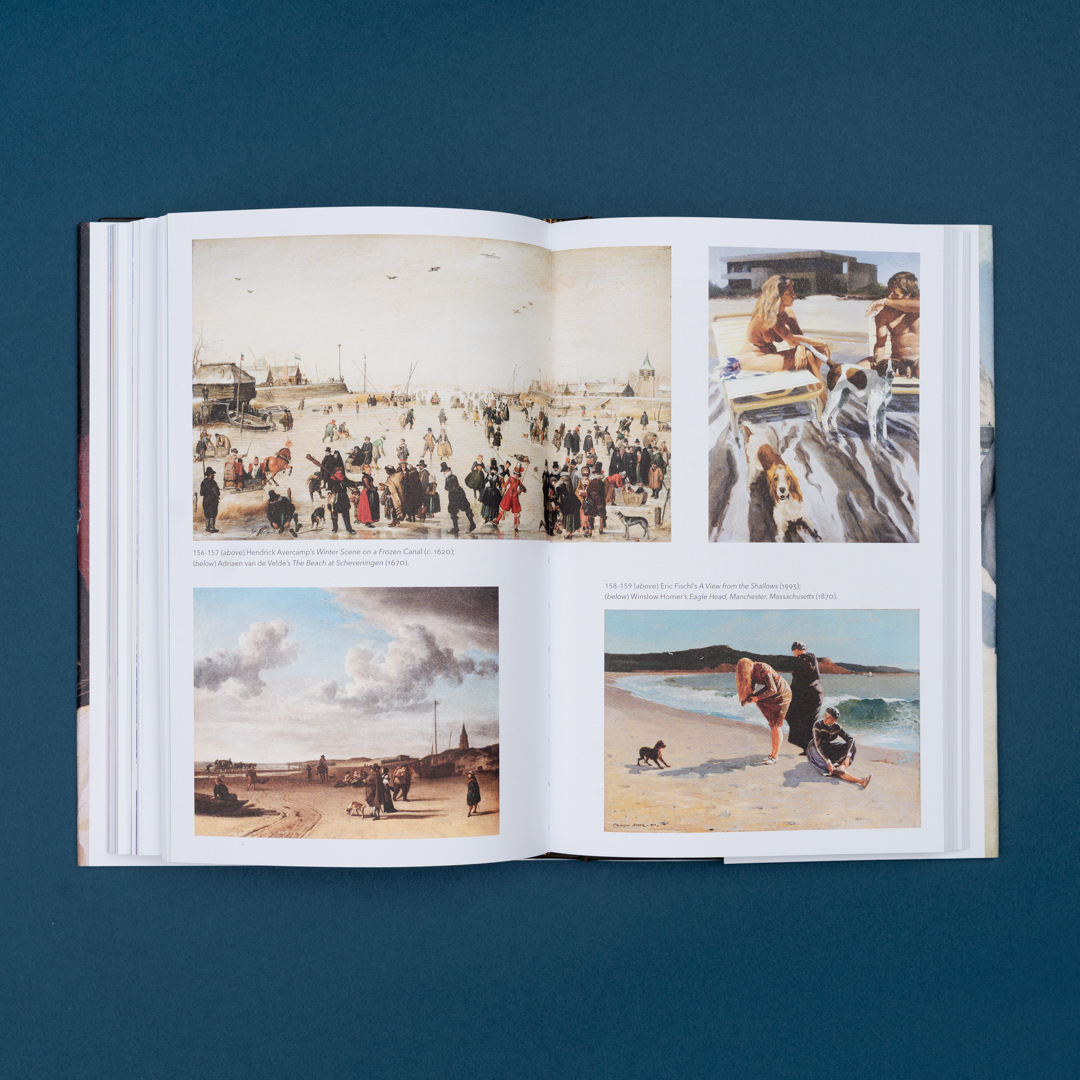
"A handsome work of scholarship . . . In this lavishly illustrated book, filled with color reproductions of paintings and photographs, Laqueur explores how dogs sit, stay, and roll over in Western art — from paintings by Titian, Rembrandt, and Winslow Homer to images from the modern era." —Ron Charles

"Yes, we all know that dogs are man’s best friend, but they are also artists’ best friend, and Thomas W. Laqueur offers an enthralling study of how and why the animal is the most illustrated in the history of painting. Sometimes they are tucked away in the background, other times they are the main focus, but the breed of dog and the relationship to the humans depicted offer fertile ground for speculation, whether the artist be Titian or Lucian Freud. Laqueur is a stylish writer who wears his considerable scholarship lightly, and the book itself is a visual stunner." —Air Mail

"Magnificently illustrated . . . A meditation, through art, on our closest relationship with another species." —Bloomberg

“Inspiring, educational, moving . . . This is a riveting visual history of man’s best friend. Thomas Laqueur, from a German Jewish family, whose mother owned boxers, introduces us to many hitherto unexplored facts. Who knew that in 1938 guard dogs, using Bedouin herding dogs, were specially bred for ‘the new Zion’? Or that Darwin thought that dogs have a conscience? We are encouraged to scrutinize masterpieces of art with a fresh eye . . . This is a fascinating book with stunning illustrations.” —The Spectator

“A brilliantly wise and engaging book about how dogs have been represented in art and what they represent in life . . . The Dog’s Gaze is in part a history of the intimacy between humans and dogs, which predates by millennia, maybe tens of millennia, our relationship with other domesticated animals, and has persisted on every inhabited continent. Laqueur offers a clear and well-informed account of the genetic and archaeological evidence of domestication, before launching into a thoughtful, erudite account of dogs in art, from prehistoric petroglyphs to Lucian Freud’s whippets, William Wegman’s photographs of Weimaraners and a yellow dog in a painting by Kerry James Marshall . . . A magnificent, generous book.” Apollo

“In this charming and lavishly illustrated book [Thomas Laqueur] sets out to discover what the dogs do for the artists and how they do it . . . The Dog’s Gaze is an enjoyable romp." —The Times (UK)

"Superbly illustrated and beautifully written . . . It's a tour de force of empathy. The Dog's Gaze is the kind of volume you'll return to again and again, learning something new each time." —The Mail on Sunday (UK)

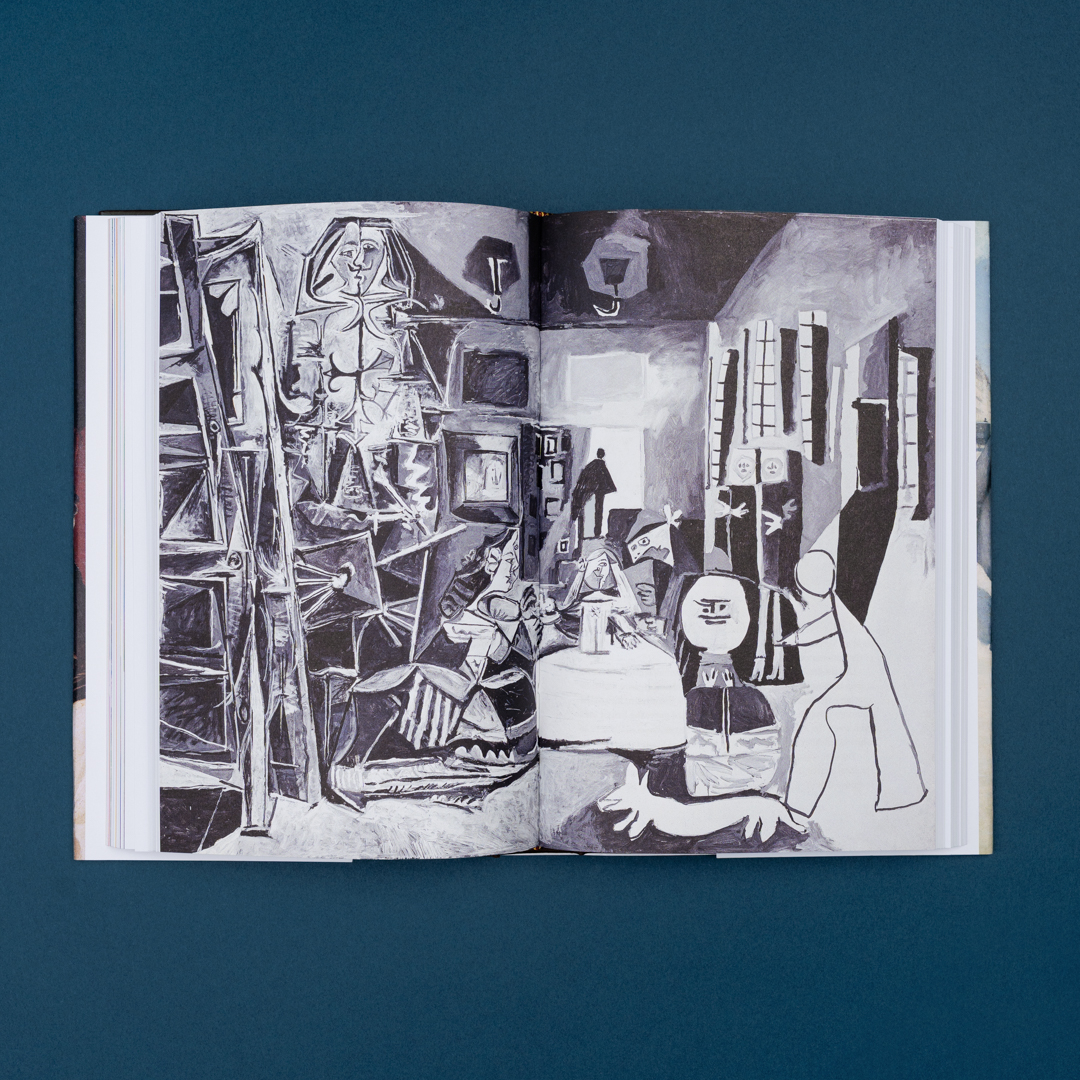
“A splendid blend of histories: natural, cultural, and artistic . . . [A] sprawling examination of dogs in the history of art, from Neolithic cave paintings to present-day photographs and paintings . . . In a book filled with image after image of dogs in all sorts of artistic contexts, Laqueur provides other meaningful interpretations of the dog as a religious symbol, an avatar of the good home, a hunting companion, a faithful friend—and, in one terrifying instance, as a hellhound chasing runaway enslaved people. Laqueur spins fine anecdotes, such as one concerning Pablo Picasso’s beloved dachshund, Lump, of whom the artist remarked, 'He’s not a dog, he’s not a little man, he’s somebody else;' and his text is full of smart aperçus, such as speculation on why dogs figure so often in stories and images about death, for 'who more than the dead need protection, attention, and guidance?' . . . A delight for dog-loving art connoisseurs, and vice versa.” Kirkus (starred review)

“Historian Laqueur traces in this delightful survey the long history of dogs appearing in artworks . . . A whirlwind tour through centuries of art history . . . Drawing from a staggering wealth of examples, the author successfully uncovers the overlapping uses and meanings of dogs in art, while interspersing the account with charming asides about artists’ relationships with the dogs that appear in their work . . . It’s an eye-catching homage to man’s best friend.” Publishers Weekly

“It is difficult to think of many other books that are at once so brilliant, so wonderfully entertaining, and so moving. I savoured every page and lingered over every illustration. It turns out that a dog’s eye view gives us unique access to some of the deepest longings, needs, and creative powers of our own species. The Dog’s Gaze is full of exuberant insights about our canine friends, about art, and about the human condition.” —Stephen Greenblatt

“The Dog’s Gaze: A Visual History is a treasure trove of fascinating material. There could be no more congenial and erudite guide than Professor Laqueur through centuries of artwork from ancient times to 20th-century America and beyond. Each dog portrait is both unique and emblematic: the dog as a companion of aristocrats, and of the common man; the dog at the periphery of human activity, and the dog as a measure of morality; the dog alone, in extremis, a mirror of human loneliness. We see in these richly varied depictions of our most faithful animal companion something of the evolution of our own humanity but most profoundly we see the dog as a creature of infinite beauty, irresistible to generations of artists.” —Joyce Carol Oates

“In this beautiful book, Laqueur shows that dogs are everywhere in our lives and our art.” —Sally Mann

additional book photo

About

"It is difficult to think of many other books that are at once so brilliant, so wonderfully entertaining, and so moving . . . The Dog’s Gaze is full of exuberant insights about our canine friends, about art, and about the human condition." —Stephen Greenblatt

“A splendid blend of histories: natural, cultural, and artistic . . . A delight for dog-loving art connoisseurs, and vice versa.” —Kirkus (starred review)

From award-winning cultural historian, an enlightening and unique meditation on the presence of dogs in art, from the Paleolithic era to the present, and what our intertwined human-canine relationship reveals about human nature


Long before the phrase man’s best friend became common parlance, dogs were already standing beside us in art as in life. In The Dog’s Gaze, the historian Thomas W. Laqueur invites us to explore why they feature more than any other animal in the ways in which we picture ourselves and our stories.

Dogs have been ubiquitous in the worldmaking of visual artists as far back as the Paleolithic age. Looking across the Western tradition, from Giotto to Goya and Rubens to Rego, Laqueur shows what their presence—as hunting partners, beloved friends, and even conduits to the afterlife—reveals about our own ways of seeing and how we want to be remembered. Far from being mere motifs, dogs are an integral and intentional element of the images in which they appear: They provide narrative coherence; they look out and bear witness, often on the artist’s behalf; they illuminate our understanding of morality and melancholy and some, like us, become celebrities. Indeed, as Laqueur reveals, dogs in art are our social doppelgängers, our companions in looking and being.

Richly illustrated and lovingly written, The Dog’s Gaze is a unique visual history that examines the remarkable social bond between two species, shedding new light on the human condition through the eyes of our canine companions.

Table of Contents

Preface
Dogs and Me 8

Chapter 1
The Dog's Gaze 28

Chapter 2
The Deep Time of the Dog 62

Chapter 3
The Art of the Dog 110

Chapter 4
Dogs and the Human Condition 170

Chapter 5
Dogs in the Art of Modern Life 236

Chapter 6
Dogs and the Moral Imagination 294

Coda
We Are Not Alone 336

NOTES 351

LIST OF ILLUSTRATIONS AND PHOTO CREDITS 379

ACKNOWLEDGEMENTS 390
INDEX 394

Excerpt

I did not come to this book from a lifelong love of dogs. My first pet, acquired in my late twenties, was a cat named Lydgate, after Tertius Lyd-gate, the doctor-reformer in George Eliot’s Middlemarch. In my teens and all through graduate school I was passionate about horses. Dogs entered my life late. Or at least as I remember them because there is a picture of me when I was three or four taken by my father in Kuzguncuk on the Bosporus straits with a dog in whose dinner I seem interested. He labelled it, ‘Thomas und Job beim Hundefressen’ (‘Thomas and Job as the dog feeds’) [2]. We are both looking intensely at his bowl. My parents were in Turkey as refugees from Nazi Germany.

My family had dogs when I was growing up but my relationship to them was shallow and vicarious. They were my mother’s, and I remember her through them. I don’t know what dogs meant to her; what childhood memories she had of them. She grew up in a large house with land around it in Holzminden an der Weser, a small town in the north-west of Germany, the daughter of a Jewish grain and animal merchant. I suspect her family had dogs but have no evidence for this.

I know that very soon after we arrived in Bluefield, West Virginia, from Istanbul in 1950, my mother acquired a dog – a boxer. She named her Heidi, the first of a succession of boxers with that name. I have a stuffed boxer, whose leg was broken and splinted at some point, that I retrieved from my mother’s house after she died. I don’t remember how it originally came into my life or how it was injured, and I don’t remember it ever meaning much to me. I keep it now because she kept it.

After the Heidis came a succession of cocker spaniels: Sapphos, a name suggested by my best friend from college – and ever after – a Greek who was visiting over the Christmas break. In the last decades of my mother’s life came Airedales, two of them in succession both named Druze – Serbian for ‘comrade’. My mother did not speak Serbian. Tante Elli gave my mother the first of this line and he came with the name; she had escaped the Nazis by going to Yugoslavia and had Airedales after she got to America. Dogs as gifts between rulers, friends, lovers, and family, as if they carried with them a declaration of intimacy, will appear often in this book [3–5].

My mother in her eighties made heroic efforts to care for Druze II; she broke her hip carrying a twenty-pound bag of kibble on slippery ice but recovered from that. When he died, she lost interest in living; the dog’s death seemed to signal that it was her time to die too.

Before starting to write this book I had never noticed the dog in a photograph of my father, mother, and little brother on the porch of our house that I must have taken when I was eleven or twelve. (In fact, I never noticed the dogs in so many of my early family pictures.) In 6, Heidi I is coming into our world, that is, entering the frame of the picture as dogs do in a great deal of the art in this book. Maybe my mother had called her, although I don’t remember her calling her dogs very often. I do remember her sending them away. ‘Go to your place’ in heavily German-accented English sent generations of Heidis, Sapphos and Druzes obediently to their beds.

My father had little interest in my mother’s dogs or dogs in general. I did not know his father, my paternal grandfather Walther Laqueur, who died in 1927. But I know he had a dog who was important enough to him to have commissioned a professional photographer to take a formal portrait of the two of them in the early 1920s on the steps of a large brownstone at 106 Hochallee in Hamburg [7]. My grandmother took the photograph with her when she narrowly escaped Germany in December 1939, aged almost seventy. My father learned that she been ordered to report to the Gestapo and managed very late in the day to persuade her to secure a Turkish visa and transit to Istanbul where he and my mother lived. (Her eldest daughter, my Tante Toni, who had emigrated to Holland and was subsequently murdered at Sobibor, had been urging her to come to Amsterdam.) The dual portrait of her husband and his dog sat in a silver frame on my grandmother’s desk in West Virginia from 1950 until five years before she died at age 100 in 1973. It is now, in the same silver frame, on my desk.

My grandfather Walther and his dog are poised in mid-action. The dog is coatless; his master fashionably bundled up against the cold – there is snow on the steps – and ready for a walk. I can imagine my grandfather as the narrator in Thomas Mann’s ‘Herr und Hund’ (A Man and His Dog), the longest of his short stories and clearly an autobiographical account of his life with a pointer-mix named Bashan. I do not know the name of Walther’s dog. I think the two of them are heading out rather than coming back from a walk. The lead is in my grandfather’s left hand; if he were turning to go up the stairs, he would have tripped over it or over the dog. The dog’s eyes, so clearly visible along the vertical axis of the photograph, are directed to the right, away from the stairs, and toward grandfather’s cane in his right hand and the street. My sense is that this dog, unlike Thomas Mann’s on many occasions, would not be disappointed when his master headed for city streets.

An image like this invites questions about both the immediate circumstances in which it was made – exactly what is going on between this Herr and this Hund ? – and about its broader social and cultural context. We know that they are posed together and professionally photographed in an artfully arranged tableau: a diagonal line runs from the main character sharply in focus on the lower left to the unknown well-dressed, coatless, man with the fob watch highlighting his waistcoat, who is more of a blur on the upper right. The dog is indispensable to the architecture of the image. We know the photograph was important to the subject’s widow, my grandmother.

We know also that it stands in a long tradition of man and dog portraiture that continues into the present, great hound and prince, formal and majestic, in the paintings of Titian, Velázquez, Van Dyck, Goya and, by the eighteenth century of a broader social range of sitters, in a variety of poses, in paintings and later photographs by hundreds of artists. There are far fewer paintings from the earlier period of women with dogs any-where near the size of those featuring men: those we have are mostly of women with lapdogs who are almost, but not quite, lap cats. They are more attentive to both the subject and the viewer than a curled-up cat would be. Images of the hunter goddess Diana and of aristocratic women represented as Diana for the hunt are exceptions until the late eighteenth century, when portraits of women with sizeable dogs started being painted; by the 1880s the new woman with a large dog in the country, on city streets, and in the home had become almost a cliché.

Like all portraits, that of my grandfather is about the private world of its sitters as well as their social position and setting. It is a good likeness when I compare it to other pictures of him: a representation of this appropriately dressed man in a conventionally gendered pose at a particular time and place in a particular relationship. But what my familial ‘Herr und Hund’ might mean in a more general sense, and specifically what the dog means or represents, is harder to say.

Iconography – enquiries about what an element in a painting might symbolize or stand for – is often the place where people begin when thinking about why there is a dog in the picture. The claim that it represents faithfulness or fidelity is a starting point and at the most abstract level that is probably true in art and in life. As the first animal to be domesticated and the first animal that could, and indeed wanted to, live intimately with humans, it has become a way for us to imagine that all is well between us and nature and between each of us and the social world we live in. In the face of famine, disease, ecological disasters, death, war, betrayal, and all the ills of civilization, dogs are a sort of intellectual, or in this context, visual comfort food. They have their lapses, but they seem resigned to living with what we have wrought and, despite our many sins and weaknesses, remain faithful to the relationship that evolution wrought tens of thousands of years ago.

But there are many other possibilities for what a dog might represent other than faithfulness: the art historian Simona Cohen, for example, argues that it stands for heresy in one version of a Tintoretto Last Supper, and ‘wise perception’ in another where it seems to identify the traitor. Erwin Panofsky, one of the most influential art historians of the twenti-eth century, interprets the dog in Albrecht Dürer’s Knight, Death, and the Devil as standing for ‘lesser virtues . . . untiring zeal, learning, and truthful reasoning’ (see 146). That dogs can be interpreted to mean so many things is evidence for how deeply they are implicated in the ways that artists create a visually coherent world through representing our relationship with them.

In specific instances iconography is helpful in understanding that imagined world. Renaissance scholars and artists, for example, thought that Egyptian hieroglyphics represented an almost Adamic language. So, when a fifth-century C& text discovered in the early fifteenth century claimed that when the Egyptians wanted to represent a scholar:

. . . they draw a dog . . . since he who wishes to become an accomplished scribe must study many things and must bark continually and be fierce and show favours to none, just like dogs.

They therefore had new grounds for the meaning of a dog in an image. Dürer was among the first to take up the idea. But there are lots of images of dogs in studies before the discovery and printing of this text, and also lots of images after, which owe nothing to the ancient associations.

Decoding iconographical associations is seldom a sufficient interpre-tive strategy. The two dogs playing near a man and woman kneeling on a wing of an altarpiece are without doubt symbols of faithfulness [8]. But why, we might ask, would a couple kneeling at an altarpiece that they paid for need dogs to attest to their faith? What do the dogs add? The answer starts with thinking about what living creatures of another species sharing a space with us, looking at one another, at us, or at something else, add to an image. The humans are still; the dogs are in action, playing. They draw us into the picture.

More generally, looking at pictures iconographically can become something of a fool’s errand. The history of how art historians have struggled to interpret Jan van Eyck’s so-called Arnolfini Portrait – one of the world’s most famous paintings with one of the most famous dogs in Western art – offers a warning [9]. It got the label largely because in 1934 Panofsky argued that the signature in the background – ‘Johannes de Eyck fuit hic ’ [‘Jan van Eyck was here’] – meant that the artist was a witness to what he thought was the wedding of Giovanni de Arrigo Arnolfini and Jeanne de Cename. (It had before been thought that the couple was van Eyck himself and his wife.) The painting thus became, in Panofsky’s account, a visual, symbolic marriage contract. Subsequently, a great deal of learning and ingenuity went into identifying each element in the picture in support of this interpretation. The burning candle, for example, symbolized the matrimonial oath and the little terrier symbolized fidelity. Or, others argued, the dog represented lust in the interest of procreation.

Author

© Hagit Caspi
Thomas W. Laqueur is the Helen Fawcett Distinguished Professor of History Emeritus at the University of California, Berkeley. An internationally renowned cultural historian, he has published books on topics ranging from working class religion and education to the history of sexuality and the body. He is a member of both the American Academy of Arts and Sciences and the American Philosophical Society and recipient of the 2007 Mellon Foundation Distinguished Achievement Award and the 2016 Cundill History Prize. His work has been translated into twenty languages. View titles by Thomas W. Laqueur

Praise

“Dogs have been bred over millennia to meet our eyes with their own, offering a gaze of gratitude rather than one of appetite or fear. Laqueur takes this simple proposition and shows how it has been institutionalized in art, chiefly in paintings of the highest order but also in posters, photographs, and marginal illustrations. His is a work of immensely humane scholarship . . . Laqueur also has something rare, though essential to real scholarship, and that is taste . . . Laqueur’s book has no particular thesis to hobbyhorse for, and yet a unified-field theory of aesthetic dogginess might be distilled from its pages. Dogs live within a neat symbolic divide. On the one hand, they represent courage, an intrepid readiness to take risks on behalf of their beloved; on the other, they represent loyalty, a refusal to be removed from the presence of their families. The dog in art both walks ahead with the hunters and stays behind with the gatherers.” —Adam Gopnik, The New Yorker

"Thomas W. Laqueur’s The Dog’s Gaze tells the story of the watchful dog. The book starts in the deep past and goes to the present, surveying much of the science and philosophy of the human-dog relationship. But Laqueur’s chief interest lies in the Western pictorial tradition, especially from the Renaissance into the 20th century. A cultural historian, Laqueur likes to come at big and familiar topics from unexpected angles." —The Atlantic

“In this luminous book, the American cultural historian Thomas Laqueur explores what he calls 'the dog’s gaze'. The dog was the first animal to live companionably with humans, and Laqueur argues that this marks the boundary between nature and culture . . . From this starting point Laqueur takes us on a wonderfully illustrated tour of dogs in art, from the shitting cur in Rembrandt’s etching The Good Samaritan to the Jeff Koons balloon dog, by way of cinema superstar Lassie. . . . By the end of this clever, beautiful book, Laqueur has persuasively made his point that the dog’s function in western art is to provide an entry-point or alter ego for viewers who might otherwise feel overwhelmed or outclassed.” The Guardian

“As long as canines have been an integral feature of the human world, they have been an integral feature of our artistic world. In The Dog’s Gaze, historian Thomas W Laqueur seeks to answer the question of precisely why . . . The way the dog’s gaze directs, judges and mirrors in art is much more than artistic convention. It reflects the deep and unique bond between man and dog.” Financial Times

"A handsome work of scholarship . . . In this lavishly illustrated book, filled with color reproductions of paintings and photographs, Laqueur explores how dogs sit, stay, and roll over in Western art — from paintings by Titian, Rembrandt, and Winslow Homer to images from the modern era." —Ron Charles

"Yes, we all know that dogs are man’s best friend, but they are also artists’ best friend, and Thomas W. Laqueur offers an enthralling study of how and why the animal is the most illustrated in the history of painting. Sometimes they are tucked away in the background, other times they are the main focus, but the breed of dog and the relationship to the humans depicted offer fertile ground for speculation, whether the artist be Titian or Lucian Freud. Laqueur is a stylish writer who wears his considerable scholarship lightly, and the book itself is a visual stunner." —Air Mail

"Magnificently illustrated . . . A meditation, through art, on our closest relationship with another species." —Bloomberg

“Inspiring, educational, moving . . . This is a riveting visual history of man’s best friend. Thomas Laqueur, from a German Jewish family, whose mother owned boxers, introduces us to many hitherto unexplored facts. Who knew that in 1938 guard dogs, using Bedouin herding dogs, were specially bred for ‘the new Zion’? Or that Darwin thought that dogs have a conscience? We are encouraged to scrutinize masterpieces of art with a fresh eye . . . This is a fascinating book with stunning illustrations.” —The Spectator

“A brilliantly wise and engaging book about how dogs have been represented in art and what they represent in life . . . The Dog’s Gaze is in part a history of the intimacy between humans and dogs, which predates by millennia, maybe tens of millennia, our relationship with other domesticated animals, and has persisted on every inhabited continent. Laqueur offers a clear and well-informed account of the genetic and archaeological evidence of domestication, before launching into a thoughtful, erudite account of dogs in art, from prehistoric petroglyphs to Lucian Freud’s whippets, William Wegman’s photographs of Weimaraners and a yellow dog in a painting by Kerry James Marshall . . . A magnificent, generous book.” Apollo

“In this charming and lavishly illustrated book [Thomas Laqueur] sets out to discover what the dogs do for the artists and how they do it . . . The Dog’s Gaze is an enjoyable romp." —The Times (UK)

"Superbly illustrated and beautifully written . . . It's a tour de force of empathy. The Dog's Gaze is the kind of volume you'll return to again and again, learning something new each time." —The Mail on Sunday (UK)

“A splendid blend of histories: natural, cultural, and artistic . . . [A] sprawling examination of dogs in the history of art, from Neolithic cave paintings to present-day photographs and paintings . . . In a book filled with image after image of dogs in all sorts of artistic contexts, Laqueur provides other meaningful interpretations of the dog as a religious symbol, an avatar of the good home, a hunting companion, a faithful friend—and, in one terrifying instance, as a hellhound chasing runaway enslaved people. Laqueur spins fine anecdotes, such as one concerning Pablo Picasso’s beloved dachshund, Lump, of whom the artist remarked, 'He’s not a dog, he’s not a little man, he’s somebody else;' and his text is full of smart aperçus, such as speculation on why dogs figure so often in stories and images about death, for 'who more than the dead need protection, attention, and guidance?' . . . A delight for dog-loving art connoisseurs, and vice versa.” Kirkus (starred review)

“Historian Laqueur traces in this delightful survey the long history of dogs appearing in artworks . . . A whirlwind tour through centuries of art history . . . Drawing from a staggering wealth of examples, the author successfully uncovers the overlapping uses and meanings of dogs in art, while interspersing the account with charming asides about artists’ relationships with the dogs that appear in their work . . . It’s an eye-catching homage to man’s best friend.” Publishers Weekly

“It is difficult to think of many other books that are at once so brilliant, so wonderfully entertaining, and so moving. I savoured every page and lingered over every illustration. It turns out that a dog’s eye view gives us unique access to some of the deepest longings, needs, and creative powers of our own species. The Dog’s Gaze is full of exuberant insights about our canine friends, about art, and about the human condition.” —Stephen Greenblatt

“The Dog’s Gaze: A Visual History is a treasure trove of fascinating material. There could be no more congenial and erudite guide than Professor Laqueur through centuries of artwork from ancient times to 20th-century America and beyond. Each dog portrait is both unique and emblematic: the dog as a companion of aristocrats, and of the common man; the dog at the periphery of human activity, and the dog as a measure of morality; the dog alone, in extremis, a mirror of human loneliness. We see in these richly varied depictions of our most faithful animal companion something of the evolution of our own humanity but most profoundly we see the dog as a creature of infinite beauty, irresistible to generations of artists.” —Joyce Carol Oates

“In this beautiful book, Laqueur shows that dogs are everywhere in our lives and our art.” —Sally Mann

Photos

additional book photo

Books for LGBTQIA+ Pride Month

In June we celebrate Lesbian, Gay, Bisexual, Transgender, Queer, Intersex, and Asexual + (LGBTQIA+) Pride Month, which honors the 1969 Stonewall riots in Manhattan. Pride Month is a time to both celebrate the accomplishments of those in the LGBTQ+ community and recognize the ongoing struggles faced by many across the world who wish to live

Read more